



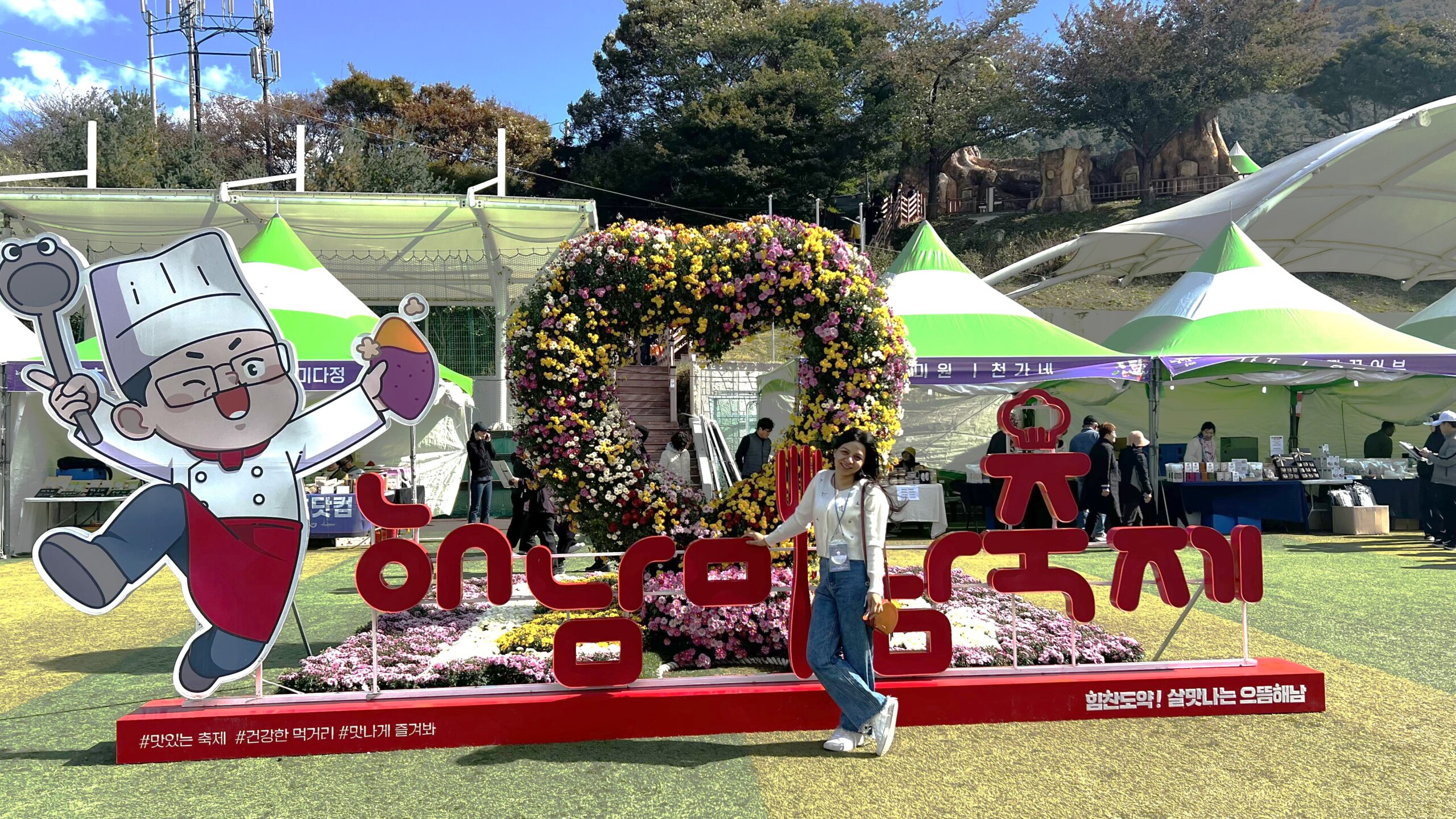
The Haenam Minam Festival: Where Korean Traditions and Autumn Memories Meet
By Neha Bisht ||
Autumn in South Korea is a season of colorful landscapes, crisp air, and vibrant local festivals. Across the country, communities celebrate regional culture through traditional performances, local delicacies, handicrafts, and seasonal displays. These festivals offer visitors a chance to discover a side of Korea beyond its bustling cities.
The Haenam Minam Festival, held in Haenam County in what is now Jeonnam-Gwangju, brings people together to celebrate local culture, food, and community traditions. For international students living in Gwangju, it is also an opportunity to explore unfamiliar places, experience Korean customs, and create lasting memories.
My Journey to the Haenam Minam Festival
Last autumn, I attended the Haenam Minam Festival through the Genie Culture Group, which organizes free trips for international students living in Gwangju. I have joined several excursions arranged by the group, and each has introduced me to new places, new experiences, and new people.
The group announces its trips on Facebook and Instagram, where students can register through an online form. The tours are completely free, including round-trip transportation, making them an excellent opportunity for students who want to explore Korea on a budget. In both 2023 and 2025, my friends and I registered for the festival and selected dates that suited our schedules. On the day of the trip, everyone gathered at a designated pickup point in Gwangju, usually near the Asian Culture Center (ACC), a convenient and familiar meeting place.
Students from different countries joined the journey, creating an opportunity to make new friends while exploring Korean culture. Before departure, the group leader distributed name tags and explained the schedule and provided important instructions. Once everyone had boarded, our bus set off towards Haenam. The approximately two-hour journey passed with conversations, laughter, and excitement about the day ahead.
A Warm Welcome with Local Flavors
Upon arriving, we headed to a dining area reserved by the organizers. There, we found local food items, including tteok (Korean rice cakes), sweet potatoes, and sausages ready to be grilled and enjoyed together.
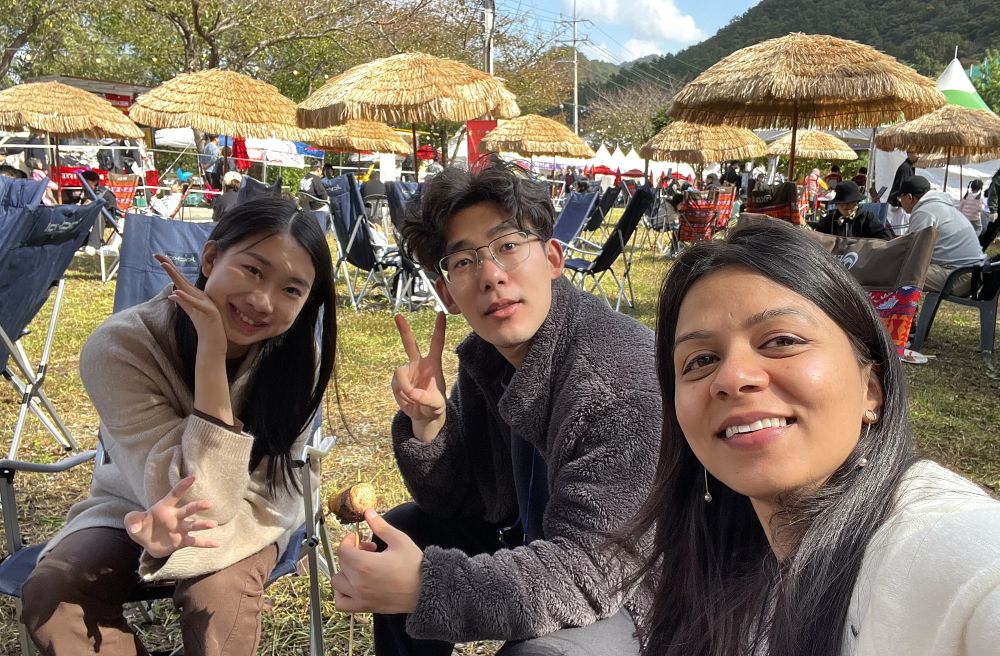
The author and her friends enjoying local barbecued delicacies at lunch.
The chilly autumn weather made the experience especially satisfying. The warmth of the grill, the aroma of freshly cooked food, and the cheerful conversations created a cozy atmosphere. Sharing an outdoor meal with students from different countries was a lovely way to begin the festival.
A Celebration of Flowers and Local Culture
After lunch, we explored the festival grounds, where colorful chrysanthemum displays created a beautiful autumn atmosphere. The flowers provided wonderful backgrounds for photographs, and every corner seemed to offer something worth capturing.
The grounds featured booths showcasing local products, regional specialties, and community activities. Visitors could browse the stalls, learn about Haenam’s products, and explore the work of local producers. Experience booths offered further opportunities to engage with regional culture.
At the heart of the festival was a large stage where local communities showcased their performances and kept the festivities lively. The vibrant mix of flowers, music, food stalls, and enthusiastic visitors created a warm and welcoming atmosphere.
“The communal atmosphere reflected the spirit of the festival.”
My friends and I wandered through the different sections, stopping at photo spots and capturing as many moments as possible on our phones. As an international student, I especially enjoyed seeing local communities share their traditions and regional identity with visitors.
Sharing a Bowl of Traditional Tteokguk
One of the highlights was tasting tteokguk, a traditional Korean rice cake soup commonly associated with Seollal, the Lunar New Year. Eating it is traditionally linked with welcoming a new year of life. At the festival, experienced cooks prepared the soup in large quantities. After the opening ceremony, it was served to visitors waiting patiently in queues.
There was something special about watching so many people gather to share the same traditional dish. The communal atmosphere reflected the spirit of the festival, while the warm soup was especially comforting in the chilly autumn weather. After finishing our bowls, we continued exploring the grounds, taking photographs, and enjoying the celebration.
Dancing Together: A Memorable Cultural Experience
One of the most memorable moments came when elderly women from local villages began singing a traditional folk song, accompanied by a group of women performing the traditional dance, Seungmu (Monk’s Dance). The experience became even more special when the performers invited visitors to join them. They reached out, held people’s hands, and encouraged everyone to dance together.
My friends and I joined in, moving along to the rhythm with the other participants. We did not need to know every step or understand every word to enjoy the moment. The music, laughter, and shared excitement brought everyone together. For a little while, I no longer felt like an outsider visiting a Korean festival. Instead, I felt like part of the celebration itself. The experience was joyful and unexpectedly nostalgic, reminding me how music and dance can connect people from different cultures. After the performance, we took group photographs with the dancers to preserve the memory of this wonderful encounter.
Finding Our Way Through Duryun Maze Park
Our next destination was Duryun Maze Park, where we faced a fun challenge: Navigate the maze, reach the top, and ring the bell. Although the instructions sounded simple, finding the correct route was not easy. Some students quickly discovered the way and reached the bell ahead of everyone else, while others struggled with the winding paths and got lost.
“For a little while, I no longer felt like an outsider visiting a Korean festival. Instead, I felt like part of the celebration itself.”
I managed to reach the middle of the maze, but finding the way forward required more patience than I had expected. Watching everyone turn around, try different directions, and search for the right path made the activity even more entertaining. It was a light-hearted challenge that encouraged everyone to participate. We also took plenty of photographs, capturing our playful moments before regrouping and heading to our final destination.
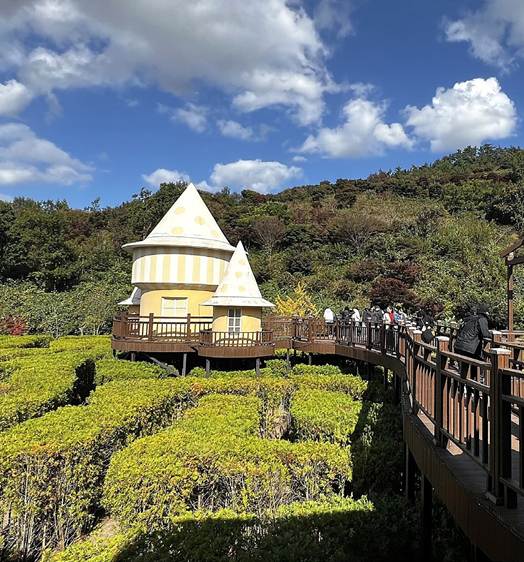
The Duryun Maze Park.
Daeheung Temple: A Peaceful Journey into History
Our final stop was Daeheung Temple, an important Buddhist temple nestled amid the beautiful surroundings of Duryun Mountain in Haenam. Daeheung Temple is a sansa, a Buddhist mountain monastery – actually, a collection of seven monasteries inscribed on the UNESCO World Heritage List in 2018. These monasteries are recognized for preserving Korea’s Buddhist traditions and serving as living centers of spiritual practice. The temple is historically associated with Seosan Daesa, a Buddhist monk remembered for his leadership during the Japanese invasions of Korea, and Choui Seonsa, who contributed to Korean tea culture.
As we entered the grounds, the atmosphere felt completely different from the lively festival. The crowds and music gave way to a quieter environment surrounded by trees, mountains, and traditional buildings. The peaceful setting invited us to slow down and appreciate the moment. Our group leader explained the temple’s historical and cultural significance, helping us understand why it remains an important landmark. I spent some quiet time exploring the grounds and appreciating the harmony between the architecture and the natural landscape.
After a full day of activities, the temple visit provided a welcome pause and an opportunity to reflect on everything we had experienced.
A Day to Remember
After visiting Daeheung Temple (Daeheung-sa), we returned to our buses for the journey back to Gwangju. We were tired after a full day of walking, exploring, eating, and dancing, but the experience left us with wonderful memories.
Looking back on my visit to the Haenam Minam Festival, I realize that the experience was about much more than attending a local festival. It gave me the opportunity to explore Korean traditions, enjoy regional food, learn about Buddhist heritage, and make friends with people from different cultural backgrounds.
The Genie Culture Group made these experiences possible by organizing free trips with transportation included, allowing international students like me to explore beyond Gwangju. From sharing tteokguk and joining traditional dances to finding our way through the maze and enjoying the peaceful surroundings of Daeheung Temple, every moment added something special to the journey.
The festival reminded me that traveling is not just about visiting new places; it is about connecting with people, understanding traditions, and enjoying the little moments along the way. These trips have become cherished memories of my life in Korea, reminding me that sometimes the most meaningful adventures begin with a bus ride, new friends, and the excitement of discovering somewhere new.
Note: I would like to extend my heartfelt thanks to the Genie Culture Group for organizing such wonderful events and providing international students with opportunities to explore Korean culture and traditions.
To learn more about their upcoming trips and activities, follow their official pages. Facebook: [Genieculture]; Instagram: [genie_culture24].
The Author
Neha Bisht is a native of India, pursuing her PhD research at Chonnam National University’s School of Materials Science and Engineering. She loves to meet new people and make new friends. Neha endeavors to contribute to the well-being of society in whatever way she can.
Follow @philla_korea
(Photographs courtesy of the author)
Cover Photo: The author at the Haenam Minam Festival grounds.