



A Day of Pottery and Village Life at Pyeongchon
By Dhivyaa S. P. ||
I visited Pyeongchon Village in the last week of August as part of a volunteering activity with Mudeung-san National Park. What I expected to be a simple day outside turned into one of those small experiences that stays with you. There was mountain scenery, village life, pottery, and a handmade dragon that somehow made perfect sense.
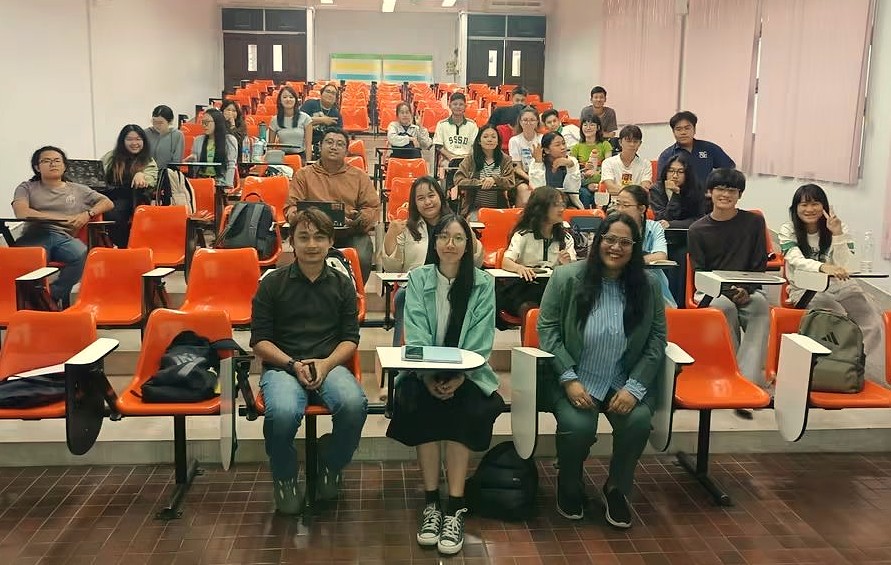
Lately, I had not been going out much except to the university. My routine had become very simple. University, home, and then the same thing again the next day. So, when I joined a volunteering activity with Mudeung-san National Park, I was already looking forward to being somewhere different.
Our destination was Pyeongchon Village (평촌마을) in Mudeung Mountain.
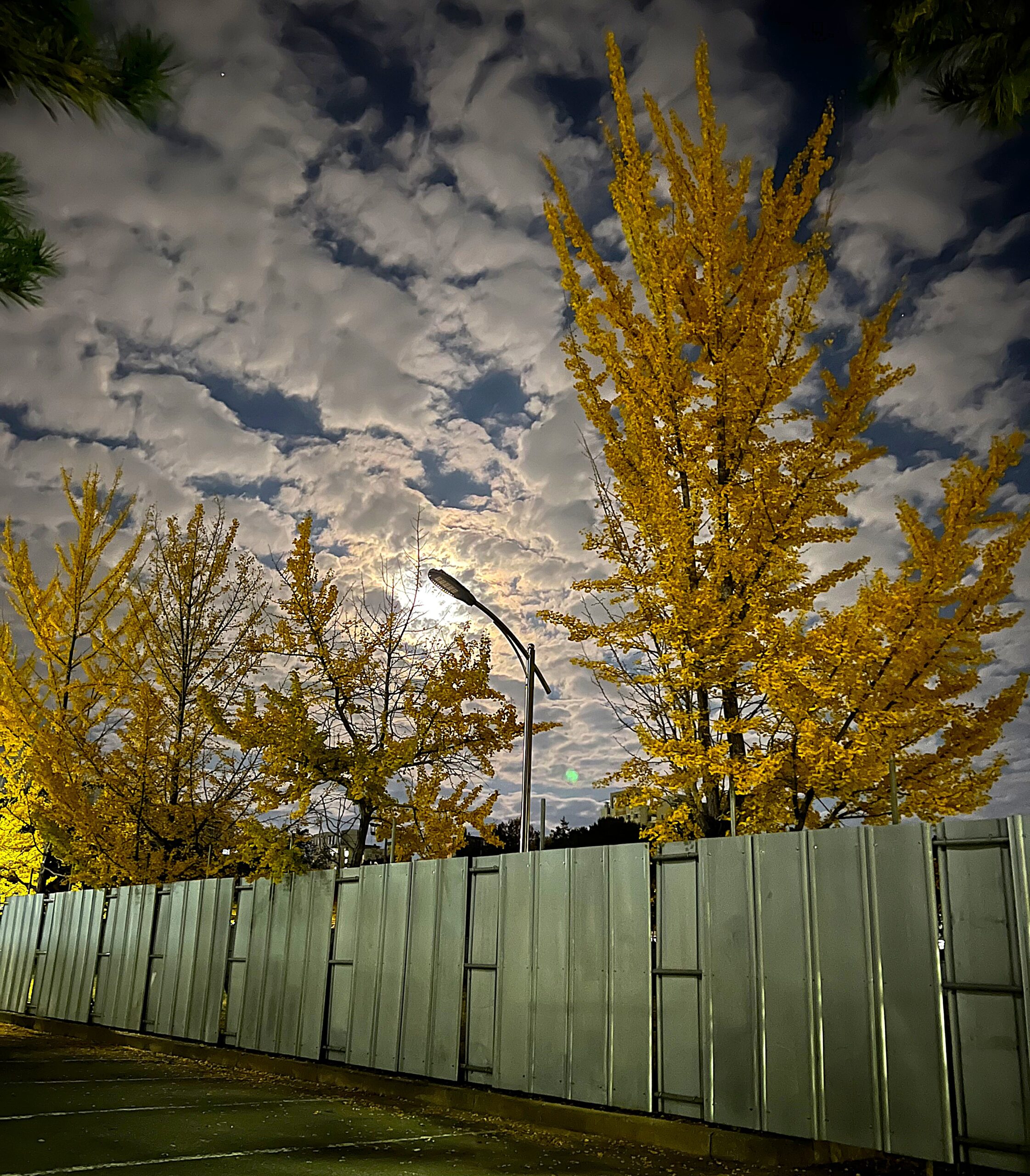
I visited in the last week of August, when summer was still hanging on. The weather could not seem to make up its mind. There were short bursts of rain, then sunshine, then another sudden shower. It was a little chaotic but not enough to ruin the day. If anything, the changing weather made the village look brighter and greener.
The stream beside the road was full from the rain. The trees looked fresh. Mist appeared around parts of the mountain, then disappeared again when the sun returned. It was the kind of scenery that made the city feel much farther away than it actually was.
Pyeongchon is known as an ecotourism village near Mudeung Mountain. It is a place where visitors can experience the local environment rather than simply pass through it. Programs are connected to nature, farming, food, and traditional crafts.
Depending on the season, visitors can join ecological walks, nature interpretation programs, and forest activities. There are also seasonal firefly experiences, which are among the village’s better-known attractions. Local food programs and agricultural activities are available at different times of the year, too.
Some forest and ecological experiences start from around 5,000 won. Village food experiences can start from around 10,000 won. Prices and programs vary depending on the season, group size, and activity, so it is best to check before visiting.
For me, though, the highlight of the day was pottery.
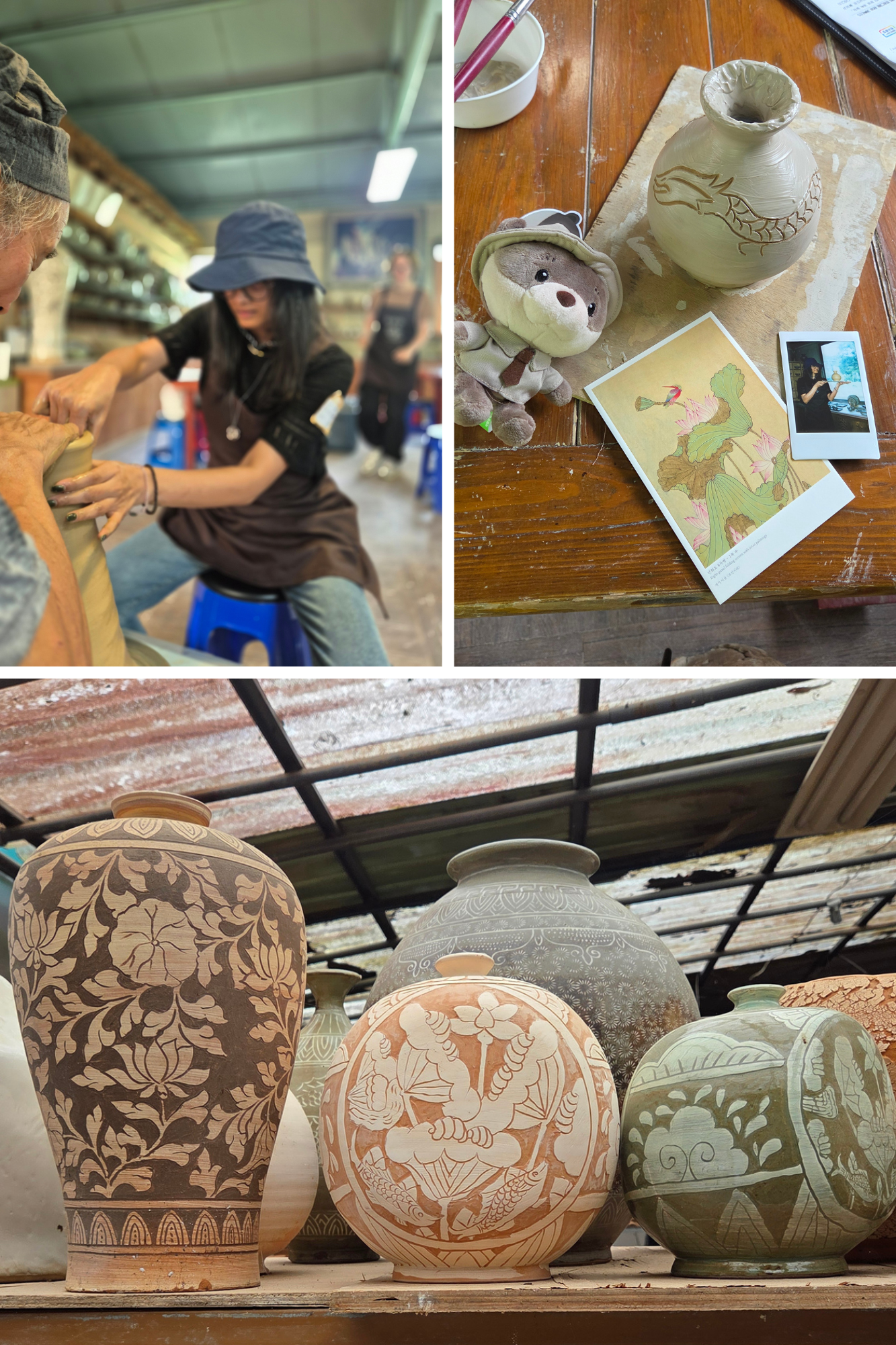
We visited the Pyeongchon Pottery Workshop (평촌도예공방), a studio that has been making Mudeung Mountain-style buncheong ceramics since 1996.
The workshop immediately felt full of character. Shelves were packed with pottery in every shape and size. There were bowls, cups, plates, vases, and large jars. Some pieces had delicate floral designs. Others had simple earthy finishes that looked beautiful without trying too hard.
It felt like a real working studio. That was what I liked about it. The place did not feel staged for visitors. You could see that pottery was part of everyday life there. After looking at all the finished pieces, I was excited to try making something myself.
Then I touched the clay. That was the moment I realized pottery is much easier to admire than to control. Clay reacts to every movement. If you press too hard, the shape changes. If you try to fix one side, you might accidentally create a new problem somewhere else. It takes patience, and it forces you to slow down.
Once I stopped trying to make everything perfect, I started enjoying it much more. I made a small rounded vase and decided to carve a dragon onto it. That was not exactly the easiest design choice. Still, I committed to it. I worked on the head first, then the body, then the scales. Every time I thought I was finished, I noticed another detail I wanted to add. I became completely focused on the carving.
For a while, I forgot about university work, deadlines, and everything waiting for me at home. It was just me and the clay. That felt surprisingly refreshing.
The workshop offers several hands-on experiences. Hand building costs around 25,000 won per person and usually takes about 60 to 80 minutes. A pottery wheel experience costs around 35,000 won and includes individual instruction. There is also a pottery painting experience for around 20,000 won. Most sessions take between 50 and 90 minutes.
One thing to remember is that you do not take your pottery home on the same day. The piece still needs to be glazed and fired. That takes around three to four weeks. After that, you can collect it or arrange for delivery. I actually liked that part. There is something fun about leaving with only the memory of what you made, then seeing the finished piece again weeks later.
Even though I visited at the end of August, I think November would also be a lovely time to visit Pyeongchon Village. The cooler weather would make walking around the village more comfortable. The mountain scenery would also feel completely different. Instead of the deep green I saw in summer, November would bring a quieter late autumn mood. It would be a good season to combine a pottery experience with a walk around the village or nearby nature trails. You could spend the day outdoors, then head inside for a warm, hands-on activity.
For me, Pyeongchon was a simple but memorable break from routine. I went there through my volunteering activities. I came back thinking I should get out of the house more often.
And yes, there was a reason I chose a dragon for my vase. The book I was reading at the time had dragons in it, so I guess one of them followed me all the way to Pyeongchon.
The Author
Dhivyaa believes that every action, no matter how small, contributes to a bigger change.
(Photographs courtesy of the author)
Cover Photo: Moments inside the Pyeongchon Pottery Workshop.