
Gwangju City News – February 2026
Government Shifts Toward a Gwangju-Style Silicon Valley
On December 19, 2025, Mayor Kang Gi-jung announced a major internal reorganization of Gwangju City’s civil service as part of the city’s long-term plan to become a “future city.” The city will reassign existing staff from sectors considered to be in decline to areas seen as strategic for Gwangju’s future.
In practice, this shift is meant to strengthen projects related to artificial intelligence (AI), smart mobility, and large-scale urban transformation. These include the creation of an AI innovation hub, preparations for relocating the military air base, and mobility projects connected to the national K-AI Cities initiative. The reorganization will also support preparations for the 2028 National Sports Festival and the establishment of an independent human-rights ombudsman.
The mayor emphasized that the total number of civil servants will remain frozen at 4,186. The goal is not expansion but efficiency – redirecting administrative capacity toward areas expected to shape Gwangju’s economic, technological, and social future.
Gwangju Partners with UK’s Arm to Become Korea’s “Fabless Chip Hub”
Gwangju is rapidly emerging as the core nerve center for South Korea’s system semiconductor industry. Following a landmark agreement between the South Korean government and British chip architecture giant Arm, the Gwangju Institute of Science and Technology (GIST) has been designated as the primary hub for the new “Arm School,” a move set to reshape the region’s industrial landscape.
Under the terms of the December 2025 agreement, the new institution aims to train approximately 1,400 elite semiconductor design specialists over the next five years. While South Korea dominates the global memory chip market, it has historically lagged in system semiconductors and fabless design – sectors where Arm holds a near-monopoly on intellectual property.
To maximize the impact, Gwangju is orchestrating a “Semiconductor Joint College” initiative. This consortium connects GIST with Chonnam National University and KENTECH (Korea Institute of Energy Technology), allowing resources and educational benefits from the Arm School to flow throughout the region.
“The establishment of the Arm School is the final piece of the puzzle in making Gwangju the ‘brain’ of Korea’s AI and semiconductor industries,” a city official stated. “We are committing all available administrative and financial resources to ensure that talent can learn, grow, and settle right here in Gwangju.”
One-Year Anniversary of the Muan Airport Disaster
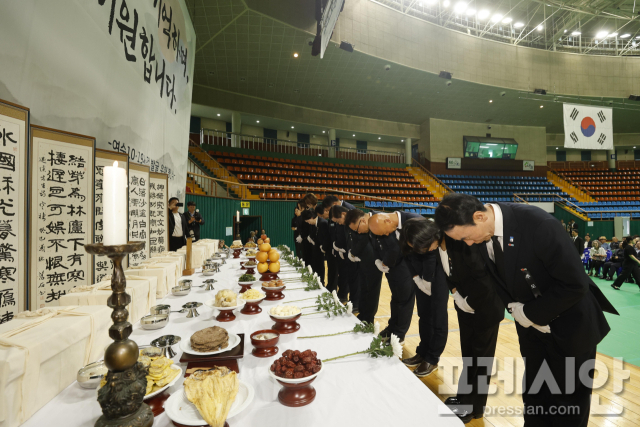
At 9:03 a.m. on December 29, 2025, an emergency alert sounded across Gwangju to mark one year since the plane accident at Muan Airport, which claimed the lives of 29 passengers. The alert invited residents to pause and observe a moment of silence in remembrance of the victims.
Approximately one hour later, a memorial ceremony was held at the airport site. Attendees included representatives from national and local governments, members of the National Assembly, emergency response personnel, bereaved families, and members of the public. The event focused on honoring those who lost their lives and acknowledging the ongoing impact of the tragedy on families and communities.
For many residents in Gwangju and South Jeolla Province, the anniversary served as a moment of collective remembrance, as well as a reminder of the importance of aviation safety and crisis response systems. City officials stated that the commemoration was intended to express public condolences and ensure that the victims are not forgotten.
Gwangju at CES 2026 in Las Vegas
CES 2026 officially opened on January 6 in Las Vegas, United States, bringing together companies, startups, and governments from around the world to present the latest developments in technology. This year, Gwangju City supported the participation of 17 Korean companies and startups, which joined the event through the Gwangju Joint Pavilion and the national K-Startup Pavilion.
Mayor Kang Gi-jung attended the opening ceremony online and delivered remarks highlighting Gwangju’s ambitions in artificial intelligence (AI), smart mobility, and future industries. CES (Consumer Electronics Show), widely regarded as the world’s largest technology exhibition, focuses on areas such as information technology, home appliances, mobility, healthcare, and emerging digital solutions.
For Gwangju, participation in CES was not only about showcasing products. City officials described it as an opportunity to promote the region itself as a growing innovation hub. During the event, several international trade agencies expressed interest in Gwangju’s AI and mobility projects, suggesting potential future cooperation and investment.
For residents, especially students and professionals interested in technology and startups, the city’s presence at CES signals continued efforts to position Gwangju on the global innovation map.
2025 Marks a Record Year for Gwangju
In 2025, Gwangju recorded its strongest performance to date in national evaluations and awards. Over the course of the year, the city received seven Presidential Citations, two Prime Minister Awards, and a total of 68 institutional recognitions for policies across multiple sectors.
Key areas of recognition included youth and education, where Gwangju achieved top ratings in the Regional Innovation-Oriented University Support System (RISE) and earned an A grade in evaluations of specialized “glocal” universities. In welfare policy, the city’s flagship “Gwangju-Style Integrated Care” program gained national attention, alongside the city’s certification as a UNICEF Child-Friendly City.
Gwangju was also recognized for its performance in safety and disaster response, and environmental and climate policy – including ranking first nationwide in the Carbon Neutrality Point System – and administrative innovation through data-driven governance. City officials noted that these awards reflect not only central government efforts but also collaboration with local institutions and organizations.
This recognition offers a snapshot of where Gwangju stands nationally and which policy areas the city is likely to continue prioritizing in the coming years.
Gwangju–South Jeolla Integration Talks Gain Momentum
Discussions on integrating Gwangju City and South Jeolla Province moved forward in early January, following a joint announcement by the mayor of Gwangju and the governor of South Jeolla on January 2. The proposal aims to create a unified regional government, potentially in time for the June 3 local elections.
To move forward, the two governments plan to submit a special law to the National Assembly by the end of February. If approved, voters in both areas would elect joint leadership under a new administrative structure. The final name and legal status of the integrated region – such as a “special metropolitan city” or a “super-metropolitan special self-governing province” – will depend on the wording of the law.
Supporters argue that integration could reduce administrative overlap, lower costs, and promote more balanced regional development. Critics, however, warn that pushing the process too quickly could create governance challenges and confusion for residents.
With apparent support from the national administration and coordination between the two local governments, the proposal remains a key political issue to watch in the coming months, especially as it may reshape regional governance in southwestern Korea.
The Compilers
Luis Andrés González is a Mexican GKS scholar and master’s student in cultural anthropology at Chonnam National University.
Amy Park is a coordinator at Asia Legal Resource Center Korea. She is currently living and learning in Gwangju with her son.
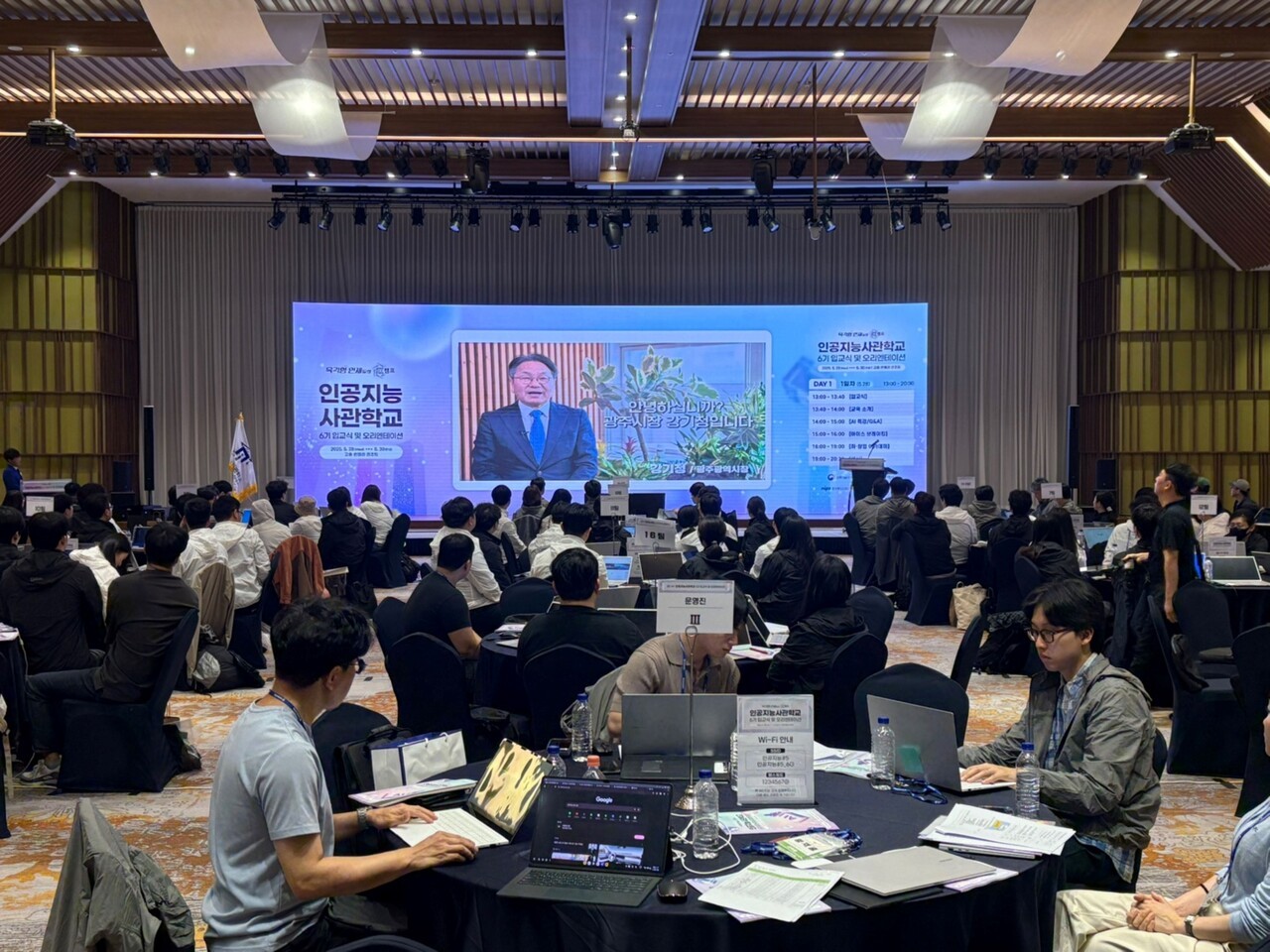
Cover Photo: Mayor Kang Gi-jung delivers a welcoming speech via video at the Gwangju AI Academy entrance ceremony. (Gwangju City Hall)