




From Hagwon to AI Tutor: How AI is Reshaping Education in Korea and Beyond
By Murdock O’Mooney ||
AI is reshaping the world of education. Students in Korea are increasingly turning to AI tutors, as they offer a cost-effective alternative to the traditional hagwon, with a 2025 study finding that 94 percent of Korean students use generative AI, and 80 percent report using it for academic purposes. While AI is convenient and undoubtably cheaper, educators express concern about its unethical use and effect on academic integrity, as well as about students losing the ability to think for themselves. As an educator myself, this is my greatest concern.
It’s no secret that hagwons, those ubiquitous private after-school academies, employ most of the foreign teachers in Korea and are the backbone of the $20 billion private education sector. There are also 80,000 hagwons in the country. That’s about one for every 645 people. However, hagwons are expensive. The average family spends around 600,000 won per month in hagwon fees, and tuition has increased more than 60 percent over the past decade.
Beyond this, three-quarters of all students in Korea attend at least one hagwon every day, making them arguably as vital to the education of students as public schools! And yet, wages in South Korea have stagnated, making it difficult for parents to afford hagwon tuition. AI tutoring platforms such as Riid, Mathpresso (Qanta), and Elice are far cheaper alternatives and use adaptive learning algorithms, that, they claim, are more effective in preparing students for the university entrance exam, or suneung.
In early 2026, FastCampus became the first private education provider in Korea to adopt OpenAI Edu. The company claims these new tools will handle the monotonous rote instruction of core subjects such as math, science, and English, while human teachers will be rebranded as learning coaches, managing students’ emotional well-being, motivation, and engagement. While all this sounds great, surely the number of hagwon teachers will decrease with the proliferation of AI tools such as FastCampus.
And yet, the public schools in Korea aren’t so convinced that AI is the best choice. They recently revoked a nation-wide implementation of AI textbooks, fueled by public outcry and a petition that garnered 56,000 signatures in 2024. Subsequently, lawmakers designated AI books as “supplementary materials” instead of “textbooks.” The use of AI textbooks is now up to individual schools, and so far, implementation varies greatly depending on the region. Daegu for example, has adopted AI textbooks in 98 percent of their schools, while cities such as Gwangju, only use them in 12 percent of their schools.
The United States uses Google Chromebooks, which often have built-in AI features powered by Google’s Gemini, in 93 percent of public schools. Other leading AI tutors include ChatGPT, and Khan Academy’s Khanmigo, which has been adopted by 570 school districts in the US and is used by over 100,000 American students and teachers. These platforms claim that AI isn’t about reinventing education but equipping it with modern AI tools to make it more effective.
Alpha School is another popular AI-driven school that claims students learn two to three times faster than traditional schools, only requiring two hours a day on academic subjects. The rest of the day is focused on projects, group work, music, and sports. Recent standardized testing results place many Alpha Schools (not all) among the top two percent of all high schools in the United States.
While Korean schools don’t use Chromebooks (or an equivalent) en masse yet, according to Stanford University’s Human-Centered Artificial Intelligence Institute (HAI), South Korea is ranked fourth globally in AI vibrancy only trailing India, China, and the United States. Beyond this, the AI education market in Korea is projected to reach $604 million by 2030, with an incredible compound annual growth rate of over 33 percent. Considering all this, it is projected that Korean students will become more reliant on AI tutors in the coming years. The good news is that Korea has the infrastructure in place to support this transition.
Korea’s impressive AI vibrancy ranking is partly due to the National Sovereign AI Initiative, which promotes domestic AI dominance from players such as LG, Samsung, and SK Telecom, while reducing dependence on foreign AI models. That’s to say, Korea is positioning itself as a global AI powerhouse, and as such, should be at the forefront of the AI revolution in education as well.
Personally, I have found it useful to address AI directly with my students, teaching a lesson at the beginning of the school year discussing ethical and unethical uses of AI in the academic setting.
I also remind them that to become good thinkers, they must think, and that no AI can do that for them. And as Plato said, “Thinking is the talking of the soul with itself.”
Further to this end, the article “How AI Helps Students Deepen Their Writing (Yes, Really)” in Education Week, highlights four rules for the use of AI in the ELA/ESL classroom. Rule 1 is to write without AI first. Rule 2 is to struggle on your own before turning to AI, Rule 3 is to prompt the bot (be specific), and Rule 4 is to question your AI results.
There’s no denying that AI is changing education in a big way. Will this mean the death of the hagwon? Probably not. Will the human teacher be a thing of the past? I certainly hope not. But we must pay attention and consider the possibilities of AI and the future of education, lest we get blindsided. And as the great education reformer John Dewey once said, “If we teach today as we taught yesterday, we rob our children of tomorrow.”
Sources
Almirall, E., & Nunez, A., SJ. (2025, July 14). AI and the disruption of higher education. Escade Business and Law School. https://dobetter.esade.edu/en/AI-disruption-education
Hanna, M. (2026, March 15). South Korea slows down AI education: Why the sudden shift? Friedrich Naumann Foundation. https://www.freiheit.org/ north-and-south-korea/south-korea-slows-down-ai-education
Kim, J. (n.d.). South Korea: Korean education technology and the wintermute model. Envisioning. https://www. envisioning.com/research/wintermute/south-korea-korean-education-technology
Smith, J. (2025, June 12). Opinion: How AI helps our students deepen their writing (Yes, really). Education Week. https://www.edweek.org/technology/opinion-how-ai-helps-our-students-deepen-their-writing-yes-really/2025/06
The Author
Murdock O’Mooney is an educator and writer based in Albuquerque, New Mexico. He promotes the ethical use of AI with his students and is curious to see the lasting impact of AI in education, and other fields, in the coming years.
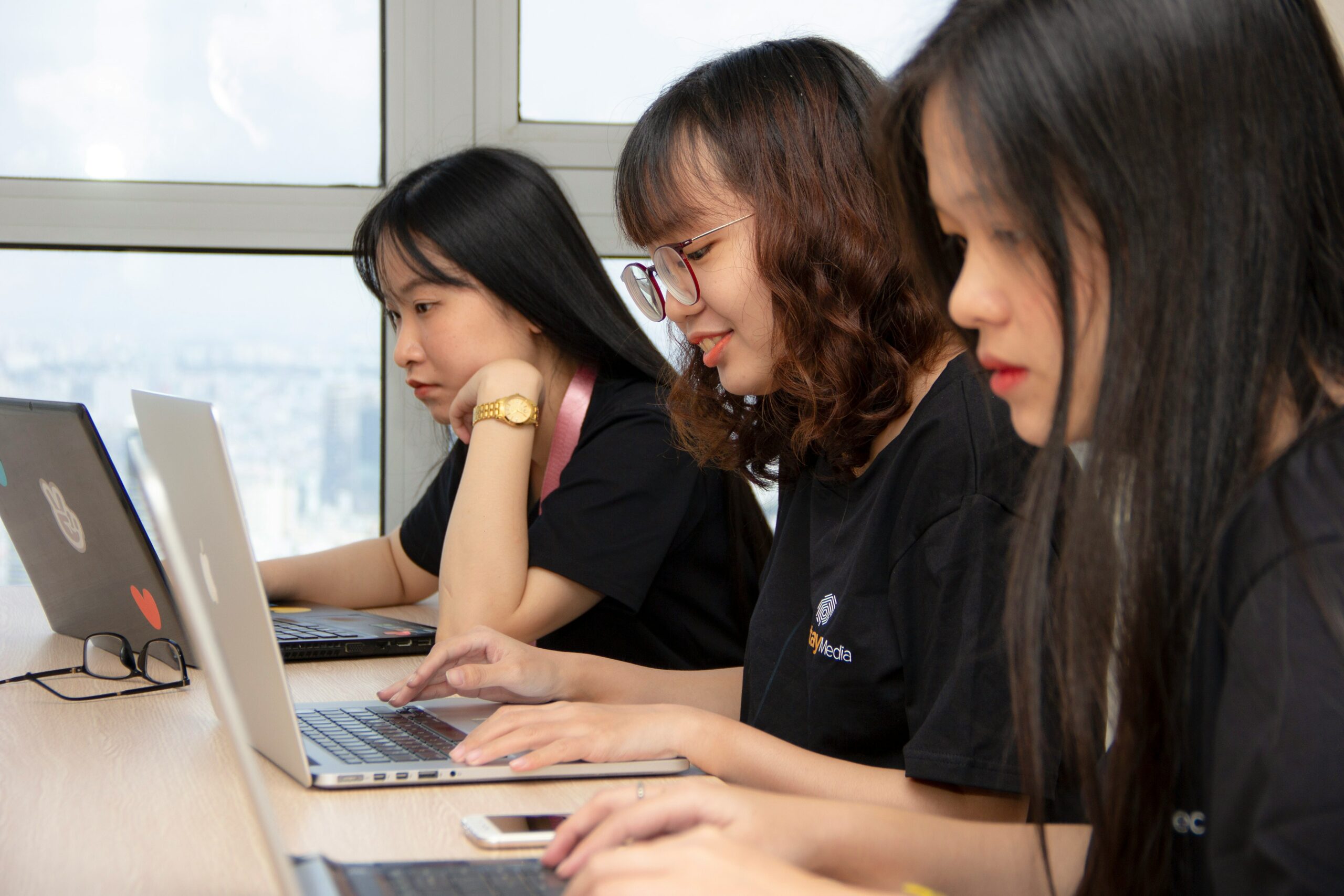
Cover Photo by Van Tay Media via Unsplash.