



A Different Light on Gwangju: Inside the Netherlands Pavilion of the 2026 Gwangju Biennale
By Luis Andres ||
The 2026 Gwangju Biennale is not confined to its main exhibition hall. Across the city, international pavilions have transformed different spaces into artistic encounters, inviting visitors to explore the contemporary art related to the Biennale and some corners of Gwangju they might otherwise overlook. One particularly charming example is the Netherlands Pavilion, where the exhibition itself is only half the discovery.
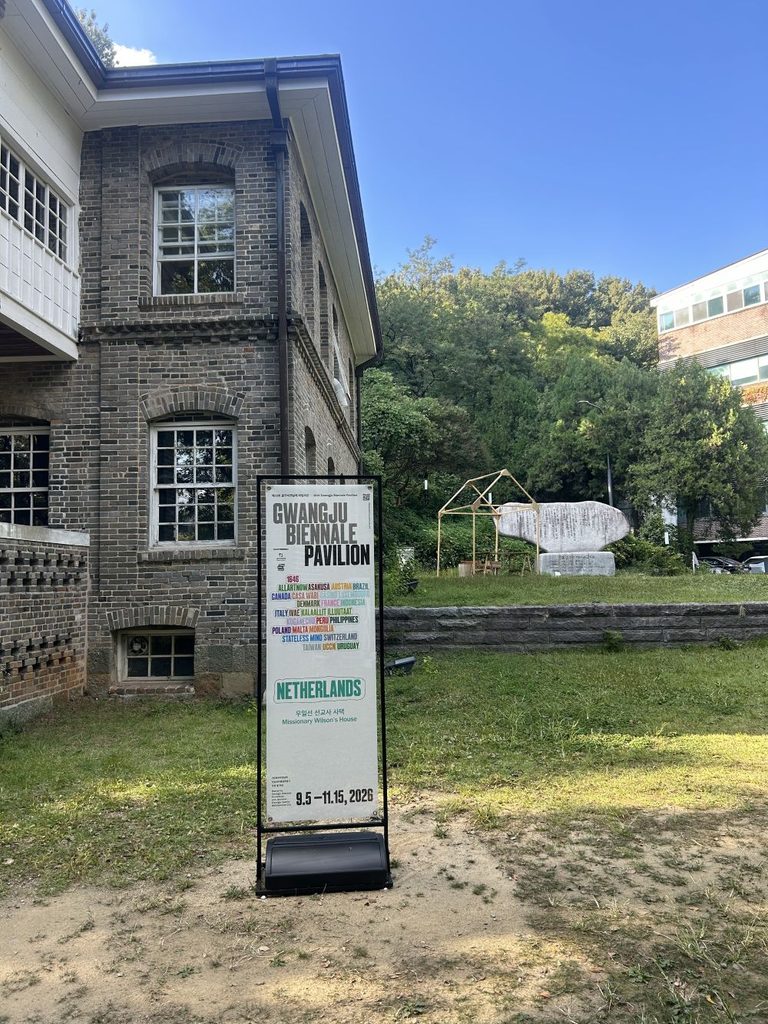
Only a small sign marks the Wilson House as the Netherlands Pavilion of the Gwangju 2026 Biennale.
Hosted at the historic Wilson House, the Dutch Pavilion offers an interesting example of how the Gwangju Biennale connects local history with global artistic conversations. The building, once associated with the city’s missionary community, tells a story of international encounters and migration long before Gwangju became the internationally recognized cultural city it is today.
With its Western-style architecture and Korean adaptations, the house is a reminder that the city’s international identity has a long tradition. It is history, shaped by generations of people arriving, settling, exchanging ideas, and leaving traces of their presence. And while many Gwangju residents may be familiar with the Biennale itself, fewer may have had the opportunity to explore this particular piece of the city’s architectural heritage.
But enough about the house. There is art to see!
The exhibition is relatively small, yet remarkably rich in sensory experiences. Rather than overwhelming visitors with monumental installations, it invites them to slow down, pay attention, and rediscover the extraordinary possibilities of seemingly ordinary things.
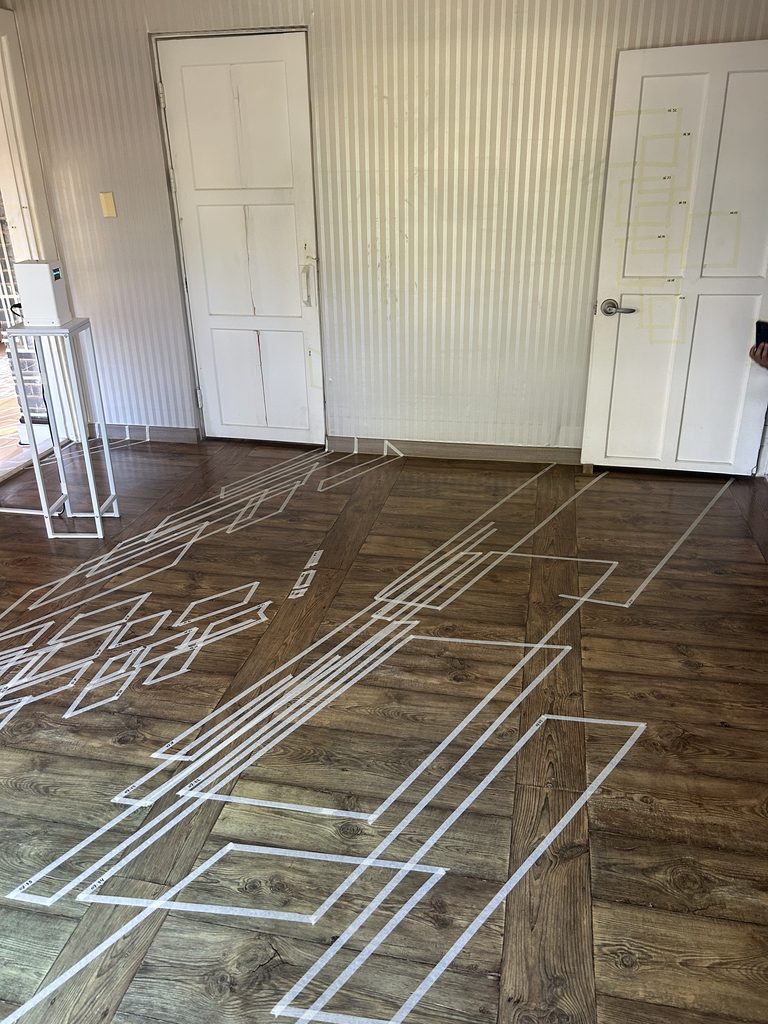
Sun tracing is not only an effort of contemplation for the artist but an effort to make a canvas of our surroundings and paint with our environment.
The experience begins with a cup of tea. A simple gesture, perhaps, but one that serves a purpose beyond hospitality. The tea welcomes visitors into the house while encouraging them to become more conscious of their surroundings through their senses. Before asking us to interpret the artwork, the exhibition asks us to be present.
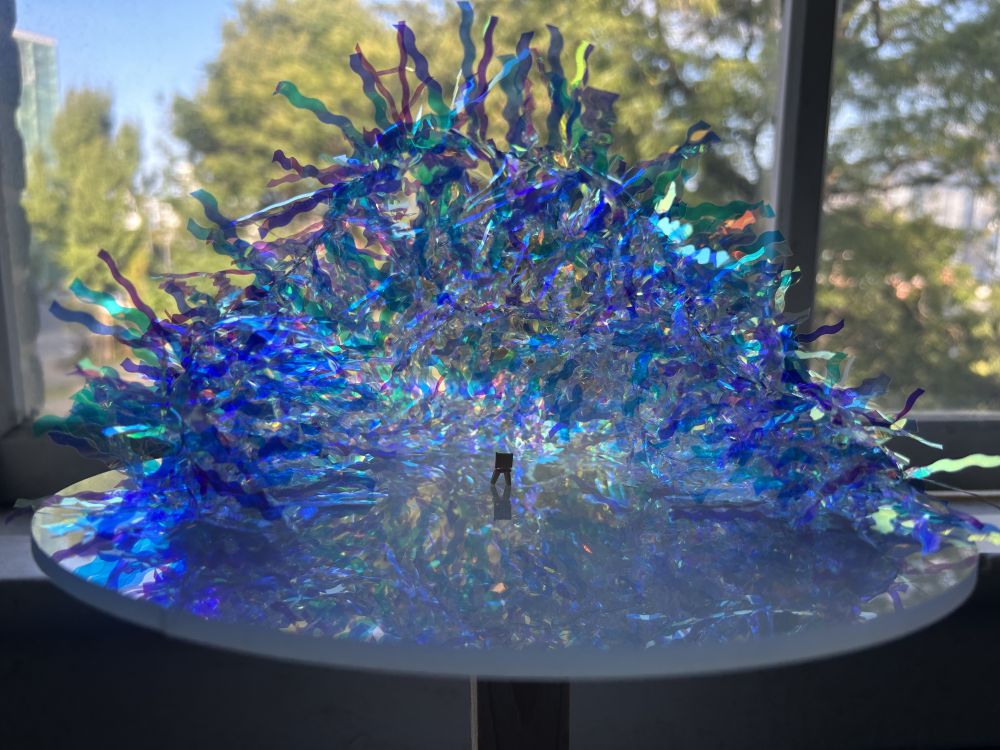
In the next room, everyday objects acquire unexpected meanings. A Coca-Cola can, for instance, can be transformed into the representation of a house, while colored paper evokes the crystalline formations of an imagined cave. Familiar materials become invitations to reconsider how meaning is created, how memories shape our perceptions, and how even the most unremarkable objects can become something worth contemplating.
Moving further into the installation, light becomes one of the exhibition’s principal artistic materials.
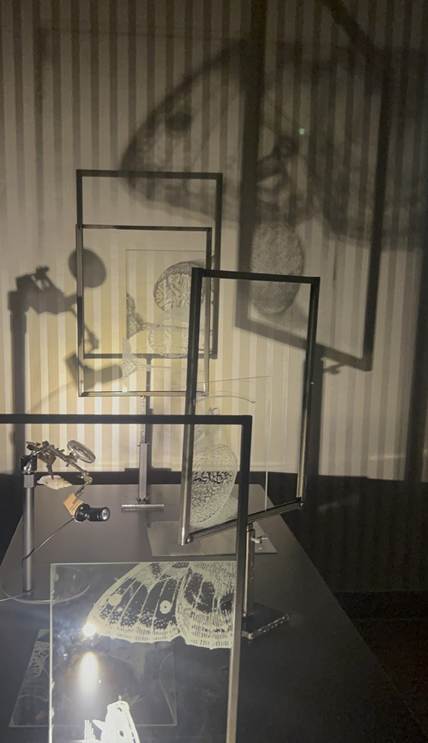
Light reveals the shadow behind what we think we see.
One of its most expansive works marks the movement of sunlight and the changing shapes of shadows throughout the day. Here, the walls of the house become a canvas, while the shadows become the paint. The artwork is never entirely static: As the sun moves, the building itself participates in the composition.
Another installation takes this fascination with light outdoors. A fog machine produces artificial clouds that interact with the sunlight entering the property. Depending on the position of the sun, the mist becomes illuminated or backlit, creating an ephemeral imitation of the sky. It is a beautiful reminder that even something as familiar as a cloud can become extraordinary when we take a moment to observe how light gives it shape.
The exploration continues in a series of darker rooms, where moving light projectors and carefully selected sounds encourage visitors to connect projected images with their own imagination. The experience is atmospheric, immersive, and occasionally a little unsettling. Apparently, contemporary art can also make you wonder whether you accidentally wandered into a ghost story.
Among the most intriguing pieces is a poetry book written in white ink on white pages. Its words cannot be read in the usual way. Instead, visitors must catch the light at just the right moment, using the shifting illumination to uncover what would otherwise remain invisible. It is a simple but powerful idea: Not everything is visible all the time, and sometimes understanding requires us to change the way we look.
This thought seems particularly appropriate for an exhibition hosted in a historic house that many people may have passed without noticing. Just as the artwork reveals unexpected meanings through light, the Netherlands Pavilion invites visitors to rediscover a piece of Gwangju’s own history.
The exhibition also offers a refreshing contrast to the scale and intensity often associated with international art events. It does not demand that visitors understand every artistic reference or arrive with extensive knowledge of contemporary art. Instead, it encourages curiosity, patience, and a willingness to experience something unfamiliar.
“The Netherlands Pavilion invites visitors to rediscover a piece of Gwangju’s own history.”
For those planning a visit, reservations are recommended to avoid waiting, as admission is organized through appointments. I would also suggest choosing a time when the sun is shining brightly. Natural light plays an important role in several installations, and a sunny day allows visitors to appreciate the interaction between the artworks and the architecture more fully.
Besides, the outdoor soundscape can make the house feel just a little spooky. Personally, I would rather contemplate the poetry of shadows than start questioning whether the missionaries left behind any ghosts.
Ultimately, the Netherlands Pavilion is a reminder that the Gwangju Biennale is not simply about bringing international art to the city. It is also about encouraging us to look at Gwangju itself differently.
Sometimes, discovering something new does not require traveling somewhere unfamiliar. It only requires a different light.
The Author
Luis Andrés González is a Mexican GKS scholar and master’s student in cultural anthropology at Chonnam National University. He advocates for LGBTQ+ rights and gender equality, and explores global affairs through pop culture. He is the founder of Erreizando, a digital magazine. Instagram: @luisin97 / @erreizando
(Photographs by the author)
Cover Photo: Small things can seem enormous and majestic depending on the perspective.