

Book Review: The Island of Sea Women
Reviewed by Michael Attard ||
- The Island of Sea Women
- By Lisa See
- 400 pages, Scribner, 2020
All Koreans, and anyone who visits Korea for any length of time, know about Jeju Island, situated off the south coast. The island encompasses more than 1,800 square kilometers, and today is a year-round holiday destination. But there is one description of the island from the past that is still widely used, and that representation is the island of “wind, stone, and women.” It is the third of these elements – women – that serves as the basis for this historical fiction. But these are no ordinary women, these are the sea women, known in Korean as the haenyeo (해녀).
The story begins in 1938, submerged in the era of Japanese colonialism, which lasted until 1945 with the end of World War Two. But this is neither the conclusion of the story nor the end of violence for the people of Jeju. The struggle for freedom has been encapsulated for history by referring to a single date, April 3, 1948, and called the Jeju Island Incident. But the conflict actually lasted for more than a year, and thousands of innocent people were killed. The Jeju Island Incident serves as the focal point of this story. For the sake of clarity, though, it is worth remembering that the Korean War began in June 1950 and stretched the pain forward for another three years.
The main character is Kim Young-sook. She is a haenyeo, and she has learned from her mother how to swim, endure the cold, hold her breath, and collect the harvest of the sea. The events of the past are spoken in her voice. The author, Lisa See, has not presumed that anyone other than Young-sook can tell her story. There are, however, other chapters chronicling a mere four days, which pull away from the past but tie the history to the current moment: the year 2008. These are related by a narrator who explains what is happening to Young-sook when she is approached by a family who are seeking her forgiveness.
At the heart of the book is the relationship between Young-sook and Mi-ja. They meet as young girls on the day that Young-sook and her mother catch Mi-ja stealing sweet potatoes from their garden. This transgression is forgiven, and friendship buds. But the relationship is cemented on the day that Mi-ja defends Young-sooks’ mother in front of Japanese soldiers. After this occurred, Young-sook describes the relationship succinctly: “We were as close as a pair of chopsticks.”
The years pass and the friends are still young, but, as was common for the times and culture, their thoughts turned to marriage. Young-sook’s grandmother arranges the marriages for both girls. Young-sook marries a local man, Jun-bu, who she has known all her life, but Mi-ja marries an outsider. This man, Sang-mun is handsome, and his family is rich. But they are also known to be collaborators with the Japanese. The engagements are bittersweet for the two young women. As Mi-ja says, “We wanted to marry boys in Hado, (their hometown) so we would always be together.”
Mi-ja moves away but life circumstances bring them together from time to time. They continue to share their thoughts and feelings. Mi-ja reveals that “things are not good with my husband.” Both women experience doubt about their self-worth. Young-sook’s husband becomes a teacher. She says, “I’ll always be a fool to him.” Her grandmother slapped her. “You are a haenyeo! Never for one moment believe you are unworthy.”
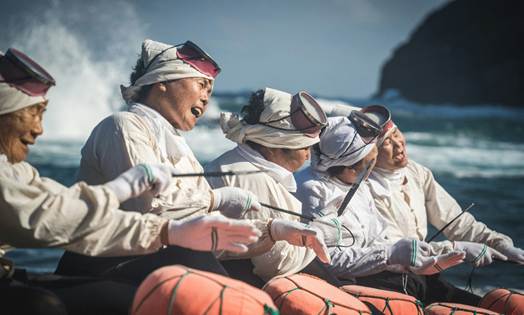
Jeju women of the sea performing their pre-diving ritual. (John Ko, Unsplash)
Throughout the book, the reader learns about what the life of the haenyeo is like. From a modern perspective, it is almost impossible to conceive of what these women endured. Their job was seriously dangerous, and many women died in the sea.
The two women bear children and World War Two comes to an end. But it seems that little has changed. As Young-sook reflects upon the situation, she concludes, “One colonizer had been replaced by another.” Her husband, Jun-bu grumbled, “They (the Americans) want us to accept their form of democracy, with an American-backed dictator.” The people of Jeju wanted to hold their own elections, and for this they were labelled “Little Moscow.”
The infamous date, April 3, 1948, arrives as the climax of the story. Young-sook and Mi-ja’s lives are changed forever. For Young-sook, adding to her physical loss is the overwhelming sense of betrayal by Mi-ja. Young-sook felt that a knife had been thrust into and turned in her belly.
The chapters, recounted by a narrator, place the reader on a Jeju beach sixty years after the infamous 4/3 date. A Korean woman and her American-Korean daughter have sought out Young-sook. The two women are Mi-ja’s granddaughter and great granddaughter. What follows is, in a sense, explanation, or filling in blanks, that Young-sook was not aware of. The author has done this not by offering excuses, denying, or counter arguing details. Rather, the two women from America ask Young-sook for forgiveness for Mi-ja because Mi-ja had her human failings but never for a moment stopped loving or intentionally abandoned Young-sook.
This is a story of forgiveness, and even though it takes sixty years, Young-sook’s heart is finally touched. Young-sook eventually comes to question her anger. She comprehends the truth spoken by the local shaman: “You are not being punished for your anger. You’re being punished by your anger.” The realization comes to Young-sook that she, for her part, has also failed Mi-ja. She contemplates the present moment, knowing that “she doesn’t have much time left to love or hate or forgive.” For the reader, the author has created a cathartic experience. Freedom comes for Young-sook. “She feels excruciating pain as decades of sorrow, anger, and regret she’s carried within her begin to shatter and melt.”
The Reviewer
Michael Attard is a Canadian citizen but has lived in Gwangju for over twenty years. He has taught English as a second language in academies and within the public school system. He is officially retired and spends time reading, writing, hiking, and spending time with friends.
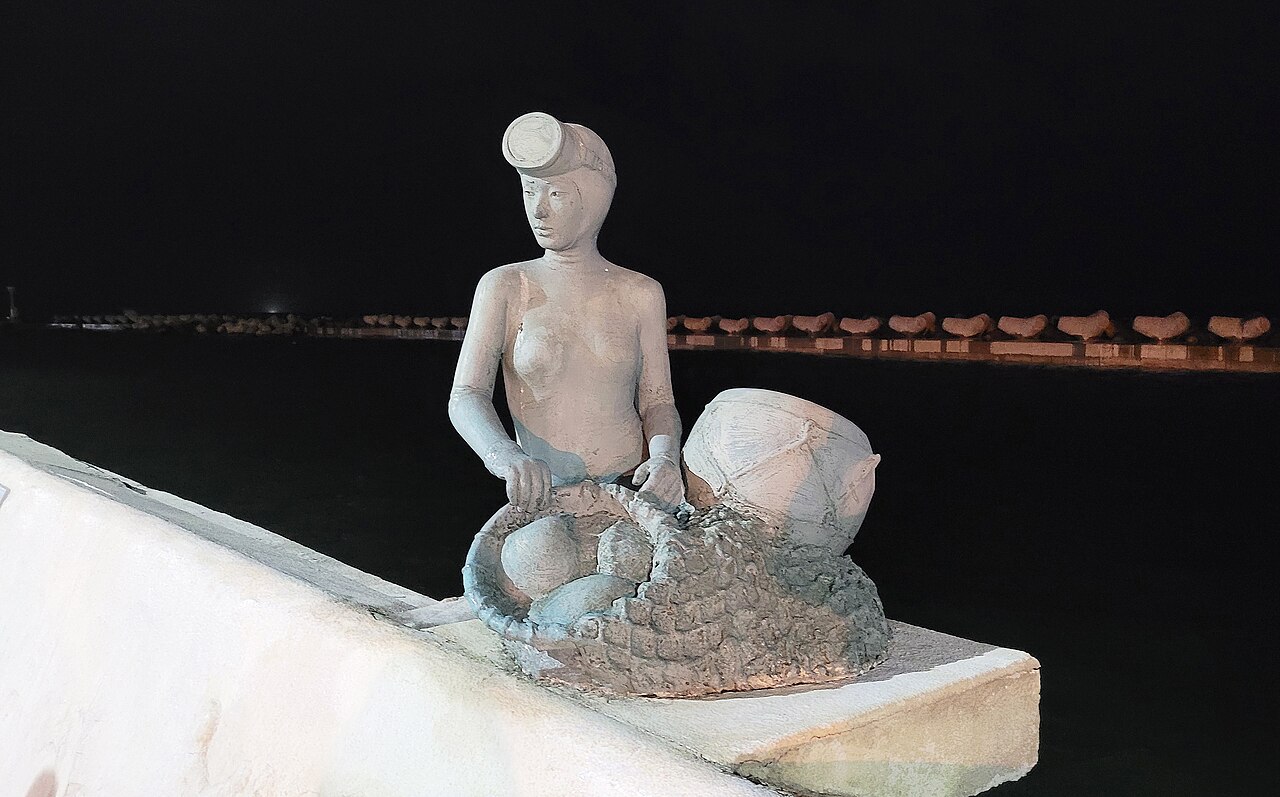
Cover Photo: Statue of haenyeo in Jeju City. (Bernard Gagnon)