




Movie Review: Silenced – A Hearing of the Unheard
By Farrukh Anique ||
In 2005, a scandal broke in Gwangju, one that would later be retold as Dogani (도가니). The principal of a special school for children with speech and hearing impairments, along with members of the school administration, was accused of sexual assault and physical violence against students. The person who blew the whistle was a teacher from within the same school, accompanied by members of a human-rights organization. Many of the accused, including the principal of Gwangju Inhwa School, were acquitted, others escaped punishment as the statute of limitations expired, and even those convicted often saw sentences reduced, light enough that several found their way back to work.¹
In 2009, Gong Yoo – the actor many now recognize as the salesman from Squid Game – was serving in the military. In those quiet pockets of military life, he read a novel titled Dogani (The Crucible). In Korean, “dogani” literally means “crucible”: the vessel in which metal is melted down. But the word also carries a more human meaning: a slow boil, the psychic heat that forces a person to change, to move, to act.
That novel was written by the Korean novelist Gong Ji-young, inspired by the same Gwangju Inhwa School scandal. When Gong Yoo read it, it struck him so deeply that he contacted the author and asked her to bring the story to the screen, insisting that he wanted to play the role of the whistleblowing teacher. Director Hwang Dong-hyuk shaped it into a screenplay with the novelist and directed the film.
The film unfolds in a fictional city called Mujin, described as a city of white fog. This invented place is attributed to the renowned Korean novelist Kim Seung-Ok, who used the name for the first time in his novel A Journey to Mujin (Mujin Gihaeng), turning the white fog into a metaphor for moral ambiguity. After that, Mujin reappeared across novels and films, carrying the same suggestion: a place where right and wrong lose their sharp edges, where clarity dissolves into mist.
A new teacher, Kang In-ho, arrives in Mujin from Seoul to work at the special school. On his very first day, he is asked for a bribe to secure his position, money his mother raises by cashing out what little she can, down to the deposit on her home. In the early days, he notices that the children in his class come to school with bruises and wounds on their faces and bodies; they sit in silence, sad and withdrawn. Then, one day, he sees the hostel warden dunking a small girl into a washing machine. He pulls her out, rushes her to the hospital, and brings along his friend Yoo-jin, who is also a member of a human-rights organization. The girl writes on paper and tells Yoo-jin that the principal tried to sexually assault her. The doctor’s report confirms it: “The child is badly injured, the wounds bearing the mark of sexual violence.”
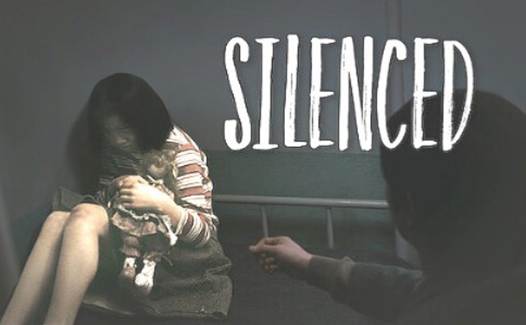
Yuri clings to her favorite doll as Kang In-Ho gently approaches her. (IMDb)
At first, Kang In-ho is so stunned he almost mistakes it for some grotesque misunderstanding. But once he reads the report, scattered pieces begin to click into place. Another girl tells them that they have already told the police, but the police always send them back to the same school. A boy tells them that a teacher also sexually abuses the boys, and that both he and his late younger brother were victims.
When In-ho and Yoo-jin go to the police, they are met with a chilling dismissal: The principal is a senior member of the church, a devout man, a pillar of the community. How can such an accusation be made, they imply, on the testimony of a few deaf children? From city hall to disability institutions, their pleas find no ear willing to listen.
In the end, they call in a TV channel, record interviews with the children, and broadcast them. Public pressure finally forces the system to stir, and three people, including the principal, are arrested. But then the familiar spectacle begins: influence, money, connections, the old machinery that turns wherever the gulf between rich and poor, strong and weak, is so wide that even the bridge of law cannot span it.
By the end, the film shows the triumph of the oppressor. The voice of the victim is muffied, and in this case, the victim is already one that literally had no voice. To silence such children, the speaking world doesn’t even need to work hard. Looking away from helpless children making gestures with their tiny hands is enough.
The last scene ends with an image of Mujin: white fog everywhere. Kang In-ho stares at it, carrying a strange blend of despair and stubborn hope. The film leaves the viewer with suffocating pressure in the chest. You feel as though the helplessness of In-ho, Yoo-jin, and those innocent children has slipped out of the screen and entered you. For a moment, it is as if you yourself have become deaf and mute, bound hand and foot with Scotch tape in the principal’s office, while that grotesquely ugly principal tears at your tiny body with a brutality that makes your skin crawl.
That was the film’s success. That is what the makers wanted: that you feel, however briefly and imperfectly, what those children felt.
The film was released in September 2011, and for weeks cinemas were packed. People left the theater carrying that heaviness home, unable to shake it, unable to sleep it off. Eventually, the pressure escaped in the form of protest, and the city administration of Gwangju came under such scrutiny that, within just two months of the film’s release, the school was shut down. Several cases were reopened, and punishments were handed down again. One accused person was sentenced to twelve years in prison.
More significant than all of this was what happened next: Korean lawmakers changed the law related to sexual violence and passed a new bill. In the “Dogani Bill,” the statute of limitations was abolished for sexual abuse cases involving minors (the statute of limitations being the period after which legal action can no longer be taken). Previously, proving sexual assault required proving that the victim was not capable of resisting, an almost impossible burden in many cases. The Dogani Bill removed that clause and made “proving incapacity to resist” unnecessary. Earlier loopholes allowed cases to collapse when victims withdrew complaints after settlements; legal reforms moved toward prosecution without depending on a victim’s petition.²
It was a tremendous victory: In-ho’s victory, Yoo-jin’s victory, and a victory for every abused child whose voice the state refused to hear simply because they could not speak. Their voices were heard; heard in courtrooms, heard in state institutions, and echoed beyond borders. Few examples demonstrate more clearly the reach of art and media, and the positive role they can play in society.
The film is shot with remarkable craft. Its deep, quiet palette gives it the texture of a horror film; and what horror is greater than sexual violence? The actors, especially the children, perform with devastating force. To convey panic, resentment, dread, and exhaustion without dialogue is not easy; the children accomplished it with heartbreaking precision.
The character of teacher Kang In-ho is compelling because he feels real. He is not a cinematic superhero or a mythic savior. He is an ordinary man, like you and me, offered many chances to be brave, yet repeatedly caught by calculation and fear. The war between convenience and conscience is not easy for him. This conflict, this riddle of what a person owes to the vulnerable, Gong Yoo often delivers without words, with nothing but a shift of expression. The peak of his craft is visible here.
Many scenes stay with you, but two carry the weight of the entire film.
In one, a deaf boy who has been accompanying his teacher and attending court, hands the teacher a sheet of paper. He writes that everyone says his little brother ran away from the hostel and was accidentally hit by a train. But it wasn’t an accident; it was suicide. The boy took his own life because he could no longer live inside that torment. Then the older brother breaks down, sobbing until the air itself seems bruised. There is a pain in that moment that sits on your heart for days: A child who cannot speak, carrying that burden in silence for so long, and when it finally spills out, it comes like floodwater.
In another scene, police fire water cannons at deaf protesters to scatter them. Teacher Kang stands holding the photograph of the child crushed under the train and shouts at the citizens: “His name was Min-su. He couldn’t speak; he couldn’t hear.” The torrent knocks him down; he rises and says it again. He falls; he rises; again and again, he repeats the same two lines. That scene shakes the collective conscience of society and delivers a brutal message: You don’t have to do much; only speak these two sentences. “His name was Min-su. He couldn’t speak; he couldn’t hear.”
Sources
- ¹ Editorial. (2011, September 30). No leniency on sex crimes. The Korea Herald. https://www.koreaherald. com/article/10348563
- ² Kim, R. (2011, October 28). National Assembly passes “Dogani Law.” The Korea Times. https://www. koreatimes.co.kr/southkorea/20111028/national-assembly-passes-dogani-law
The Author
Farrukh Anique is a PhD student immersed in mechanical engineering at Chonnam National University. Originally from Pakistan, he’s not all about gears and equations though. He’s got a real love for the performing arts, culture, literature, and languages. He is an amateur theater actor, a short-story writer, and he speaks five languages. In his spare time, he dives into Korean culture and history, soaking up the vibrant traditions and stories that spark his curiosity. Oh, and he absolutely loves strawberries.
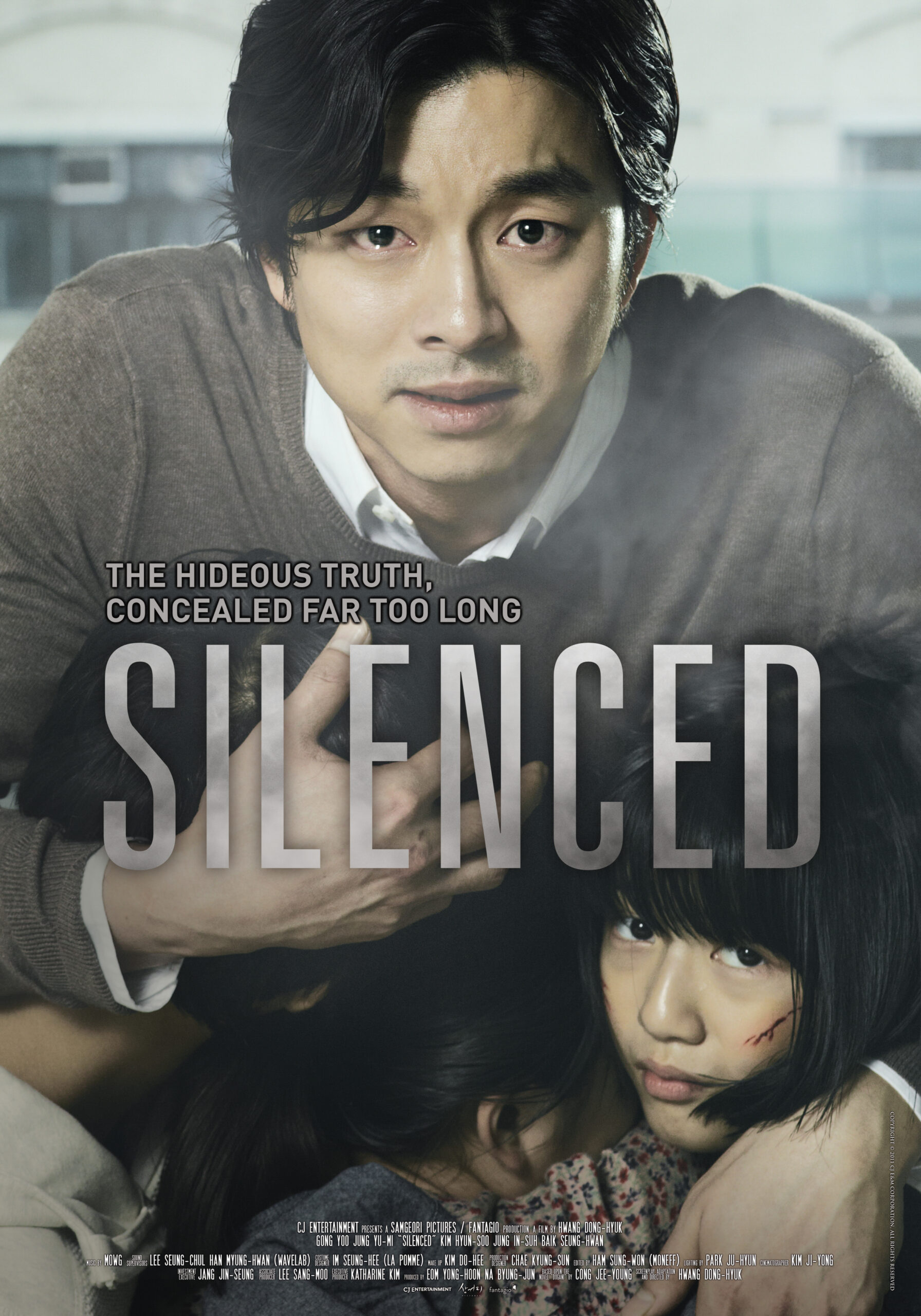
Cover Photo: Official film poster. (IMDb)