


The Spirit of May: How Gwangju’s 5.18 Still Shapes Korea’s Democracy
By Vibhanshu Maurya ||
Walk through the streets of Gwangju and one number appears again and again: “5.18.” It appears on memorial parks, museum walls, street banners, and civic events across the city. For residents of this southwestern Korean city, the number is more than a date. It represents a memory of sacrifice, a moral reference point, and a reminder of a moment when ordinary citizens stood up to defend democracy.
Visitors often ask a simple question: Why does an event from more than four decades ago still shape how Koreans think about democracy today?
The answer lies in the enduring legacy of the May 18 Democratic Movement, a turning point in South Korea’s modern history that transformed a local tragedy into a national symbol of democratic courage.
A City That Rose
The events of May 1980 unfolded during one of the most turbulent periods in South Korea’s political history. After years of authoritarian rule, the country was placed under expanded martial law by the military regime led by Major General Chun Doo-Hwan.
Universities were closed, political activities banned, and dissent suppressed. On May 18, students at Chonnam National University gathered to protest the closure of their campus and the tightening grip of military rule. Their demonstrations were met with brutal force as paratroopers were sent to disperse the crowds.
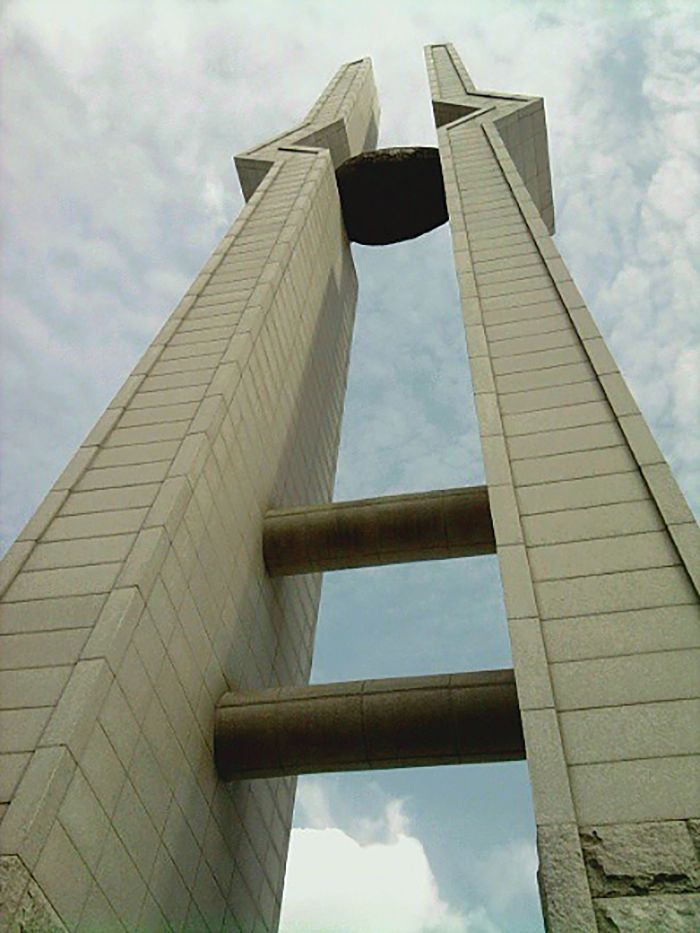
May 18 Memorial Tower at the May 18th National Cemetery.
What began as a student protest quickly spread throughout the city. Citizens, taxi drivers, shopkeepers, office workers, and parents joined the demonstrations, outraged by reports of violence against students. As tensions escalated, Gwangju became the center of a broader civilian resistance. For several days, the city was effectively cut off from the rest of the country. The military eventually retook control, and hundreds of people were killed or injured.
For years afterward, the government suppressed the truth about what had happened. Only after South Korea began its transition toward democracy in the late 1980s did the full story of the uprising emerge. What had once been portrayed as a disturbance was gradually recognized as a powerful struggle for democratic freedom.
The Meaning of the “Spirit of May”
In South Korea, the phrase “Spirit of May” (o-wol jeongsin, 오월 정신) refers to the values that emerged from those days in Gwangju. At its core, the Spirit of May represents a belief that democracy depends on the courage and responsibility of ordinary citizens. It reflects a willingness to stand up for justice, even when the consequences are uncertain or dangerous.
The uprising also revealed an extraordinary sense of solidarity. During the crisis, residents supported one another in ways that transcended social divisions. Taxi drivers formed convoys to help protesters move around the city. Citizens donated food and medical supplies to injured demonstrators. People who had never met before suddenly found themselves united by a shared commitment to protecting their community. These experiences left a lasting moral imprint on Korean society.
Over time, the Spirit of May came to symbolize four key values: civic courage, solidarity, sacrifice, and moral resistance against authoritarian power. These ideals have since become woven into South Korea’s broader democratic identity.
From Tragedy to Transformation
Although the uprising was violently suppressed, its legacy did not fade. Instead, it became a powerful catalyst for South Korea’s democratization movement. The memory of Gwangju inspired activists, students, and citizens across the country who continued to push for political reform.
Seven years later, mass demonstrations erupted nationwide during the June Democratic Struggle. Millions of Koreans took to the streets demanding constitutional reforms and direct presidential elections. The protests forced the government to introduce sweeping democratic changes, marking the beginning of South Korea’s transition toward a modern democratic system. In this sense, the sacrifices of Gwangju helped shape the democratic institutions that exist in South Korea today.
A Culture of Civic Participation
The legacy of May 18 has also contributed to a distinctive feature of South Korean political culture: a strong tradition of civic participation. Public demonstrations are not unusual in Korea, but many of them are notable for their peaceful character and broad participation.
A striking example occurred in 2016–2017, when millions of citizens gathered in candlelight protests calling for the impeachment of then-president Park Geun-hye. Night after night, crowds filled central Seoul carrying candles and light sticks. Families attended together. Musicians performed, and citizens held signs calling for accountability and constitutional governance.
The demonstrations remained peaceful, and eventually the National Assembly voted to impeach the president, a decision later upheld by the Constitutional Court. Observers around the world praised the protests as a model of peaceful democratic action. For many Koreans, the candlelight movement echoed the lessons of Gwangju: that citizens have both the right and the responsibility to defend democratic institutions.
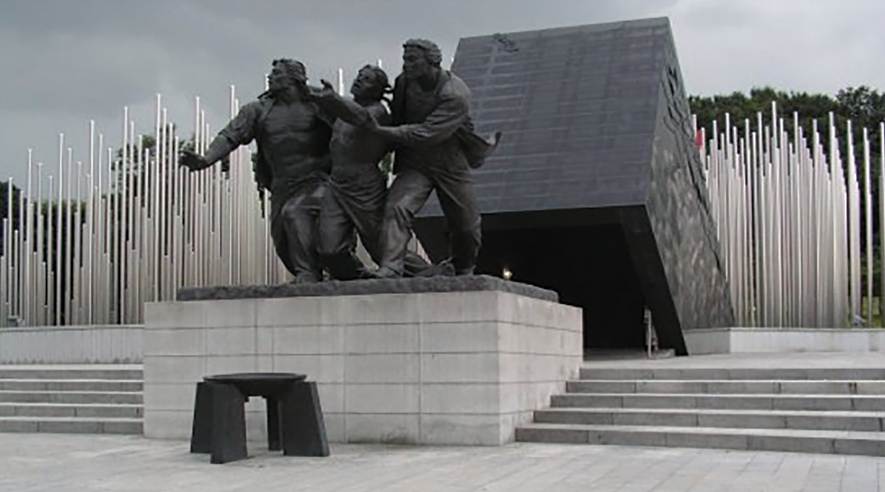
May 18 Memorial in Gwangju. (Bohemianvegan, [1])
The Spirit of May in Today’s Korea
The influence of the Spirit of May continues to be visible in contemporary Korean politics. One recent example came during the political crisis of December 3, 2024, when the government attempted to impose martial law in response to escalating political tensions. The announcement triggered widespread concern about the potential erosion of democratic norms. Within hours, citizens began gathering in large numbers to voice opposition and demand that democratic procedures be respected.
The rapid mobilization of the public, along with strong responses from democratic institutions, led to the restoration of constitutional order. For many observers, the episode illustrated how deeply civic vigilance has become embedded in South Korean society. Some scholars even suggested that the peaceful public response demonstrated a democratic maturity shaped by decades of historical experience.
In discussions that followed the crisis, commentators noted that South Korean citizens had once again demonstrated a commitment to defending democratic principles. The idea that civic participation could serve as a safeguard for democracy led to conversations about recognizing the Korean public’s actions on the global stage, including suggestions that citizens be considered collectively for the Nobel Peace Prize. While such recognition remains symbolic, the discussions highlighted how Korea’s democratic culture continues to attract international attention.
“Many scholars say the Spirit of May 18 teaches an important lesson: Democracy survives only when citizens care enough to protect it.”
Gwangju as a Global Symbol
Today, Gwangju has embraced its history and transformed it into a message for the world. The city now promotes itself as a center for democracy, human rights, and peace. Visitors from around the globe come to learn about the history of the uprising and its lessons for democratic societies.
One of the most significant memorial sites is the May 18 National Cemetery, where many victims of the uprising are buried. Each year, thousands of people, including national leaders and international visitors, gather there to honor those who lost their lives during the movement.
Building on this legacy, Gwangju has also transformed the painful memory of May 1980 into a platform for global dialogue on democracy and human rights. One example is the World Human Rights Cities Forum (WHRCF), an international gathering hosted annually in the city. Established in the spirit of the May 18 Democratic Movement, the forum brings together mayors, policymakers, activists, scholars, and international organizations to discuss how cities can promote and protect human rights in everyday governance. Participants from around the world share experiences on issues ranging from migration and social justice to climate change and digital rights. In this way, the legacy of May 18 extends beyond historical remembrance. It becomes a living platform for global cooperation, reinforcing Gwangju’s identity as a city committed not only to remembering democratic sacrifice but also to advancing human rights in the present.
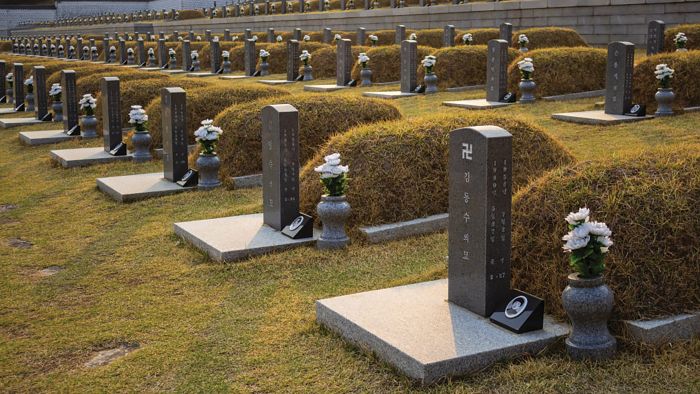
Graves at the May 18 National Cemetery. (Sarah Pittman/GN)
The story of Gwangju has also gained recognition beyond Korea. Scholars, activists, and students study the uprising as an example of how citizen movements can influence democratic transformation. The city regularly hosts international conferences on human rights and democracy, ensuring that the lessons of May 1980 continue to resonate globally.
“The strength of a democracy ultimately depends on the spirit of its citizens.”
A Living Legacy
More than four decades have passed since the events of May 18, yet the memory of those days remains deeply woven into South Korea’s democratic identity. For many Koreans, the Spirit of May is not simply about remembering the past. It is about recognizing the responsibility that comes with living in a democratic society.
The uprising reminds citizens that democratic institutions are not self-sustaining. They require vigilance, participation, and a willingness to stand up for fundamental values when those values are threatened. The legacy of Gwangju demonstrates that democracy is not only built through laws and elections but also through the moral courage of ordinary people.
As the story of May 18 continues to be shared with new generations, its message remains clear: The strength of a democracy ultimately depends on the spirit of its citizens.
The Author
Vibhanshu Maurya, originally from India, is pursuing his PhD at CNU. He leads a vibrant lifestyle, driving his motorbike across the Korean Peninsula. He directed the Gwangju Hikers group and created podcasts that explored the challenges of residing in Korea and strategies for overcoming them.