

Gwangju City News – May 2026
The Spirit of May 18 at a Constitutional Crossroads
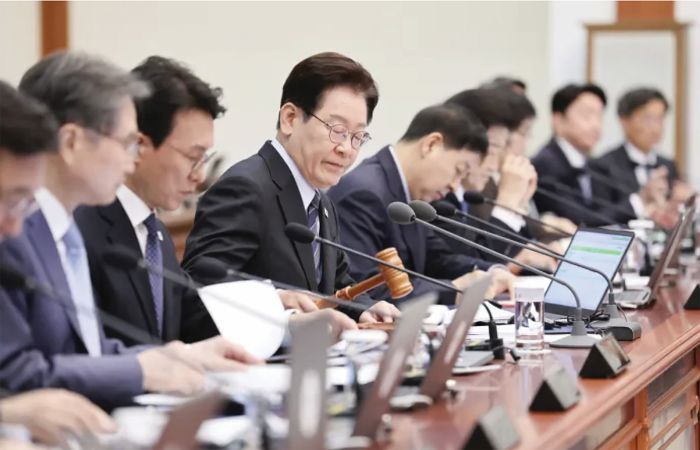
Constitutional Amendment Public Notice approved by the National Assembly, April 6, 2026. (The Blue House)
A narrow window has opened for South Korea to enshrine the spirit of May 18 in its constitutional preamble – and it may close before the anniversary itself arrives. With the June 3 nationwide local elections approaching, the National Assembly must pass a constitutional amendment between May 4 and 10 to allow a concurrent referendum. If that window is missed, the next realistic opportunity likely depends on the outcome of the 2028 general election.
On April 6, six parliamentary parties – led by the ruling Democratic Party of Korea – formally submitted the amendment bill, signed by 187 lawmakers. President Lee Jae-myung approved the official promulgation notice, triggering a mandatory 20-day public announcement period under Article 129 of the Constitution. Under Article 130, a national referendum must follow within 30 days of the Assembly’s vote, making early May passage the only viable path to a June 3 referendum.
The proposed revision would expand the preamble to explicitly name the Buma Democratic Uprising and the May 18 Democratization Movement alongside the existing reference to the April 19 Revolution. It would also strengthen parliamentary oversight of presidential martial law declarations, requiring immediate National Assembly approval and rendering any unapproved declaration automatically void within 48 hours. Passage requires a two-thirds supermajority – at least 197 of 295 sitting members.
Gwangju’s Military Airport to Relocate to Muan
South Korea’s Ministry of National Defense officially designated Mangun-myeon in Muan County as the preliminary relocation site for Gwangju’s military airport on April 2 – the first formal administrative step in a process that began 18 years ago. The announcement follows the formation of a six-party consultative body last year comprising key ministries and local governments, which issued a joint declaration in December confirming the relocation framework.
Under the agreed “contribution-for-transfer” model, Gwangju will fund and construct a new military airbase to hand over to the Defense Ministry, receiving the existing Gwangju Airport site in return. Muan County will receive over one trillion won in support funds. Final confirmation will require community impact assessments, public hearings, and a referendum among Muan residents, with majority approval triggering the county’s formal application to host the base. The process is expected to be driven by the inaugural mayor of the newly unified Jeonnam-Gwangju Special City, launching on July 1 following the June 3 local elections.
The relocation is the centerpiece of a sweeping overhaul of regional aviation infrastructure. Gwangju Airport currently serves as both a domestic hub and the home base of the Air Force’s 1st Fighter Wing, but faces hard limits on growth due to noise complaints and urban height restrictions. International routes have already been transferred to Muan International Airport, with domestic operations continuing at Gwangju until the military transition is complete.
Muan International Airport is set for major upgrades, including runway extension to over 3,160 meters and a KTX rail link directly to the terminal that is due to open in 2027. Once the Gwangju Airport site is vacated, it will be redeveloped as the “Human Energy City,” featuring AI and mobility R&D clusters, urban parks, and cultural landmarks.
Jeonnam’s Medical School Moment Has Arrived
For the first time in the province’s history, a public medical school is no longer a dream – it is a plan with a deadline. After thirty years without one, Jeonnam is on track to open an integrated public medical school by 2027. The path was cleared earlier this year when Sunchon National University students narrowly voted to approve a landmark merger with Mokpo National University – 50.34 percent in favor – completing the final internal hurdle toward making it a reality.
The vote caps decades of regional frustration. Jeonnam, home to roughly 1.8 million people, has long lacked a public medical school of its own, fueling persistent shortages of physicians and specialist care outside major urban centers. For thirty years, the idea of a locally trained medical workforce remained largely aspirational.
The proposed model is structurally unusual: a single accredited university operating across two campuses, one in the eastern part of the province and one in the western. Each campus would anchor a 500-bed teaching hospital, and the combined student quota is targeted at up to 200 per year.
Gwangju Takes First Step in Opening Public Wedding Venues to Jeonnam Residents
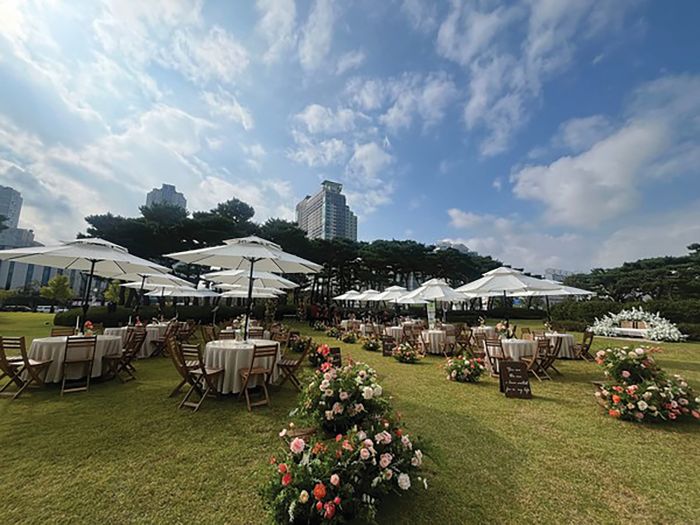
Gwangju Garden of Light, outdoor wedding space. (Gwangju City)
With the July 1 launch of the Jeonnam-Gwangju Integrated Special City on the horizon, Gwangju is moving ahead of schedule on at least one front. Starting this May, the city is opening its public wedding venues to Jeonnam residents – the first concrete step toward shared public services across the two regions.
Gwangju has operated public wedding venues at its City Hall complex since last year, offering outdoor and indoor spaces under the name “Bit-ui Jeongwon” (Garden of Light). The grounds include a lawn area, a rose garden, and an indoor civic hall – all available for a flat fee of 10,000 won per day outdoors or per two-hour indoor session, with parking and utilities included. Eight couples used the venue last year; four more are booked for the first half of 2026. From May, any couple where at least one partner or one set of parents lives in Jeonnam province is eligible to apply.
Compiled by Amy Park.
Amy Park is the program officer for the Asian Legal Resource Center (ALRC Korea) based in Gwangju. For the 2026 World Human Rights Cities Forum, she is coordinating the UNESCO Asia-Pacific Coalition of Inclusive Cities (APCIC) session on behalf of ALRC Korea.