

UN Rights High Commissioner Comes to Gwangju: Speaking at WHRCF 2026
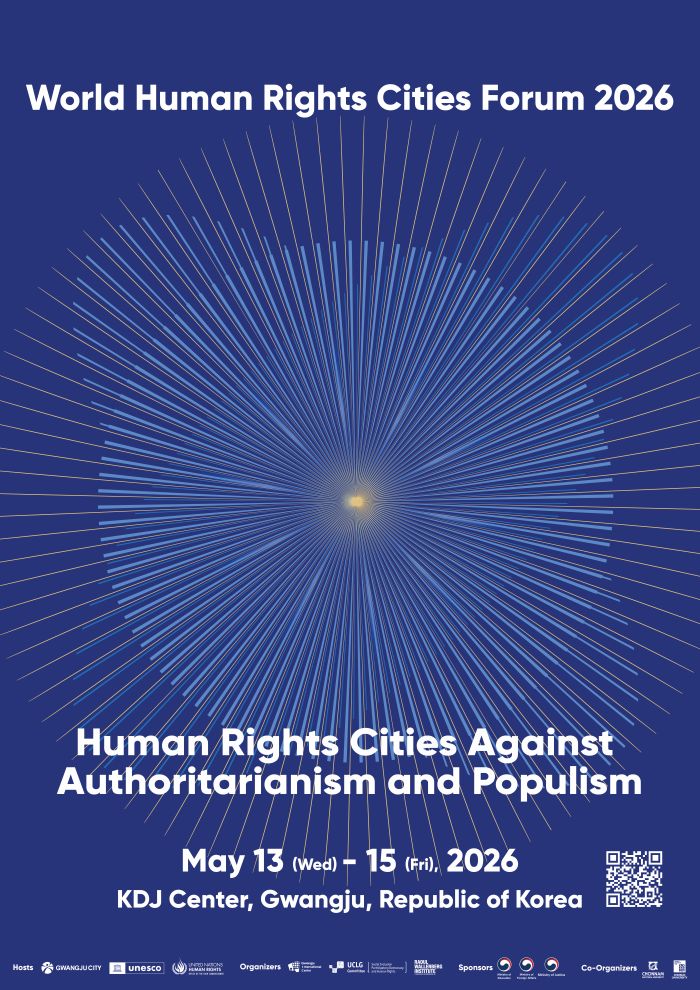
Volker Türk of Austria is the current United Nations High Commissioner for Human Rights. He is the keynote speaker at the 2026 World Human Rights Cities Forum – the first time for a UN high commissioner to attend the Forum in its 16-year history. The three-day Forum (May 13–15) opens under the theme Human Rights Cities Against Authoritarianism and Populism. The Gwangju News hadtheprivilegeofinterviewing the High Commissioner prior to the opening of the conference and here brings you the contents of that in-depth interview — Editor ||
Gwangju News (GN): This is the first time for a UN high commissioner for human rights to attend the World Human Rights Cities Forum [WHRCF] in person. What considerations have led you to decide that 2026 was the right moment to come to Gwangju to give the opening keynote address?
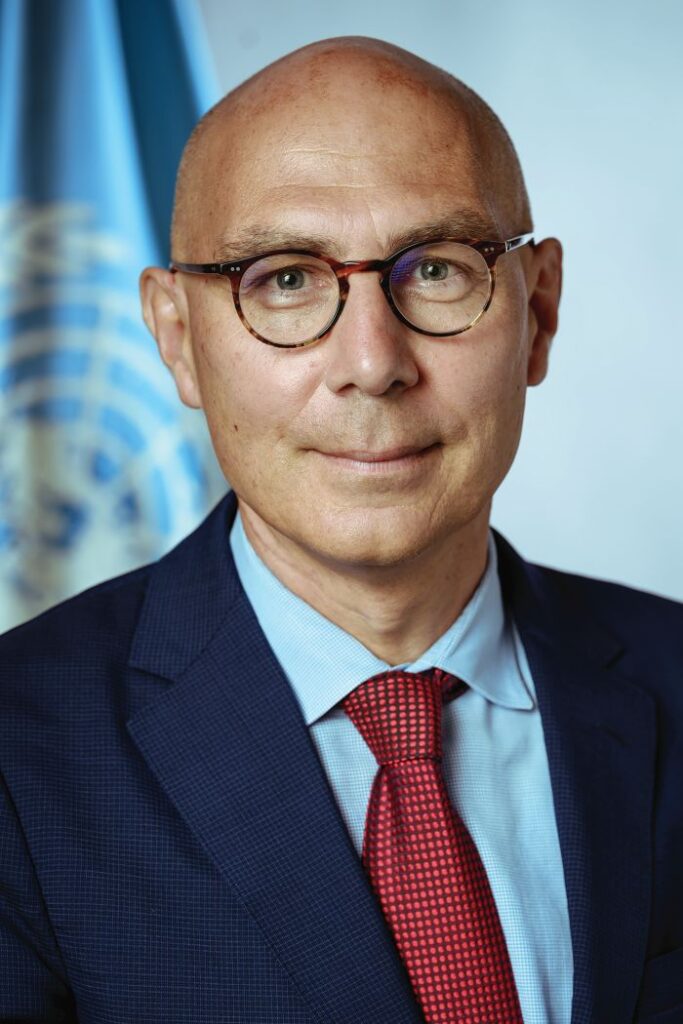
High Commissioner Volker Türk. (Courtesy of the UN Human Rights Office)
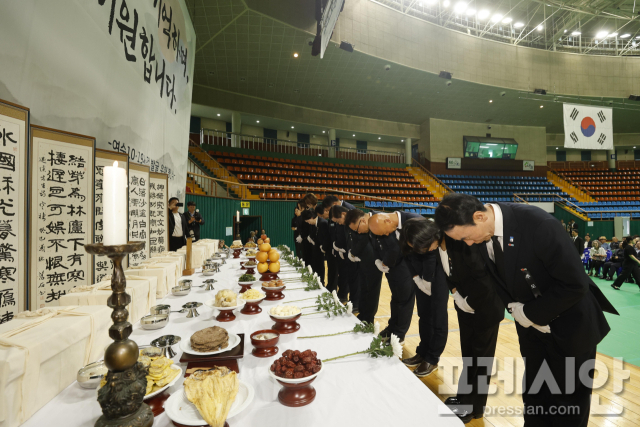
High Commissioner: It is indeed a deeply significant moment to be in Gwangju and join its citizens in reaffirming a shared commitment to democracy. I am scheduled to visit the May 18 National Cemetery, a powerful place of remembrance that bears witness to courage, dignity, and democratic resilience.
The National Cemetery commemorates those who lost their lives almost 50 years ago, during the May 18 Democratization Movement, when the people of Gwangju stood up to demand democracy, human rights, and an end to military rule. Their movement was met with brutal repression, resulting in the loss of hundreds of civilian lives, yet their sacrifice has become a lasting symbol of resistance to injustice and of the central role citizens and cities play in defending democratic values.
I would like to express my deep appreciation to the city of Gwangju for its commitment to promoting and protecting human rights, and for its initiative in organizing this Forum since 2011. This way, the city has kept alive the Gwangju spirit, rooted in justice, democracy, human rights, solidarity, and community resilience, the very values embodied by its citizens in May 1980. This spirit has transcended national borders, inspiring movements for democracy, accountability, and human rights far beyond the Republic of Korea.
Today, Gwangju reminds us that cities are not only sites of economic and social life, but also vital guardians of democratic space. Human rights – in particular its principles of equality and participation – offer a coherent governance model for cities facing complexity and rapid change. They demonstrate that if cities are to be engines of shared prosperity rather than places of deepening inequality, human rights must be embedded not only in law, but in planning, budgeting, and everyday governance.
This is why human rights cities will be central to the Global Alliance for Human Rights that my Office will launch next month. The Alliance responds to today’s fragmentation by mobilizing the energy for human rights that exists at the local level and translating it into real improvements in people’s lives. As we move toward the Universal Declaration of Human Rights’ (UDHR) 80th anniversary in 2028, cities, building on partnerships like Gwangju, will be key to expanding a global network that puts human rights at the heart of urban life worldwide.
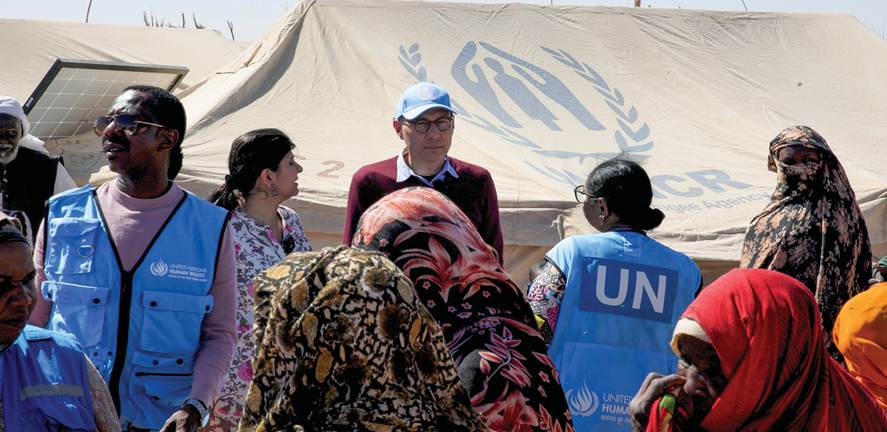
The High Commissioner visiting the Al Afad Internally Displaced Persons Camp, Sudan, January 2026. (Courtesy of the UN Human Rights Office)
GN: Since 2020, OHCHR [the Office of the United Nations High Commissioner for Human Rights] and UNESCO have co-hosted the WHRCF. In practical terms, what does this joint engagement say about the role you expect local governments and cities to play in the UN human rights system?
High Commissioner: Local governments and cities are critical actors in the human rights system, operating at the point where rights are most directly experienced. Through their daily engagement with communities, they address grievances, manage claims, address violations, and shape policies that determine whether human rights are realized in practice.
When access to rights is unequal, whether in education, employment, housing, digital connectivity, or public services, entire segments of society are prevented from fully contributing to economic and social life.
Cities feel this acutely. Inequality is not abstract. It appears in segregated neighborhoods, informal settlements, overcrowded schools, insecure jobs, and unequal access to transport and green space. These inequalities create parallel economies, some formal and thriving, others informal and precarious, weakening the city as an integrated socioeconomic system.
In this framework, local governments and cities are expected to play a critical role as frontline implementers of international human rights standards, translating those into concrete policies, services, and outcomes at the local level. They are also key actors in identifying protection gaps; advancing economic, social, and cultural rights; and ensuring participation, inclusion, and accountability in decision-making that directly affects people’s daily lives.
Our collaboration with the World Human Rights Cities Forum and other national, regional, and international partners, reflects a shared conviction: that the global human rights system simply cannot deliver on its promises without strong, committed local governments at the table. Through the Forum, we are building genuine space for cities to learn from one another and to connect their work directly with international standards and appreciate their roles.
“Local governments and cities are critical actors in the human rights system, operating at the point where rights are most directly experienced.”
Our hope is that the Global Alliance for Human Rights will amplify and give further visibility to the critical work of this Forum by offering a cross-regional platform for cities, mayors, and local governments around the world to share experiences, good practices, and peer learning of how human rights have been integrated into city policies, planning, and budgeting for greater inclusion, equality, and participation for all.
GN: OHCHR’s work on local governments stresses their complementary responsibilities alongside states. In concrete terms, what distinguishes a city that genuinely integrates human rights into its laws, budgets, and institutions from one that refers to human rights mainly as a slogan?
High Commissioner: A human rights-based approach serves as a normative framework that guides all dimensions of local governance. It is the exact opposite of tokenism or sloganeering, and demands sustained political and financial commitment. It requires that development planning, policy formulation, budgeting, and implementation are explicitly anchored in international human rights law, including clearly defined rights, corresponding obligations, and accountability mechanisms. In practice, this means that local government processes are entrusted to respect, protect, and fulfill human rights at the local level, guided by core human rights principles of participation, non-discrimination, transparency, and accountability, and oriented towards identifying and addressing structural inequalities.
Last year, together with United Cities and Local Governments, we published Guidance Framework for Creating a Human Rights City. It provides a roadmap to support cities in allocating resources, setting priorities, and adopting rights-based approaches to public service delivery, without discrimination.
What we look for are three layers of genuine integration. The first is political commitment, leadership, and legal foundations. A mayor or governing body can publicly declare the local government’s commitment to becoming a Human Rights City, but it can be further strengthened by adopting a local ordinance that embeds a human rights-based approach into all local laws, development plans, and public service delivery. Without that legal anchor, commitments remain largely symbolic.
The second layer is institutional structures. A human rights city will establish dedicated human rights structures and bodies within its administration and create mechanisms for accountability. It is also encouraged to set up a consultative participatory body to ensure the meaningful participation of civil society and diverse stakeholders.
The third layer is operational tools, which include a range of practical measures that cities and local authorities can adopt – from awareness-raising campaigns to developing a local human rights action plan and reporting to the United Nations human rights mechanisms – to ensure that they are protecting human rights through their daily actions and are meeting their human rights obligations.
GN: The WHRCF has produced instruments such as the Gwangju Guiding Principles for a Human Rights City (2014). How can OHCHR, together with local-government partners, help ensure that such local frameworks inform global guidance and become used more widely by cities and national governments?
High Commissioner: The Gwangju Guiding Principles expand the concept of human rights to the city, placing active local leadership at the center of human rights promotion and protection. We welcome other similar complementary approaches.
There are many ways we can help share this valuable knowledge and facilitate exchanges around the world.
This year, we plan to hold a Mayors’ Meeting in collaboration with our partners, bringing together local government leaders to share promising practices and tools. Events like this are powerful opportunities to put Gwangju’s experience and principles in front of city leaders from very different places.
We are also hoping that the Guiding Principles can be brought forward in discussions at international human rights forums including at the Human Rights Council, during its discussion on local governments and human rights. That would be a meaningful step in further broadening their global standing. Additionally, we are developing a new practical and easy-to-use assessment tool for local governments to help them measure real progress in the human rights field.
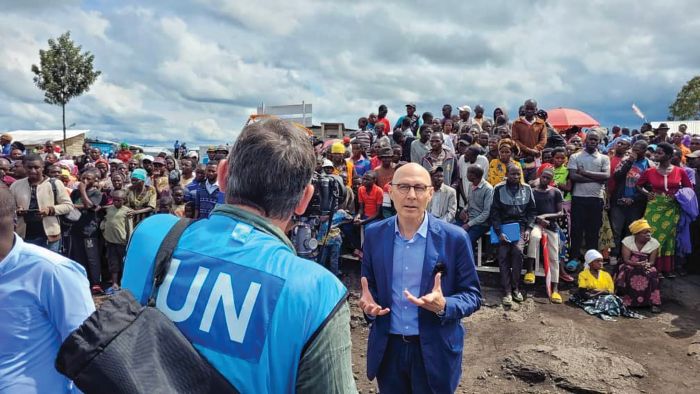
UN High Commissioner Türk on a fact-finding mission to the Democratic Republic of Congo, June 2025. (Courtesy of the UN Human Rights Office)
GN: Many local authorities face tight budgets, political pressure, and growing mistrust from their residents. What forms of support – such as guidance, capacity-building, or partnerships – can the UN Human Rights Office realistically offer to mayors and local councils that want to advance human rights under these constraints?
High Commissioner: Our Office has been engaging with local and regional governments on human rights capacity-building for more than a decade, recognizing that cities are often the closest level of government to people’s daily lives and play a decisive role in the realization of rights.
Through sustained capacity-building initiatives, we support cities to strengthen their role as duty-bearers and key implementers of international human rights norms and standards, particularly in the areas of economic, social, and cultural rights. Our approach focuses on embedding human rights into local policy-making, budgeting, and service delivery, so that cities are equipped to identify inequalities, address discrimination, and respond to the needs of those most at risk.
Last year, for example, we worked with nearly half of the county governments in Kenya on economic, social, and cultural rights; the SDGs [sustainable development goals]; and human rights budgeting. We have also delivered similar trainings for local government officials in countries as diverse as Kyrgyzstan, Turkmenistan, Bangladesh, Sri Lanka, and Pakistan. We have recently been piloting a human rights cities workbook with local governments in the Philippines.
To provide more comprehensive support, our Office offers global policy guidance, such as the Guidance Framework for Creating a Human Rights City. It is the first basic global framework designed to assist cities in integrating human rights into all aspects of local governance. We hope the guidance framework can support local leaders to allocate resources, set priorities, and adopt rights-based approaches to public service delivery.
We also facilitate peer learning by organizing events with partners. Last year, our Office held two meetings on local governments and human rights, bringing together mayors, city councilors, local government representatives, city networks, and experts to share good practices in building human rights cities, the realization of economic, social, and cultural rights at the local level. These have helped the integration of human rights-based approaches into budgeting and procurement implementing, implementation of the Guidance Framework for creating a human rights city, and engagement with the human rights mechanisms. The July meeting, organized with UCLG [United Cities and Local Governments], gathered more than 60 participants from over 20 cities from across the world, while the online meeting in November collaborated with the Government of the ROK, UCLG, RWI [Raoul Wallenberg Institute], and the Geneva Academy to bring together more than 80 participants globally.
We also promote human rights monitoring and implementation through different human rights mechanisms. We encourage cities to actively engage with us through the Universal Periodic Review, treaty bodies, and special procedures, and to contribute to reporting and follow-up through national mechanisms for implementation, reporting, and follow-up, where such mechanisms exist. And to press governments to adopt them, where they have not yet been created.
Interviewed by Shin Gyonggu.