
Remembering to Resist: Yeolmae and the Fight for Justice Ahead of WHRCF
By Luis Andrés ||
In the middle of this May, from May 13 to 15, Gwangju will once again host the World Human Rights Cities Forum (WHRCF). This year’s theme, Human Rights Cities Against Authoritarianism and Populism, feels particularly urgent in a time when democratic values are increasingly contested across the globe.
There may be no more fitting place for such a conversation than Gwangju. The city’s history is not only one of resistance, but of memory: of insisting that past violence is neither forgotten nor normalized. The legacy of the May 18 Democratic Uprising (1980) continues to shape how human rights are understood, practiced, and defended here.
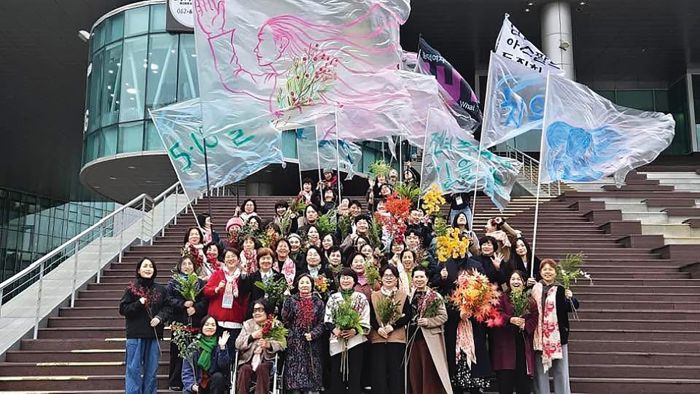
Among the organizations carrying this legacy forward is Yeolmae, a recently established association, formally founded in February 2026. Dedicated to supporting survivors of sexual violence, particularly those connected to the Gwangju Uprising, Yeolmae works at the intersection of memory, justice, and community. Their work reminds us that recognition is not only about the past but about building the conditions for dignity in the present.
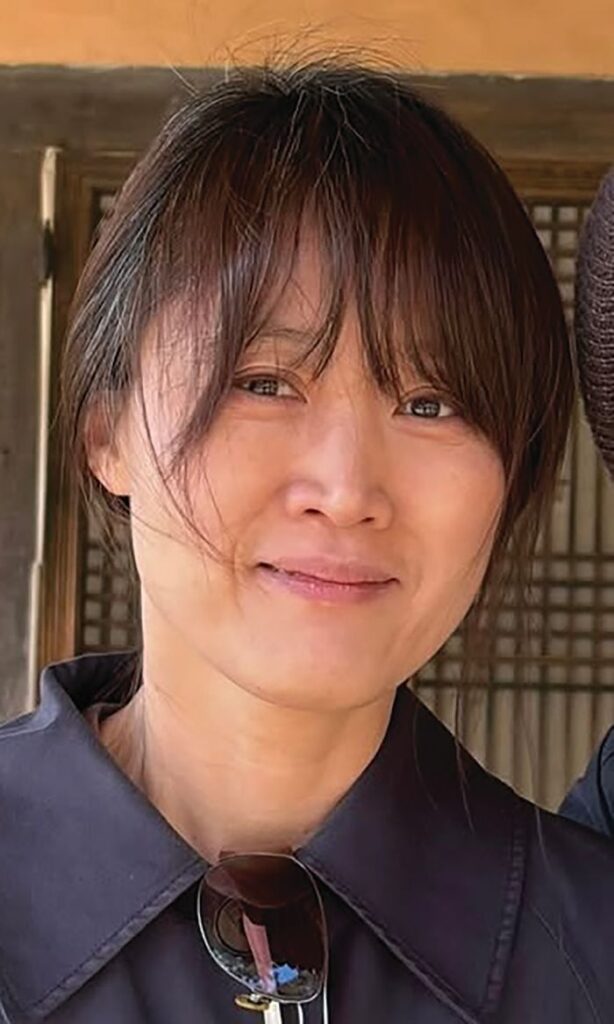
Ahead of the WHRCF, Gwangju News spoke with Yoon Gyeong-hoe, administrative secretary of Yeolmae, about the organization’s mission, the role of recognition in confronting violence, and what this year’s forum represents in a rapidly shifting global context.
Luis Andrés: Could you briefly introduce yourself and Yeolmae to our readers?
Yoon Gyeong-hoe: My name is Yoon Gyeong-hoe, and I serve as the secretary of Yeolmae [Korean for “fruit,” “reward”], which represents opening the path to truth and healing for gender-based violence in historical contexts, with a focus on May 18.
Prior to this, I worked as an investigator in national truth commissions, where I was responsible for cases of sexual violence. In that role, I documented victims of state violence and worked toward uncovering the truth. It is through that process that one thing became very clear: Revealing the truth alone does not restore people’s lives. Even after documentation and judgment, survivors must still continue to endure and live with what happened to them.
Yeolmae began precisely from that realization. It started as a self-support group of survivors of sexual violence related to May 18, and I took on the role of secretary working alongside them. Based on that experience, we formally established the organization as a non-profit this February.
This was also a turning point for me. I moved from being someone who investigates and documents cases to someone who participates in what comes after truth: healing, restoration of dignity, just reparations, and the creation of social responsibility.
Luis Andrés: Yeolmae was formally established this year. What did this moment mean for the organization, and what has changed since becoming legally recognized?
Yoon Gyeong-hoe: Being formally established was not simply about gaining legal status; it was a shift in responsibility. While we were previously a self-help group of survivors giving testimony, we have now become an organization that asks: Which truths have been silenced, and will society publicly recognize and take responsibility for them?
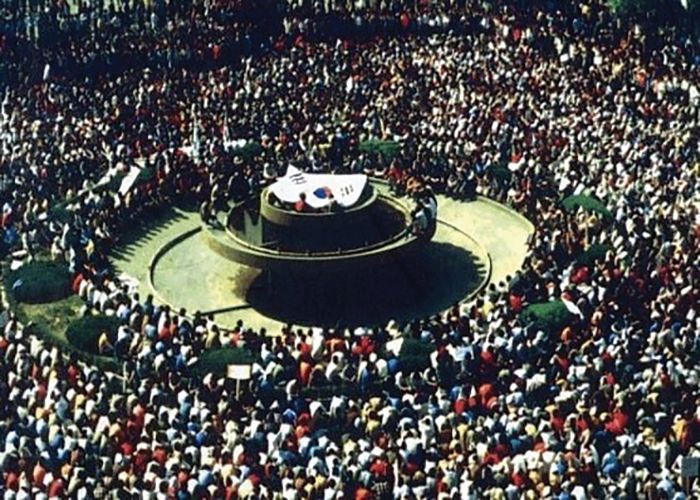
Democracy Square of Gwangju, May 1980. (Courtesy of Yeolmae)
Our structure has also expanded. What began as a group centered on survivors, investigators, and counselors now includes researchers, archivists, artists, and broader allies. This allows us to connect testimony with healing, documentation with public discourse, and advocacy with concrete issues such as reparations. Perhaps the most important change is in how we understand ourselves: We are no longer only responding to what has happened, but we are actively shaping what kind of society recognizes truth and takes responsibility for it.
Luis Andrés: Do you think Yeolmae could have emerged outside of Gwangju? What makes this city a particularly meaningful place for your work?
Yoon Gyeong-hoe: It is difficult to imagine Yeolmae emerging in the same form outside of Gwangju. Gwangju is not simply a place where violence occurred; it is a place where that violence has been continuously remembered, debated, and reinterpreted. The legacy of the May 18 Uprising has created an ethical and social foundation where questions of truth, responsibility, and dignity remain alive. In that sense, Yeolmae is not an exception but part of a longer historical process.
This city has taught us that memory is not passive; it is something that must be actively held onto. Without this sustained practice of memory, many forms of violence, especially sexual violence, would have remained unspoken and unrecognized.
Luis Andrés: In your work, you refer to the concept of “state violence.” Could you help our readers understand how the state can be implicated in cases of sexual violence?
Yoon Gyeong-hoe: Sexual violence is often understood as an individual crime. However, in many historical contexts, it is deeply embedded within structures of power.
In the case of the May 18 Uprising, sexual violence occurred within a system of state repression. This includes not only individual acts but also conditions such as military control, impunity, and enforced silence. Therefore, state violence does not only refer to direct acts by state agents. It also includes failures of truth-seeking, denial of facts, and the long-term neglect of survivors. When the state delays or avoids recognition and responsibility, the violence continues extended across time.
Luis Andrés: How does the protection of human rights relate to addressing sexual violence, and why is it important to approach this issue from a local or city-level perspective?
Yoon Gyeong-hoe: Sexual violence is a violation of human dignity. Addressing it is not only about punishment but about restoring the conditions that allow survivors to live with dignity.
“It is difficult to imagine Yeolmae emerging in the same form outside of Gwangju.”
While national institutions are important, recognition, support, and healing actually take place at the local level. The local community is where survivors live, where relationships are formed, and where memory is either sustained or erased. A local approach allows for responses that are more concrete, relational, and continuous. It connects policy with lived experience and ensures that survivors are not isolated but supported within a community.
Luis Andrés: Your work emphasizes the importance of recognition. Why is acknowledging past and present violence so crucial in the struggle for justice?
Yoon Gyeong-hoe: Recognition is often misunderstood as symbolic. In our experience, it is a material and relational condition that makes justice possible. Without recognition, violence remains internalized and fragmented, leaving survivors to carry it alone. Recognition shifts that burden outward, transforming violence into a public issue and a matter of social responsibility. Recognition also transforms time itself.
When violence is acknowledged, it is no longer confined to the past; it becomes a present issue that society must respond to, repair, and learn from. A society that cannot publicly acknowledge and take responsibility for its most difficult truths will inevitably repeat them.
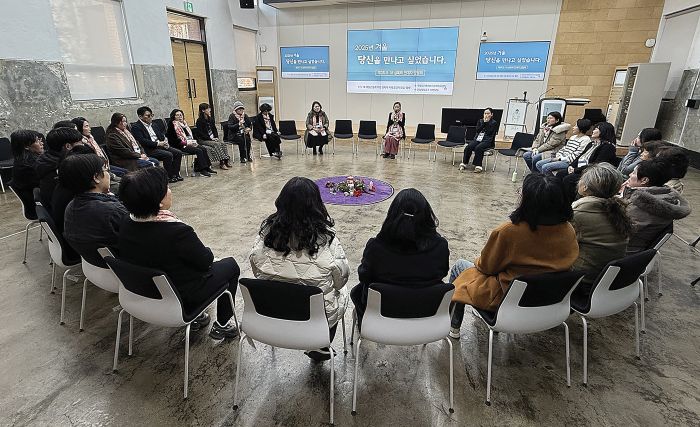
The 3rd May 18th Meeting of the Solidarity for Sexual Violence at Nam Joo Hall, Chonnam National University, December 12, 2025. (Courtesy of Yeolmae)
Luis Andrés: This year’s WHRCF focuses on authoritarianism and populism. In what ways do you see Yeolmae’s work contributing to this broader discussion?
Yoon Gyeong-hoe: Authoritarianism restricts citizens’ freedom and participation, controlling what truths can be spoken. Populism fragments society through emotional mobilization, pushing certain experiences to the margins. Yeolmae’s work exists at the intersection of these two phenomena. We bring forward experiences of sexual violence that have long been silenced, translating them into public language and positioning them as issues society must take responsibility for.
Sexual violence is often concealed in authoritarian contexts and marginalized in populist environments. Making these experiences visible is a way of redefining what can be spoken and what must no longer be erased. In this sense, our work is not only about the past; it is about protecting democracy itself. It concerns what can be said, and what truths a society is willing to take responsibility for.
Luis Andrés: Have you participated in the WHRCF before? What are your expectations for this year’s forum?
Yoon Gyeong-hoe: Although Yeolmae will not formally participate in this year’s forum, we have been a part of it before. In 2025, we introduced our work during the WHRCF women’s session, The Gwangju Uprising and Women. At that time, we were still a self-support group, so it was more about sharing our concerns than making a formal presentation. During that session, we expressed our intention to establish a formal organization, and nine months later, we did. Because of that, we view this year’s forum with particular anticipation.
We hope the forum will elevate marginalized voices, such as survivors of gender-based violence in historical contexts, into meaningful discussions among researchers, activists, and policymakers. In the future, we also hope to participate directly, sharing our experiences and continuing these conversations within broader networks of solidarity.
Luis Andrés: What do you hope participants and Gwangju News readers take away from this year’s WHRCF?
Yoon Gyeong-hoe: I hope participants and readers clearly recognize that the resistance, solidarity, and sacrifice of Gwangju citizens in 1980, against the destruction of constitutional order, were the same forces that stopped the declaration of martial law on December 3, 2024.
At the center of that history is a form of giving toward future generations – an offering of one’s own life. That spirit became the foundation upon which democracy in Korea was built, and it continues to re-emerge in moments of crisis. I believe this spirit lives on as a constant decision: In May 1980, people defended the provincial office with nothing but their resolve. The meaning we give to that resolve is what shapes the choices we make today.
In 1980, human rights in Gwangju could not be separated from the sound of gunfire and military boots. That memory became active again during the martial law crisis in December 2024. The transmission of memory guided citizens’ choices, and ultimately became a form of responsibility to protect the community.
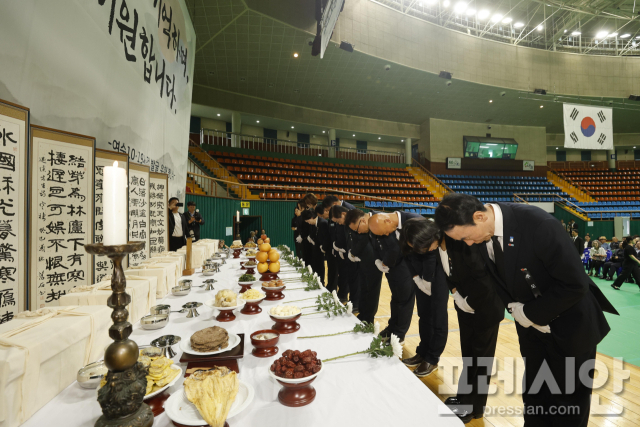
Cover Photo: May 18 Yeolmae Foundation General Assembly at the Kim Daejung Convention Center, February 2, 2026. (Courtesy of Yeolmae)