


Half the Story: Women, Memory, and the Unfinished History of May 18
By Luis Andrés ||
May returns to Gwangju each year not as a simple commemoration but as a confrontation. It reminds us of the May 18 Democratic Uprising of 1980, not only as a national tragedy but as a defining moment in the global struggle for democracy.
In May 1980, state violence reached its peak in an attempt to silence a growing civic resistance. What began as student demonstrations quickly transformed into a city-wide uprising, met with military repression that left hundreds dead and many more injured, detained, or disappeared.
Today, the uprising stands as a symbol of resistance, dignity, and collective courage. And yet, even after decades of recognition, trials, pardons, films, and memorialization, the story we tell remains incomplete. That is because we are still not fully listening to women. Despite the institutionalization of memory around May 18, women’s experiences have often been reduced to brief mentions or footnotes in history books, if acknowledged at all.
In 2025, on the occasion of the 45th anniversary of the uprising, renewed efforts by scholars, activists, and local institutions have sought to bring forward voices that have long remained on the margins. One such example is the publication The Gwangju Uprising and Women (2025), compiled by the Gwangju Foundation for Women and Family, which seeks to incorporate women’s testimonies into the democratic memory of the city.
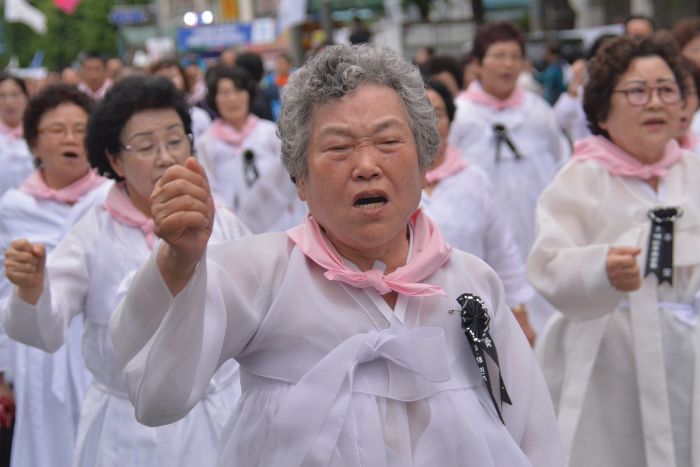
Relatives of those killed or wounded march for justice on the streets of Gwangju during a 5.18 commemoration. (Stephen Wunrow/Korean Quarterly, [1])
The truth is that, without women, much of what we “know” about May 18 would not exist. It was through women’s testimonies that we came to understand the everyday practices that sustained the uprising: the making and distribution of jumeok-bap (rice balls) for those on the frontlines, the care networks that emerged in the absence of state support, and the emotional labor of holding together a city under siege.
It was also through their voices that more uncomfortable truths surfaced: stories of retrieving bodies, tending to the wounded, and surviving trauma that extended far beyond physical violence. Among these are the long-silenced accounts of sexual violence suffered by both women and men, often buried under layers of stigma, shame, and social pressure.
This article is not meant to retell the full history of May 18. Nor is it to diminish the sacrifices of those who fought and died. And it is certainly not to speak on behalf of the women who lived through it. Rather, it is an invitation to reconsider how we remember.
When we engage with women’s perspectives, such as those documented in recent compilations and testimonies, we begin to challenge the silence that was imposed on them for decades. We see that democracy was not only defended in the streets but also sustained in kitchens, hospitals, and hidden spaces of care and survival.
To remember May 18 without women is not only an omission; it is a distortion. History, when it excludes half of those who lived it, ceases to be a discipline grounded in truth. It becomes a fragmented narrative, shaped by visibility rather than reality. And in doing so, it risks betraying the very democratic values that the uprising sought to protect.
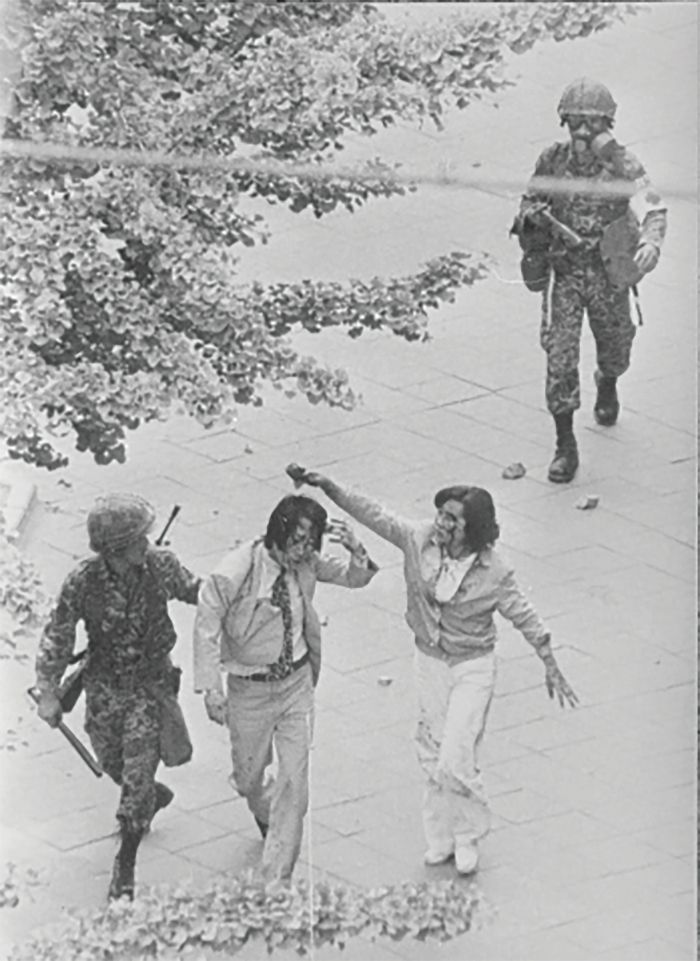
Women were always there, taking care of the men up front. (5.18 Archives)
If we dare to complete the story, painful as it may be, through a reflexive lens grounded in empathy and mutual understanding, healing can begin. The May Mothers stand as one of the most powerful examples of this process of acknowledgment. Formed by women who were not always on the frontlines of direct confrontation with the military but who sustained the movement through care, nursing the wounded, preparing food, and writing signs, their presence remains a living reminder of the broader meaning of the May Uprising. Democracy, sustained across different spaces and roles, cannot exist without our mothers, sisters, daughters, and friends.
Another example has emerged more recently with the formalization of the Yeolmae association, highlighted in the Gwangju News [April 2026] by Jay Lee. Led by survivors of sexual violence, the association provides support while also advocating for recognition and justice. Acknowledging survivors not only as victims but as agents of resilience and activism, reframes their place within the democratic narrative. Their voices are not only part of the past: They are actively shaping a future that seeks to be free from gender-based violence.
If May 18 teaches us anything, it is that democracy is not built by a few visible heroes but by entire communities, seen and unseen. To honor that legacy today means more than remembrance: It means remembering differently.
The Author
Luis Andrés González is a Mexican GKS scholar and master’s student in cultural anthropology at Chonnam National University. He advocates for LGBTQ+ rights and gender equality, and explores global affairs through pop culture. He is the founder of Erreizando, a digital magazine. Instagram: @luisin97 / @erreizando
[1] Korean Quarterly: www.koreanquarterly.org