

Creative Writing: The Anatomy of an Almost-Love
By Reeti Roy ||
We did not break. We concluded.
There was no spectacle to it. No raised voices in the street, no final sentence sharp enough to scar. Just a quiet recognition, like a compass needle settling when interference is removed.
I had moved more than three thousand miles for love.
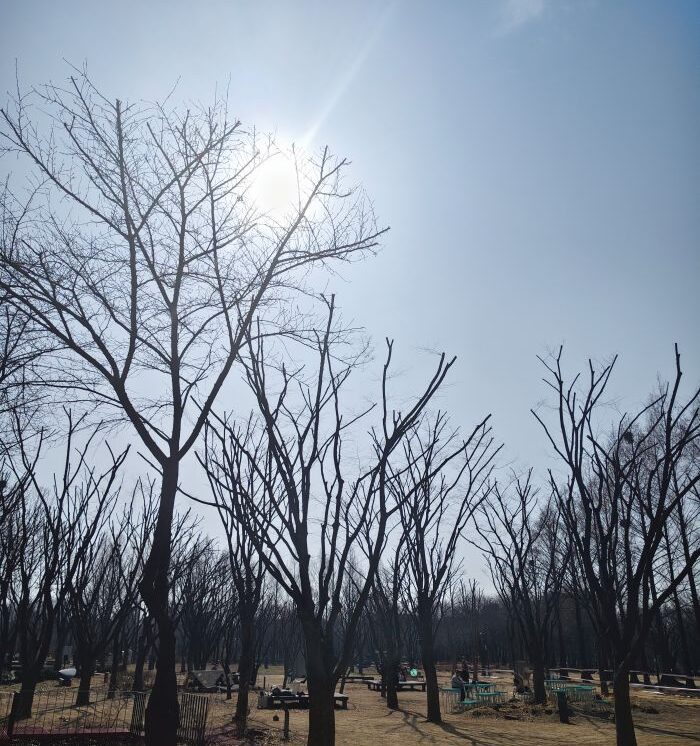
Not in the softness of spring or the forgiving gold of autumn. I moved in February, when Seoul was steel and breath rose in pale ghosts between buildings. When the wind off the Han River cut clean through wool and even the mountains seemed stripped to the bone.
February does not seduce. It tests.
The decision had not been reckless. There were spreadsheets. Visa timelines. Apostilled documents. Winter coats packed into suitcases that felt heavier than their contents.
I told friends it was for work, for writing, for expansion. All of that was true. But beneath all of the well-thought-out logic was something quieter and far more vulnerable: I believed that if I crossed the miles, proximity might make courage easier.
Seoul in winter is exacting. The stairways of Huam-dong feel steeper in the cold. The air smells sharper – garlic, detergent, distant charcoal smoke and fine yellow dust carried cleanly through thin light. The city does not wrap around you. It requires endurance.
So did Jinwoo.
His life had a choreography – gallery openings where wine glasses tilted in careful arcs, measured laughter that never spilled into excess, the calibrated warmth of people who knew when to lift their chopsticks and when to lower their eyes. There was a calibrated elegance in it. A fluency in hierarchy and silence.
There was also a script.
A future laid out in clean, unbroken lines: family dinners where hands were positioned correctly and feelings were folded neatly beneath the table. A partner whose presence would not disturb symmetry. Someone whose edges matched the architecture already in place.
I was not architectural.
I asked questions that lingered too long. I held eye contact a fraction beyond comfort. I spoke of grief as inheritance rather than inconvenience.
I did not instinctively lower my eyes. I did not know how to perform propriety for the sake of social cohesion.
Jinwoo was not cruel. That must be said clearly. He was careful. Careful men are often mistaken for distant ones, but distance can be a discipline learned early.
He moved through life like a warrior in civilian clothing – advancing only when terrain had been surveyed, exposing no unarmored ground unless victory was assured. He did not enter emotional landscapes without being acutely aware of their exits.
I, on the other hand, had never been interested in victory.
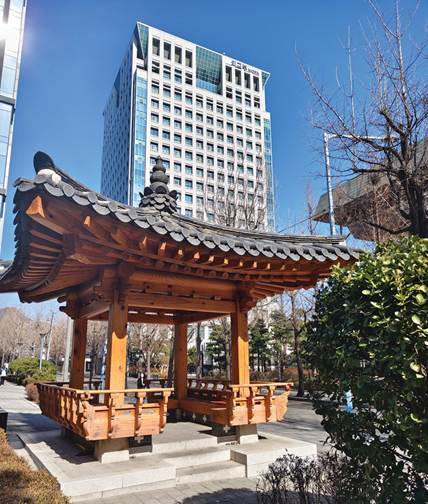
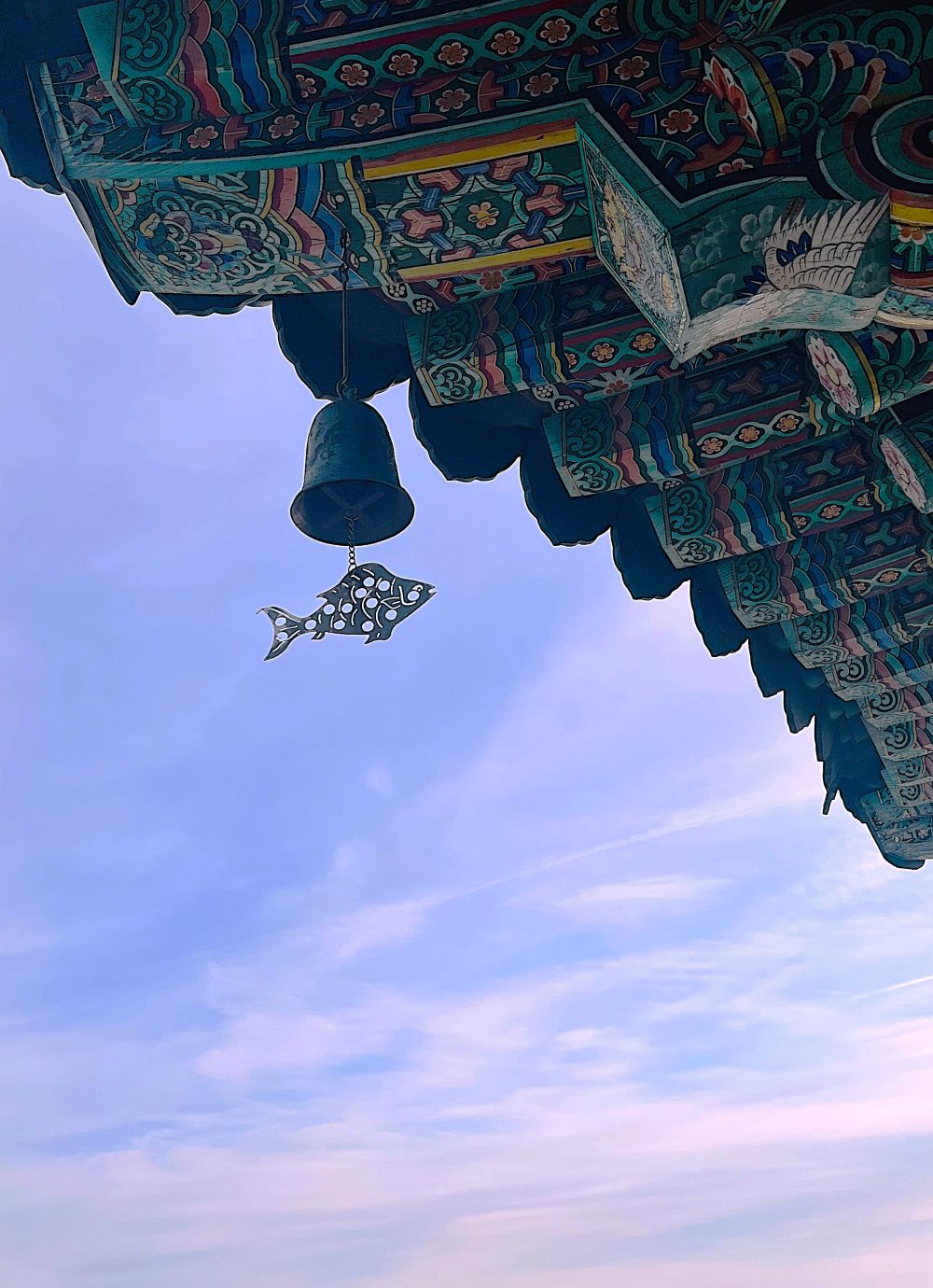
Juxtaposition of ancient and modern, Seongsu-dong area, Seoul.
If he was a warrior, I was a priestess – though not of temples or doctrine. I was a priestess of thresholds. Of the liminal spaces between departure and arrival. I believed in tending fires others were taught to extinguish. I believed in naming wounds instead of disguising them as strategy. I believed that love, even incomplete love, was not a liability but a form of illumination.
Where he fortified, I questioned. Where he calculated, I listened. Where he secured, I witnessed.
Is it difficult for a warrior to love a priestess?
One asks, “Is it safe?”
The other asks, “Is it true?”
We met somewhere between those questions and built an almost. An almost-love.
The almost-love we practiced with geometric precision. Dinners that ended before they could tip into vulnerability. Walks along the Han River where our shoulders brushed but did not settle. Conversations that hovered at the edge of confession before retreating into wit. It was not a lack of feeling that defined us. It was the presence of caution.
There were evenings when the city felt suspended. Neon reflecting off wet pavement, the hum of traffic below us – and I sensed something moving quietly between us. Not cinematic romance. Something quieter. Recognition.
As if we had stood on another battlement in another century – Jinwoo holding a sword polished by duty, me holding a temple lamp that refused to dim. As if we had circled each other across lifetimes, always arriving at tenderness without permanence.
Not tragedy. Pattern.
The day it ended was unremarkable. That is how most endings occur. We sat across from one another at a small wooden table. Outside, someone laughed too loudly. A delivery scooter passed. The world continued with admirable indifference.
He did not say he did not care. He said he did not know how to reconcile me with the life already in motion. And I understood.
There are worlds you enter as a guest, and worlds built with your measurements in mind. I had stepped into his as a beautiful interruption. But interruption is not infrastructure.
Three thousand miles cannot override social gravity.
I told him, quietly, that he would always be special to me. Not because we had almost built something monumental. Not because I needed him to remember me. But because, for a brief moment, he had allowed me to see the careful anatomy of a guarded heart – and for a fleeting instance, he had let me stand inside it without armor.
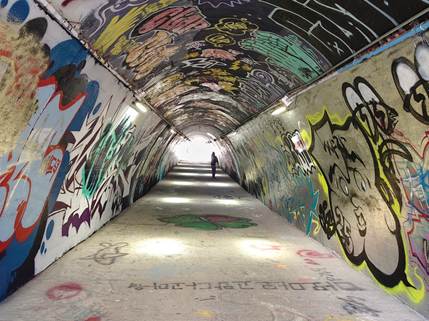
Graffiti art in a Sinchon-dong passageway, Seoul, February 2026.
He looked at me with something unspoken – not regret, not relief. Recognition.
We did not dramatize departure. We did not promise futures. We finished our tea.
When I walked back through the city that evening, February felt sharper than before. The wind moved cleanly down the narrow streets. The neon signs flickered on with mechanical certainty. I realized then that relocating had not been foolish.
It had been faithful.
Faithful to my own capacity for risk. Faithful to the belief that love, even almost-love, is worth crossing oceans for. Not because it guarantees permanence, but because it reveals you to yourself.
Jinwoo would return to his world of symmetry and sanctioned light. He would attend the openings. He would bow at the appropriate angles. He would survive, and likely thrive, within the clean lines of expectation.
And I would return to mine – to cities that inhabit you instead of merely hosting you. To rooms thick with memory. To the quiet labor of keeping what others discard. To writing what does not fit neatly into scripts.
We did not fail.
We fulfilled the brief.
Sometimes love is not meant to alter the architecture of a life. Sometimes it is meant to illuminate it briefly – to reveal its load-bearing walls and hidden fractures – and then step away before collapse.
If he is a warrior, he will continue to fight bravely. If I am a priestess, I will continue to tend the unseen fires.
I will accept what passes through my hands without demanding that it remain. I will keep the scars. I will keep the stars.
And somewhere – in another lifetime, or another city at dusk – we will sit across from one another again with the quiet knowledge of two people who stood at the precipice of an almost-love and chose alignment over desire, chosen longing over belonging.
The Author
Reeti Roy is a writer and cultural observer based in Seoul. She explores human connections, urban life, and cross-cultural experiences through essays, travel writing, and personal narratives, often weaving in themes of sanctuary, observation, and emotional landscapes.
Photographs by the author.