

Creative Writing: The Whispering Petals of Gwangju – A Springtime Tale
By Tabbu Shaikh ||
The transition of seasons in Gwangju is not merely a change in weather; it is a profound cultural awakening. As an exchange student navigating the intersection of academic rigor and newfound wonder, witnessing the city transformation under the soft touch of spring feels like stepping into a living watercolor painting.
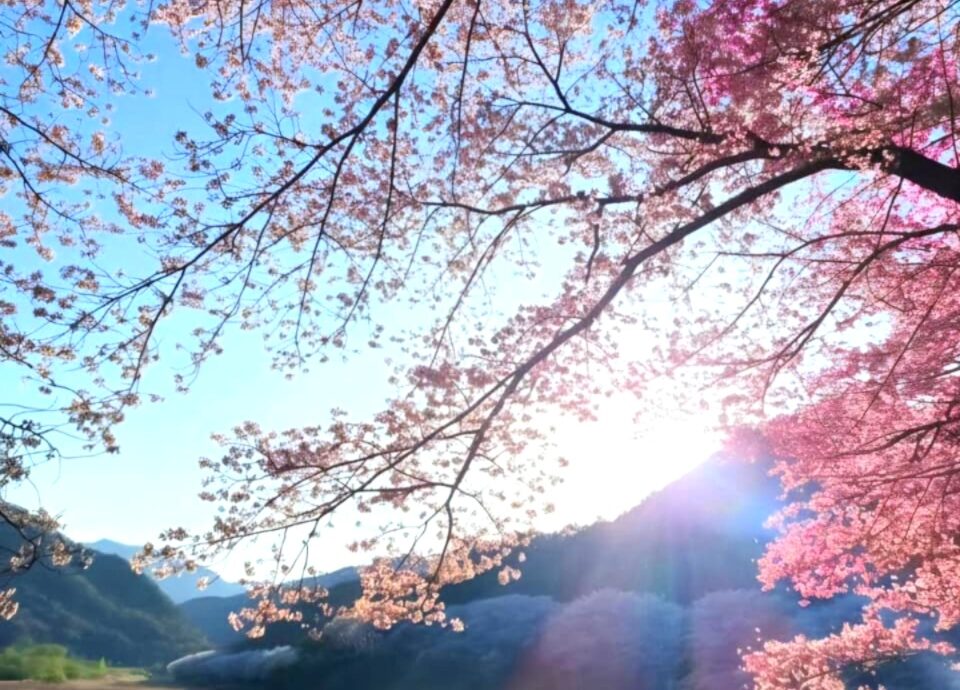
I remember the day, when I was standing in front of the century-old tree on the campus of Chonnam National University, Gwangju, where I witnessed the very first cherry blossom of the year – a tiny pale star against the dark weathered bark – marking the moment the earth began to dream again. Soon, these blossoms spread like a soft canopy of lace under a porcelain sky, eventually surrendering to the breeze in a dance of flower rain (kkot-bi).
In Gwangju, the arrival of the cherry blossoms is a quiet revolution. One morning, the branches are bare; the next, the city is draped in a fragile, pale pink lace. Here I really feel the truth in saying, “No winter lasts long, no spring skips its turn…” Walking toward the CNU campus, the wind acts as a gentle conductor, orchestrating a flower rain. These blossoms do not simply fall; they dance, coating the pavements in a velvet white shroud that makes even the most routine walk feel like a walk through a dream. Along the banks of the Gwangju Stream, the yellow forsythia (gaenari) creates vibrant streaks of gold, mirroring the rising sun.
Amidst this pastel awakening, the eye is suddenly drawn to the defiant brilliance of the red-leaved maples, whose crimson foliage blooms into the spring air like a vivid sunset caught in its branches. These trees stand as elegant anomalies, their deep ruby leaves shimmering with glossy intensity that rivals the soft pinks of the blossoms, offering a fiery reminder that nature’s palette is never limited to a single mood. There is a profound, aching beauty in this transience – a reflection of the student’s own journey, where every moment is a precious, unrepeatable spark of self-discovery. Under the moonlight, the trees take on a bioluminescent quality. The contrast of the dark sky against the glowing clusters of petals creates an atmosphere of stillness, urging one to pause and breathe in the fleeting nature of beauty. While the cherry blossoms are the heralds, Gwangju’s spring is a multi-layered masterpiece of flora and fauna.
Spring in South Korea is a season of jeong – a unique Korean concept of deep connection and social warmth. The lawns become communal living rooms. Students and families gather on checkered mats, sharing gimbap and laughter. There is a collective sigh of relief as the winter coats are tucked away, replaced by the bright colors of spring fashion. There is a specific resilience in this city. Seeing the elderly residents tend to urban gardens or young couples taking “snapshots of a lifetime” under the cherry blossoms reflects a culture that deeply respects the cycle of life and the importance of the present moment.
To be an exchange student here during this time is to experience a double-blooming: the world outside transforms, and so does one’s internal perspective. The rhythm of the city – the soft hum of the bus, the distant chime of campus bells, and the rustle of the spring breeze – creates a poetic soundtrack to a journey of discovery. Gwangju doesn’t just show you spring; it invites you to become a part of its gentle, blossoming heart.
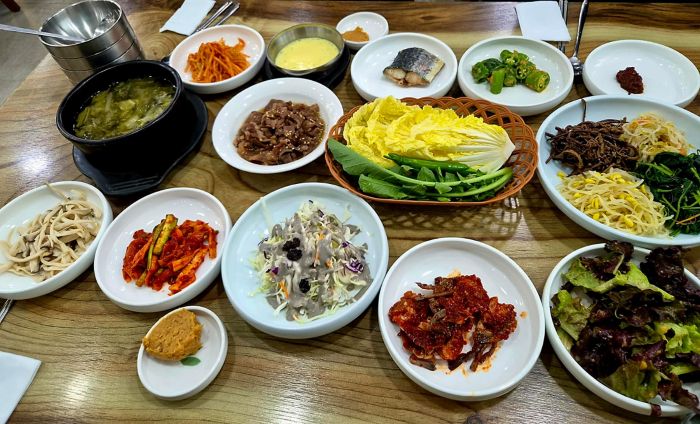
A vibrant, colorful Korean meal.
The blossom festival of the senses extends beyond the visual lace of the trees and into the very flavors of the Gwangju soil. As the winter chill recedes, the local markets overflow with bom-namul, the bitter, sun-drenched spring greens that carry the earth’s first waking breath. In the campus cafeterias and the bustling stalls of Yangdong Market, the clatter of chopsticks becomes a rhythmic celebration; bowls of bibimbap are tossed with wild chives and shepherd’s purse, offering a sharp, revitalizing taste of the season’s resilience. To eat these greens is to consume the vitality of the city itself, a culinary rite of passage that grounds the exchange student’s lofty dreams in the nourishing reality of the Korean landscape.
I have learned to walk with the rhythm of Gwangju, realizing that while the petals must eventually fall, the grace of this blossoming spring will stay embedded forever in my heart. It is the joy of a thousand small moments – the scent of the earth after rain, and the kindness of strangers, the loving people and the shining smiles. While the petals will inevitably surrender to the breeze, the vibrant energy of living in this city has left an indelible mark on my soul. I don’t just live in Gwangju; I bloom here. This journey has transformed me from a traveler into a participant in the city’s soul.
The Author
Tabbu Shaikh is an international student from India. She has traveled from India to South Korea for the Spring Exchange Program 2026 at Chonnam National University in Gwangju. Being a research student, she is deeply immersed in research work but actively seeks inspiration in the world of nature, capturing those moments through the lens of a poetess.
Photographs by the author.
Cover Photo: Cherry blossoms in bloom over a tranquil river beneath a radiant spring sky.