


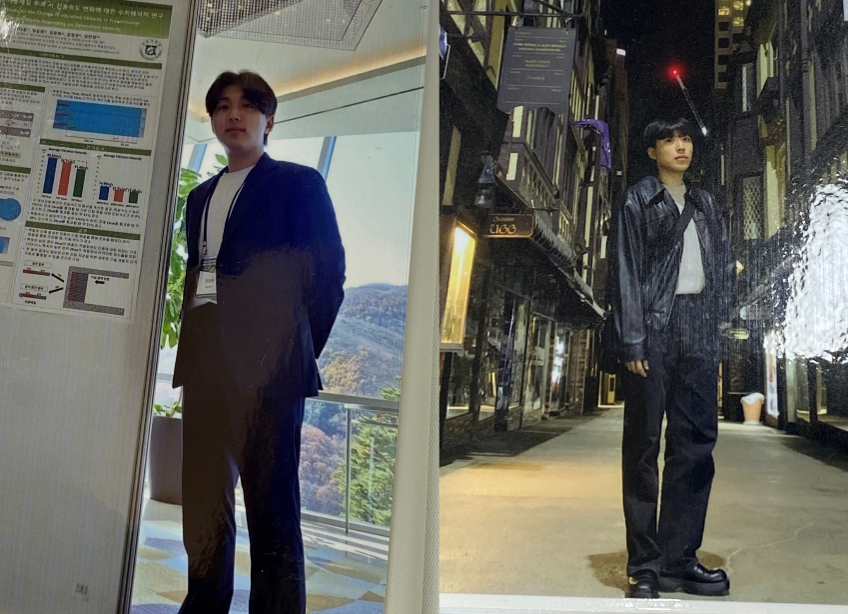
Learning–Labor–Exploitation: The Space Graduate Students Live In
By Vibhanshu Maurya ||
In April 10, 2026, a seminar hall in the College of Social Sciences at Chonnam National University (CNU) became the setting for a conversation that is often avoided in academic spaces.
The event, titled Learning–Labor–Exploitation: What Suppresses Graduate Student Workers, was organized by the Yongbong Editorial Committee in collaboration with the National Graduate Employee Union. What unfolded over the course of the afternoon was not a typical academic seminar but an open and, at times, deeply emotional dialogue about the realities of graduate student life, particularly the pressures, vulnerabilities, and structural gaps that often remain unspoken.
I participated in the symposium as an invited speaker, presenting on the topic “Beyond Incidents: Systematic Challenges Faced by International Graduate Students.” While the discussion covered multiple perspectives, one message became clear: Recent tragedies involving graduate students are not isolated events but reflections of deeper systemic issues.
From Incidents to Patterns
The symposium was shaped by the backdrop of two recent cases: one in 2024 involving an international student and another in 2025 involving a Korean graduate student. Both incidents resulted in the loss of young lives, and both raised difficult questions about the pressures within academic environments. While details of such cases are complex and sensitive, speakers at the event emphasized that these tragedies should not be understood solely as individual or personal failures. Instead, they urged a broader perspective – one that considers working conditions, academic culture, and support systems.
A particularly significant development discussed during the symposium was the recognition of the 2025 case as an occupational death. This classification marked an important shift: It framed the incident not only as a personal matter but as one connected to workplace conditions and systemic responsibility. For many participants, this recognition was seen as a step toward acknowledging the realities of graduate students’ working environments.
“Not Fully Students, Not Fully Workers”
One of the central themes that emerged during the discussion was the ambiguous position of graduate students within the academic system. Graduate students are often described as learners, yet they simultaneously contribute significantly to research output, lab operations, and academic projects. They carry responsibilities similar to those of employees but without always receiving the same level of protection, recognition, or clarity regarding their rights.
This dual identity – being both a student and a worker, yet not fully either – creates a structural gap. As one speaker from the Graduate Employee Union emphasized, “Graduate students should be recognized as workers, not just as students. This applies to international students as well.” The implication of this perspective is significant. Recognizing graduate students as workers would not only clarify their role but also strengthen the framework for addressing issues related to working conditions, communication, and accountability.
International Students: An Added Layer of Vulnerability
While the symposium addressed graduate student life more broadly, the experience of international students emerged as a particularly important dimension. International students often navigate multiple layers of adjustment simultaneously: a new academic system, a different language, unfamiliar cultural norms, and varying expectations regarding communication and hierarchy. These factors can create additional challenges, especially when it comes to seeking support or expressing concerns.
In many cases, systems and support structures that are clear to domestic students may not be as accessible or transparent to those from abroad. This can lead to hesitation, misunderstanding, or silence in situations where communication is critical. These challenges are not unique to Korea; they are part of a broader global pattern. However, as several speakers noted, acknowledging these gaps is the first step toward addressing them.
A Moment That Stayed in the Room
Beyond the structural discussions and policy perspectives, the symposium was marked by moments of profound human emotion. One such moment came when the elder brother of the Korean graduate student who died in 2025 addressed the audience. Holding a photo album of his younger brother, he spoke briefly in Korean. A translated portion of his words resonated deeply with those present:
“I thought… why couldn’t my brother tell anyone about his pressure? I hope everyone can tell their story here.”
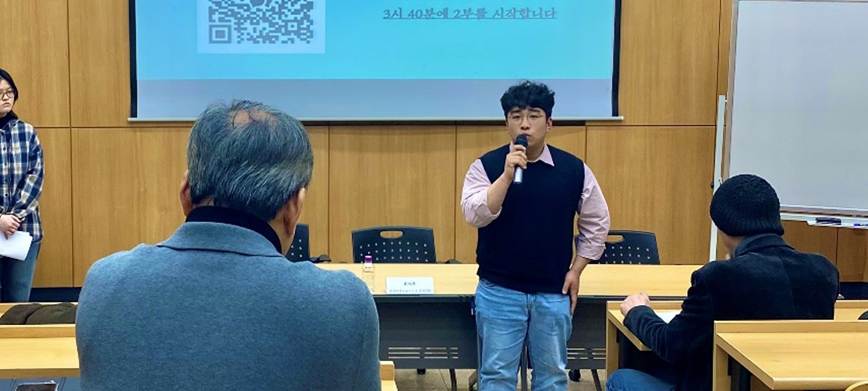
The elder brother of the student lost is 2025 addresses the symposium, reflecting on his brother’s experiences and the importance of open dialogue. (Courtesy of the author)
After the session, I had the opportunity to speak with him and look through the photograph he carried. They showed a young man smiling, traveling, attending conferences, living what appeared to be an active and hopeful life. It was a powerful reminder that behind every statistic or case discussed in policy terms, there are individuals – people with aspirations, relationships, and futures.
“What unfolded … was a … deeply emotional dialogue about the realities of graduate student life.”
Communication, Culture, and Silence
Another recurring theme throughout the symposium was the role of communication – and the lack of it. Several speakers highlighted how academic culture, hierarchical structures, and implicit expectations can create environments where it becomes difficult for students to speak openly. In some cases, differences in communication styles, particularly in multicultural settings, can lead to misunderstandings that escalate over time.
When combined with power dynamics inherent in advisor–student relationships, these gaps can discourage individuals from voicing concerns, even when they experience significant stress. As one presenter noted, many of these situations should be understood through a workplace perspective, where communication, structure, and clearly defined roles are essential for well-being and productivity.
A Global Issue, A Local Opportunity
Importantly, participants in the symposium emphasized that these challenges are not confined to a single institution or country. Issues related to graduate student well-being, labor recognition, and academic pressure have been reported in universities worldwide, albeit in different forms. At the same time, this global context presents an opportunity.
Countries like Korea, which have demonstrated leadership in areas such as technology, education, and innovation, are also well-positioned to lead in developing more supportive and transparent academic systems. Such systems would not eliminate all challenges, but they could significantly reduce risks by addressing issues earlier, before they escalate into crises.
Looking Forward: Systems and People
The discussions at CNU underscored the importance of structural change: clearer reporting mechanisms, better communication channels, and greater recognition of graduate students’ roles. However, structural improvements often take time. In the meantime, several speakers and participants highlighted a more immediate and human response: looking out for one another.
In academic environments where individuals are often deeply focused on their work, it is easy to overlook signs of stress or isolation in those around us. Yet, as the symposium reminded its audience, small acts – checking in on a colleague, having a conversation, offering support – can make a meaningful difference.
Beyond Incidents
The title of my talk, “Beyond Incidents,” reflects a shift in perspective, from reacting to individual events to understanding the systems that shape them. If there is one takeaway from the symposium, it is this: Addressing these issues requires both structural awareness and human attentiveness. Recognizing the systemic nature of the problem is essential. But equally important is ensuring that, within these systems, individuals do not feel alone. Because sometimes, before systems change, change begins with people.
The Author
Vibhanshu Maurya, originally from India, is pursuing his PhD at CNU. Living in Korea for several years has given him a deep interest in international student life, academic culture, and the importance of supportive communities during the graduate school journey.
Cover Photo: Photographs of the graduate student whose life was lost in 2025. (Courtesy of the deceased’s family)