

Inside the Gwangju News: Meticulous and Methodical – Vibhanshu Maurya
Gwangju News (GN): Thank you, Vibhanshu, for finding the time for this interview. Our readers, as well as myself, know you mainly through your writings for the Gwangju News. So, could you give us some background information on who Vibhanshu Maurya is?
Vibhanshu: I am from Prayagraj, India, and I am currently pursuing a PhD in mechanical engineering at Chonnam National University. My research focuses on soft, electricity-conducting gel materials for energy storage, sensors, and soft electronics. Before Korea, I studied materials science and engineering at IIT Kharagpur and spent time as a DAAD research fellow in Dresden, Germany. Outside the lab, I like observing people, places, and systems carefully. That is probably why science, writing, travel, and interviews all feel connected to me. They are different ways of asking, “What is really happening beneath the surface?”
GN: What was it that brought you from India to Korea for your international studies when there are so many countries to choose from?
Vibhanshu: A few years ago, if you asked many Indians what came to mind when they heard “Korea,” the first thought would probably be North Korea and Kim Jong Un. South Korea was not really on my list when I began applying for PhD positions. Since I had spent almost a year as a researcher in Germany, my first preference was to return to Europe. But around 2021, many countries had closed or restricted their borders because of COVID-19. While waiting for responses from professors, seniors already pursuing PhDs in Korea suggested that I apply here. Later, I learned more about South Korea and became attracted to its strong research culture, rapid technological growth, and serious work in materials science and engineering. Korea slowly moved from being an unexpected option to the place where I began a new chapter.
“Outside the lab, I like observing people, places, and systems carefully.”
GN: How, and why, did you get involved in writing for the Gwangju News?
Vibhanshu: I saw the Gwangju News as a bridge between communities. As an international student, I felt that many foreign residents’ experiences remain invisible unless someone writes them down. I started contributing because I wanted to document those experiences clearly and humanely. Writing also helped me understand Gwangju better. When you write about a place, you stop being only a resident and become a listener.
GN: You wrote an article on graduate student deaths at Chonnam National University that I thought was extremely well researched and extremely well presented. Could you give us some insight into your motive for penning that article [September 2025]?
Vibhanshu: That article came from sadness and responsibility. As a graduate student, I know how isolating academic life can become, especially for international students far from family. I did not want to write something sensational. I wanted it to be careful, respectful, and useful. Behind every tragic incident are human beings, families, friends, and systems that need to be examined. Universities are places of learning, but they should also be places of care.
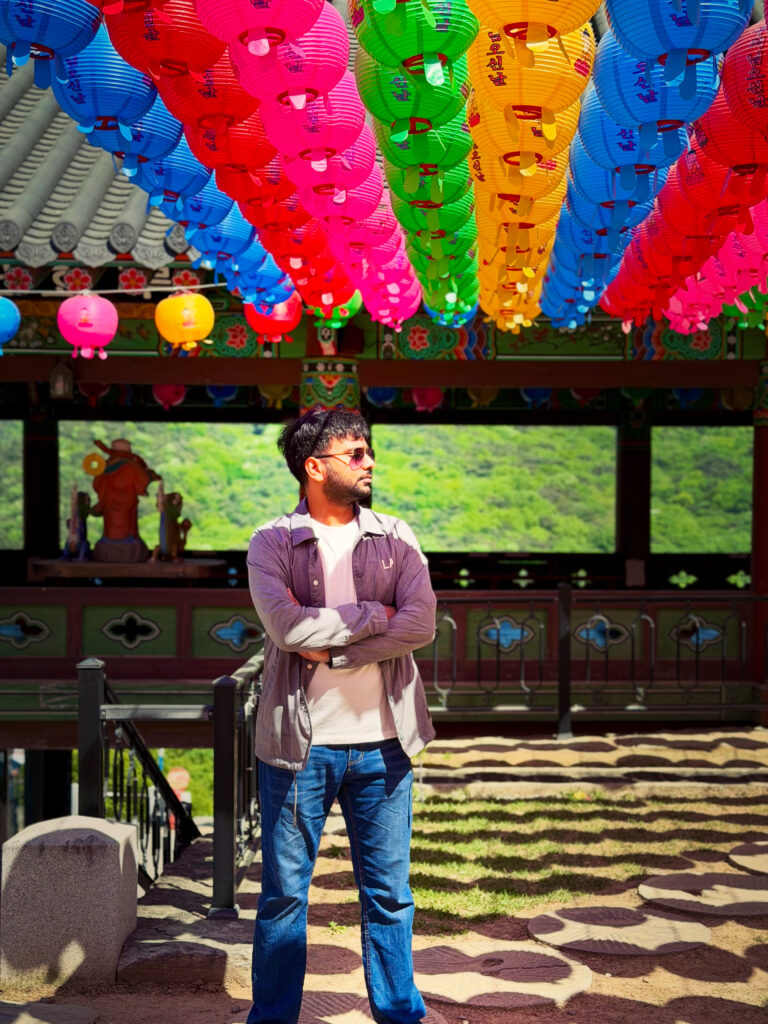
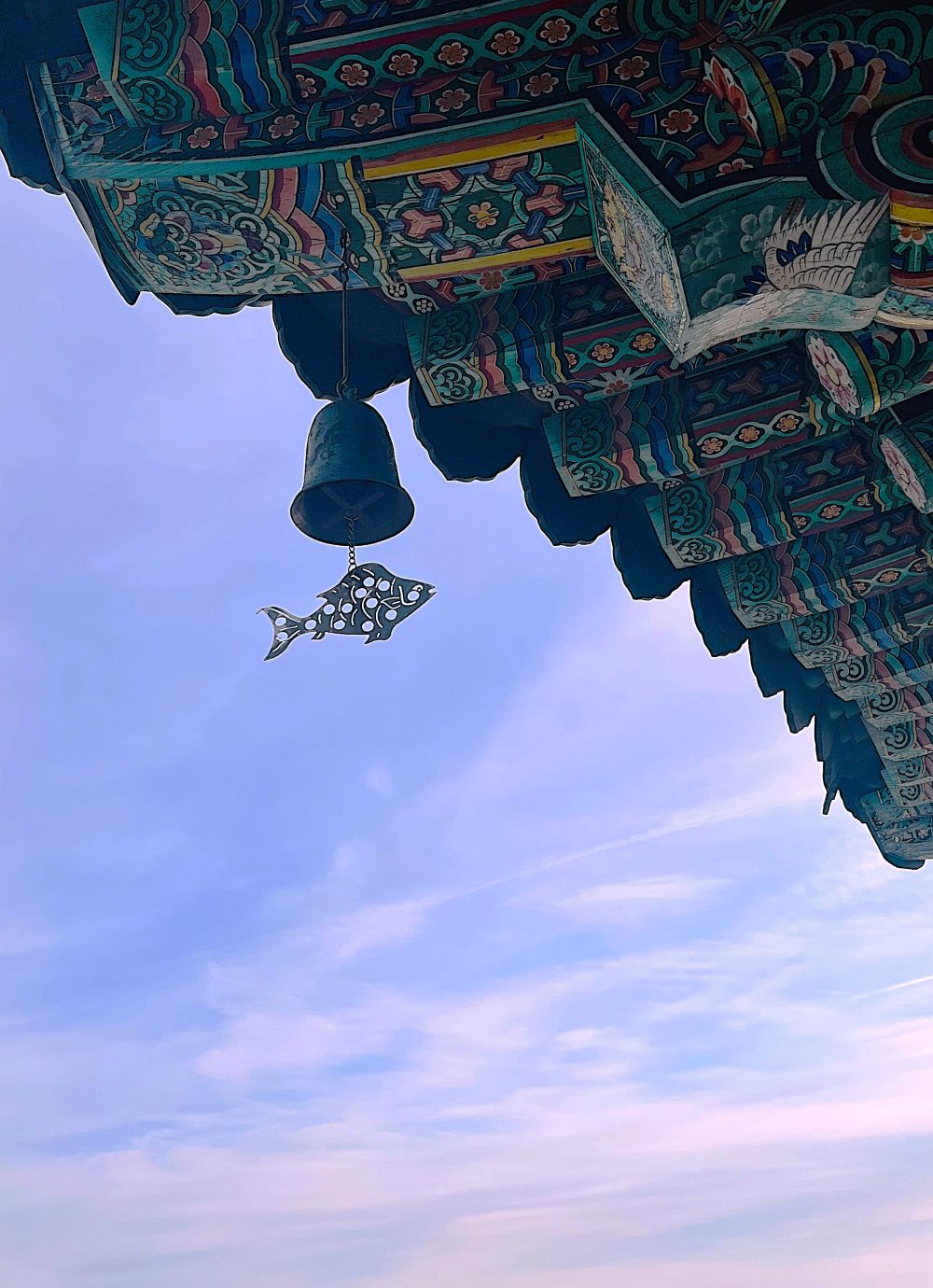
Vibhanshu Maurya under colorful temple lanterns at Won-hyo Temple, Gwangju – a quiet moment reflecting his love for local travel, culture, and observation.
GN: Until recently, you hosted a podcast. Could you tell us about your motivation behind that?
Vibhanshu: The podcast began from curiosity and loneliness. I wanted to talk with foreigners who had lived in Korea for a long time and ask about their real journey beyond the polished image people often see online. Many come with dreams but also face language barriers, cultural distance, career uncertainty, and emotional struggles. I wanted to create honest conversations where people could share what helped them survive and what they wished they had known earlier.
GN: You also led a hiking group in Gwangju for quite some time. How did that come about?
“I want to travel across Korea more slowly, listening to local stories rather than only visiting famous places.”
Vibhanshu: Yes, I led a group called Gwangju Hikers for almost one and a half years. It was a simple but meaningful way to bring foreigners and Koreans together outdoors. We hiked, talked, shared snacks, and discovered the mountains around Gwangju. These days, I am not organizing regularly because of time limitations, but I remember that period very fondly. It taught me that community can begin with a trail, a few people, and a shared willingness to walk together.
GN: And you’re a motorcyclist! Where has that two-wheeler taken you – both physically and emotionally?
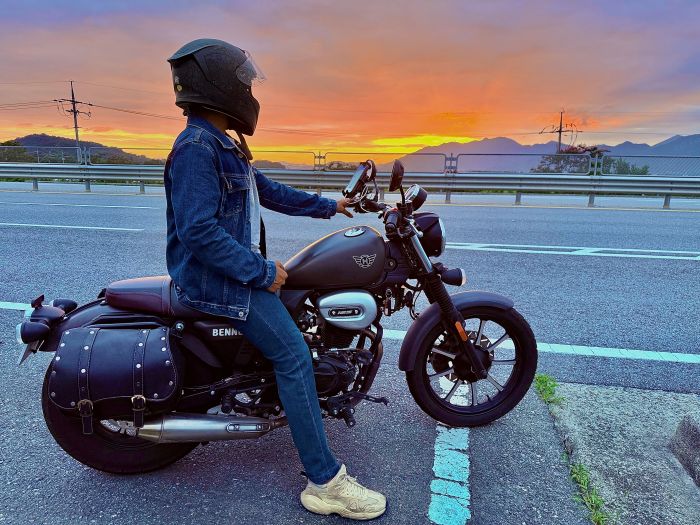
Vibhanshu: Physically, it has taken me through quiet roads around and beyond Gwangju, to temples, mountains, riversides, beaches, and small towns I might never have noticed by bus or train. Emotionally, it has given me freedom. During difficult periods in my PhD, riding helped me breathe. On a motorcycle, you are exposed to the weather, the road, and your own thoughts. You cannot overthink too much. You have to be fully present.
GN: What do you see yourself doing in, say, five years from now? And where might you be doing it?
Vibhanshu: I hope to work at the intersection of science, communication, and community. Professionally, I want to continue with soft materials, wearable electronics, or bio-inspired devices, either in academia or industry. At the same time, I do not want to lose writing. I want to keep explaining science simply and telling stories about people whose experiences are often overlooked. I am open about where: Korea, Europe, India, or anywhere that lets me grow scientifically and personally.
GN: I imagine you have a bucket list. What items might be at the top of that list?
Vibhanshu: I want to finish my PhD with work I can truly be proud of. I want to travel across Korea more slowly, listening to local stories rather than only visiting famous places. I also hope to publish a book about my PhD journey, sharing practical lessons and honest experiences. Another dream is to create a space where international students can find guidance, friendship, and emotional support. And someday, I would love to take a long motorcycle trip across beautiful parts of Asia.
GN: What has living in Gwangju taught you?
Vibhanshu: Gwangju has taught me that a city does not need to be the biggest or loudest to shape a person deeply. It has taught me slowness, resilience, and the value of community. I have met people here who helped me in small but unforgettable ways. I have also seen how international residents can feel welcomed and isolated at the same time. That contradiction has shaped much of my writing.
GN: Thank you, Vibhanshu, for allowing our readers to get to know you better! We hope to learn even more about you through future articles that you contribute to the Gwangju News!
Interviewed by David Shaffer.
Photographs courtesy of the author.
Cover Photo: Chasing sunset on two wheels – for Vibhanshu, motorcycle rides around Gwangju offer freedom, stillness, and a way to be fully present.