

The Calcuttan in Korea: The Ghosts and the Kinetic
By Reeti Roy ||
In Calcutta, where I am from, we inherit a certain faith of the mind. Not loudly, not as doctrine, but quietly, through habit. In the way we listen, in the way we are taught to admire, in the way a well-formed sentence or a certain kind of education begins to stand in for something larger than itself. The ability to hold a room through thought alone is not merely an accomplishment. It is, in some sense, an assurance – that if someone can think well, they will live well. That if they can speak beautifully, they will also, inevitably, “arrive.”
I arrived in Seoul carrying that faith of the mind with me, almost unconsciously, like a second language I did not know I was fluent in. It has been, since then, gently and persistently undone.
The Men Who Did Not Arrive
There are two men in this story, though neither of them ever quite enters it in the way I once expected they might. The first is what I have come to think of as a credentialed academic. Precise, articulate, careful with language in a way that signals both training and restraint. When we first spoke, we spoke for hours, the kind of conversation that feels less like an accident and more like a construction. It had shape, movement, a sense of shared intellectual ground that is rare enough to feel significant when it appears.
Seven months later, we have still not met. What exists instead is a trail of messages that are, in themselves, almost faultless. Gracious, measured, always oriented toward a future encounter: “It would be lovely.” “I am looking forward to it.” “Let us find a time.”
And yet, the future remains exactly that. Something deferred, something that holds its form without ever becoming real. There is always a reason, never dramatic, never even particularly inconvenient, just sufficient enough to prevent the moment from arriving.
At some point, without me quite noticing when it happened, the language begins to lose its weight. Not because it changes, but because it does not. I find that I cannot recall the content of what he has said, only the structure of it. The promise of presence without its fulfilment. A series of sentences that gesture toward something that never quite materializes. He lives, I realize, in a future tense that never quite becomes the present.
The second man exists in a different register altogether. There was no careful calibration here, no measured pacing. Only intensity. Conversations that unfolded quickly and with a kind of emotional velocity that can be mistaken, in the moment, for inevitability.
We spoke as if something had already been decided. And yet, nothing was. Because intensity, I am beginning to understand, does not necessarily move forward. It can remain suspended, complete within itself, requiring no translation into action.
Between the two of them, what remains is not quite disappointment, and certainly not heartbreak. It is something quieter and more difficult to name. The experience of something that almost becomes real, and then does not.
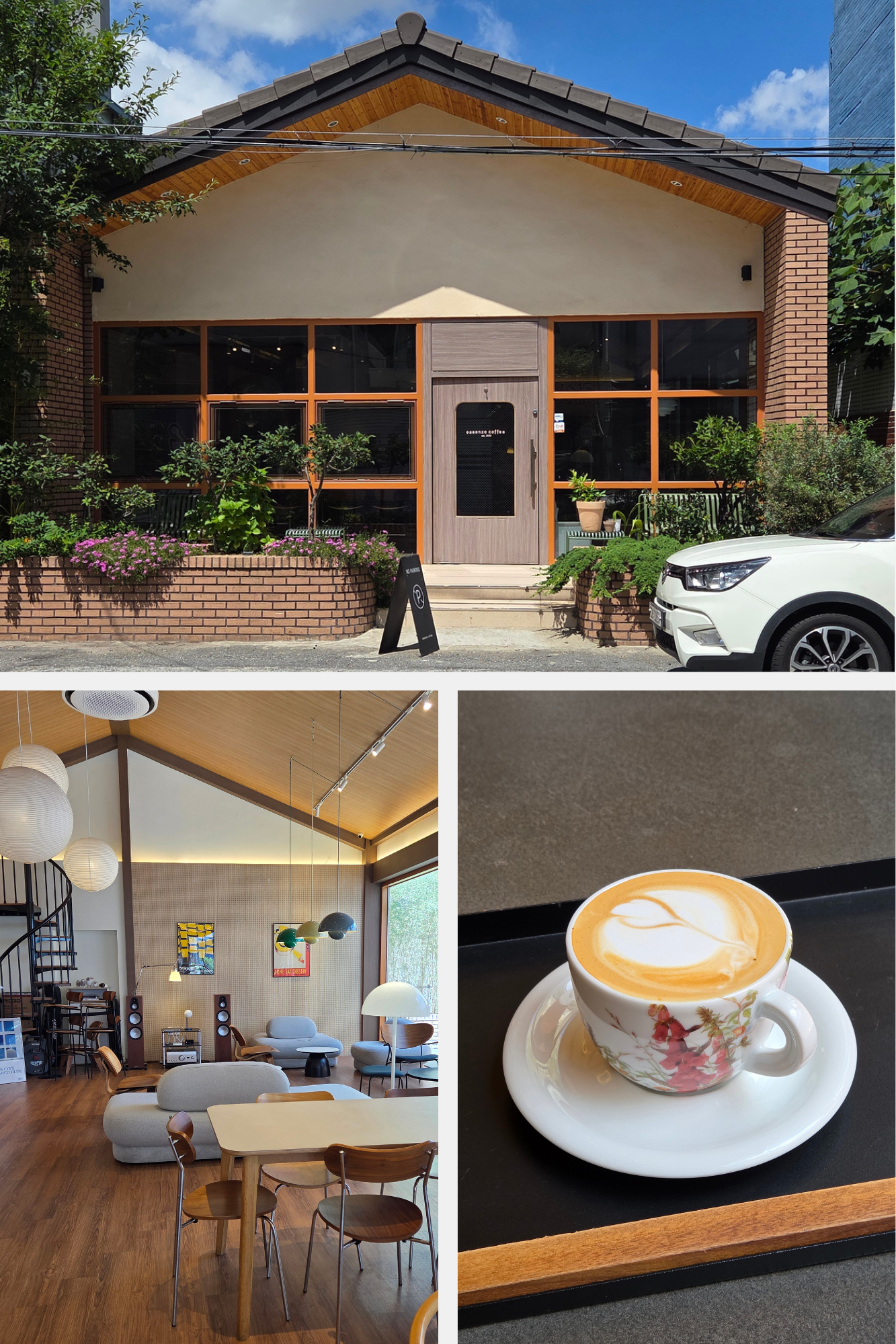
Exploring Seoul one neighborhood at a time, learning the city not through landmarks alone but through everyday encounters.
What It Means to Leave
This is not, finally, a story about men, though they appear in it. It is a story about leaving. When I left Calcutta, I did not simply change cities. I stepped out of a world in which I was held in ways that I had not fully understood until they were no longer immediately available to me.
- My mother, who reads my silences with an accuracy that still unsettles me.
- My four cats, who have never required language to understand me, only proximity.
- My brother, who worries without saying so, whose concern exists as a quiet constant rather than a spoken one.
- My little nephew and niece, who tell me to bring back ramyeon, who insist that I should have a good time, who perform their excitement with such care that it almost conceals what sits just beneath it. They do not say that they miss me. They come very close, and then stop, their voices shifting in that small, unmistakable way that reveals what is being held back.
There are moments here, in the stillness that follows a long day, when the question arrives without warning: Why did I leave a life so full of love to come to a city where I know no one? It is not a question that demands an answer so much as one that marks a transition. Because here, I am learning to live without the immediate recognition that once structured my days. To think in one language, speak in another, and feel in something that does not yet fully belong to either.
There are days when even the air feels unfamiliar. The fine yellow dust settles quietly, insistently, reminding me that the body, too, must negotiate its place in a new environment. And beneath all of this, something I had not encountered before in quite this way: the absence of an emotional anchor. Not loneliness, exactly. Something more suspended than that.
What I encounter instead is a form of social grace that is difficult to translate directly. It is warm, attentive, careful in its politeness, and yet it does not always arrive in the way I expect it to. It does not reject. But it does not quite choose either.
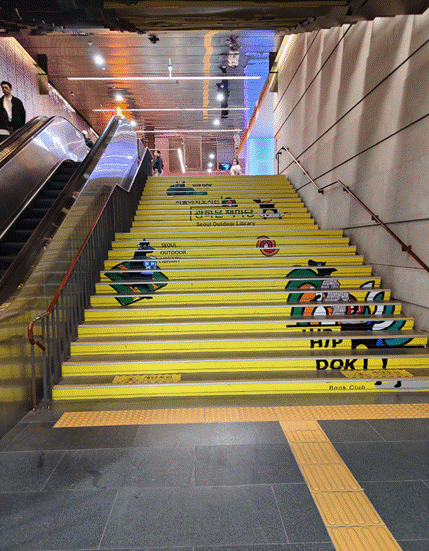
Steps transformed into public art, reflecting Seoul’s ability to weave creativity into ordinary urban spaces.
The City That Touches Back
And yet, while certain connections remain suspended, the city itself resists that same distance.
Seoul, I am discovering, is a place that touches back. Not dramatically, not in ways that announce themselves but in small, precise gestures that accumulate into something unexpectedly steady. – A flight attendant who reaches out, without hesitation or commentary, and places a bandage where it is needed.
- A young man at a samgyeopsal restaurant who stands over the grill with complete attention, turning the meat at exactly the right moment, placing it on my plate with a quiet assurance that does not require explanation.
And then, at my university, during a routine fire drill, I find myself next to a firefighter. There is no shared vocabulary, no introduction. Only the immediacy of the task. He takes my hand to guide it. Adjusts my grip. Shows me, through touch, what needs to be done.
It is a brief moment. And yet, it is entirely present. I realize, with a clarity that feels almost physical, that my body registers this differently. I remember the pressure. The steadiness. Nothing in my body remembers the Korean sentences I have been reading for months. The body does not archive intention. It archives contact.
When he says, softly, that I have done well, it lands not as praise, but as recognition.
The Softness I Did Not Expect
There is, alongside this, another form of presence that I had not anticipated. In my classroom, my teachers are 친절합니다 – kind. I have learnt, slowly and with some hesitation, to say it aloud: 선생님이 친절합니다. It is a simple sentence: “My teacher is kind.” And yet, it seems to contain more than I first understood. Not just kindness as a quality, but as a way of being present. A way of noticing without intrusion, of encouraging without performance.
They place stickers in my workbook when I get something right. They circle my Hangul strokes carefully, not only to correct but to encourage, to signal that the effort itself is visible. In a space where I am often aware of what I cannot yet say, they do not withdraw from that limitation. They remain with it. It is a quiet kind of generosity. One that does not rely on language to assert itself.

Street art in Seoul’s public realm, where moments of humor and imagination emerge unexpectedly in the flow of daily life.
A City in Parallel
And all the while, the city moves on another register entirely. I am here at a moment when BTS have returned, and there is a sense, difficult to define but easy to feel, that something larger is unfolding alongside the ordinary. It appears in fragments. In the sudden presence of purple lights, in music that slips out into the street from passing cars or open doors, in the low hum of collective anticipation that moves through the city without needing to announce itself.
At some point, without trying to, I begin to recognize words before I fully understand them: 자 어서 내 손을 잡아 (Come on, take my hand). It is a phrase I have already learned elsewhere. Not in a song, but in the quiet choreography of this city. In the firm guidance of a firefighter’s grip. In the instinctive steadiness of a stranger who does not hesitate.
It is possible, here, to be living a life that feels intensely private while being surrounded by something unmistakably public. To hold both without contradiction.
What Remains
What I am learning here is not what I expected to learn: that presence is not always articulated. That care is not always declared. That the ability to speak beautifully does not necessarily extend to the ability to arrive.
I am learning, slowly, to distrust language that does not move toward action. To recognize that some people inhabit the future as a way of avoiding the present. And to understand that a brief moment of contact can carry a weight that no amount of intention can replicate.
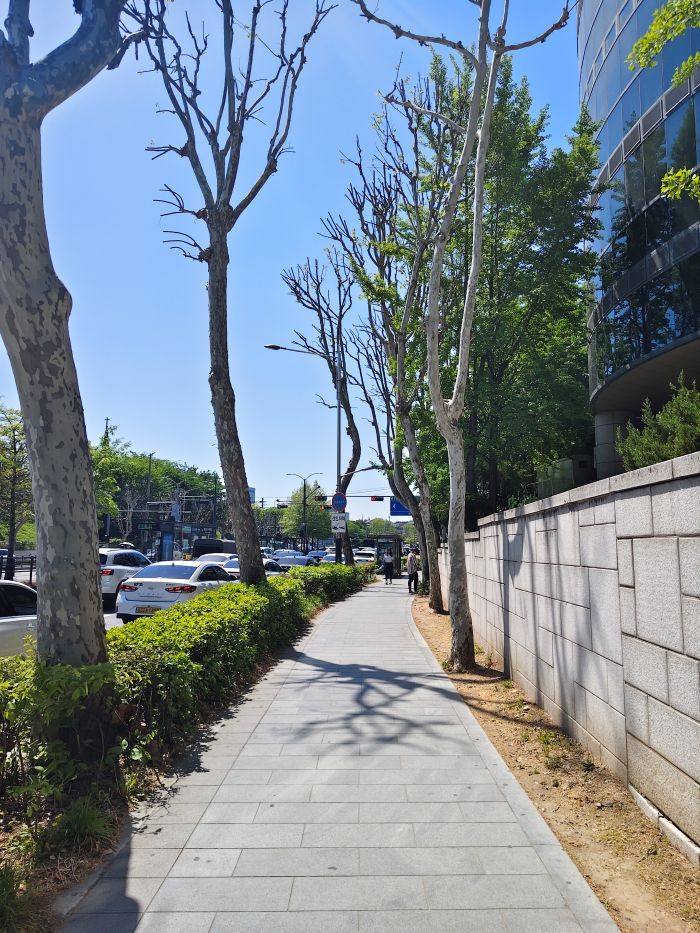
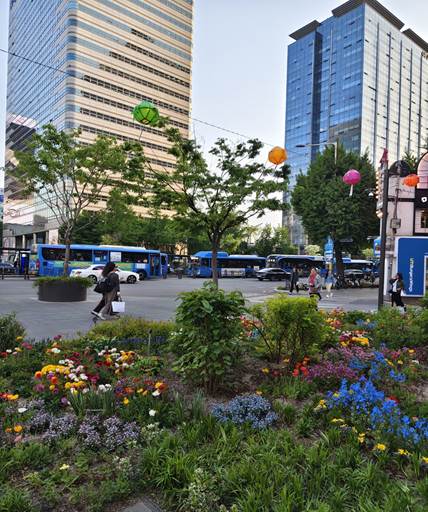
The author’s familiar route to and from the university.
The Ending
There is, now, a clarity that does not feel dramatic, only settled. On one side, men who speak in futures, who construct possibilities that remain suspended in language. On the other, a city that continues, quietly and persistently, to meet me in the present.
In Calcutta, I learned to trust the mind. In Seoul, I am learning to trust something simpler: the hand that does not hesitate.
The Author
Reeti Roy is a cultural commentator and the founder of Aglet Ink. A graduate of Jadavpur University and the London School of Economics, she is currently based between Korea and India, investigating Indo-Korean social architectures through an anthropological lens.
Photographs courtesy of the author.
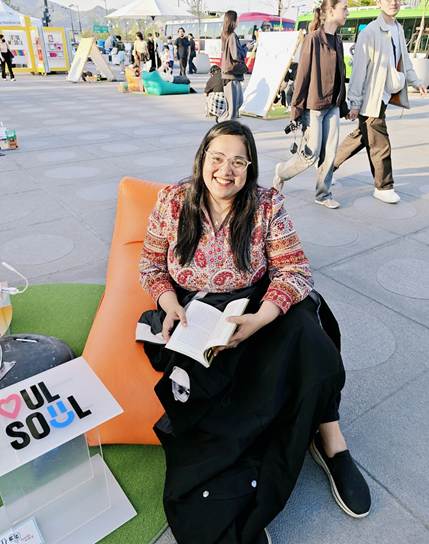
Cover Photo: The author in Seoul, where a summer of language study became an unexpected lesson in presence, belonging, and the small gestures that make a city feel alive.