

The San Antonio Youth Summit: Gwangju Delegates Report
San Antonio, Texas, is one of Gwangju’s sister cities. The two urban centers have a long history of exchanges, and this is probably the most active of Gwangju’s sister-city relationships. The most recent event involving the two has been the Sister Cities Youth Summit in San Antonio to which two youth delegates from Gwangju were invited. The two fortunate Gwangju individuals selected to participate in the July 24–29 pro-gram were Lee Chaewon and Choi Seo-hyeon. In collaborating on writing this article for the Gwangju News, Lee describes the Youth Summit, while Choi focuses on the interactions with student delegates from vastly different parts of the globe. — Editor
The Program
The San Antonio Sister Cities Youth Summit brought together students from Baguio, Philippines; Kumamoto, Japan; Darmstadt, Germany; Querétaro, Mexico; Kaohsiung, Taiwan; and San Antonio, USA. Throughout the week, we explored sustainability, cultural exchange, and global citizenship while building friendships across cultures.
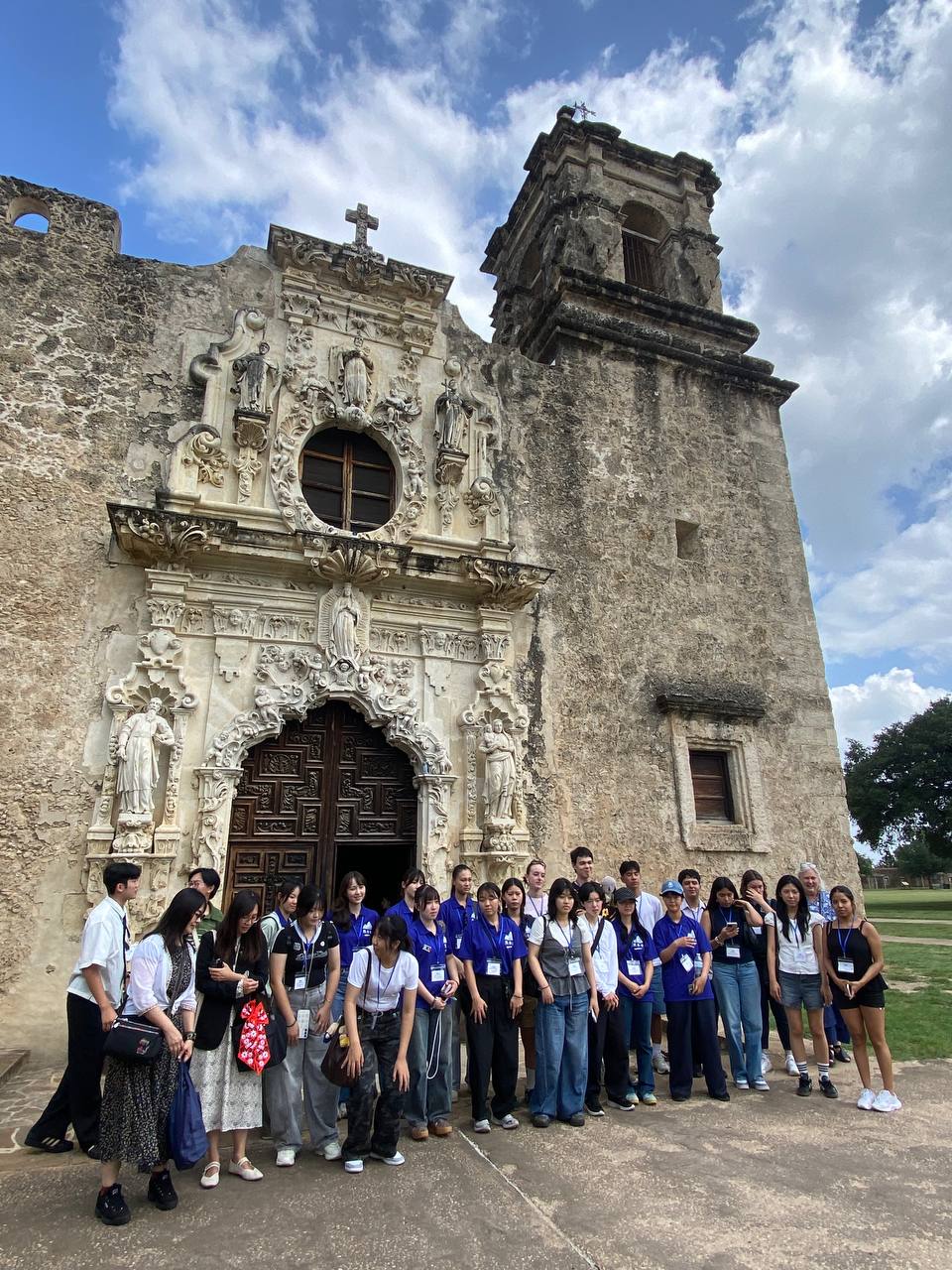
Our first day focused on learning about the history and culture of San Antonio. By visiting landmarks such as The Alamo, Mission San José, and the San Antonio River Walk, we gained a deeper understanding of the city’s history and the blend of cultures that has shaped its identity.
On the second day, we participated in a volunteer project at the San Antonio Food Bank alongside SOS (Students of Service) students. Although sorting and packing food was physically demanding, the experience was both meaningful and enjoyable. We encouraged one another, shared conversations, and worked together toward a common goal. By the end of the volunteer project, we had helped package 32,240 pounds of food. This experience taught me that community service is not only about helping others but also about bringing people together.
The third day was spent with our host families. Living with local families allowed us to experience everyday life in San Antonio and better understand American culture beyond what we could learn as visitors.
The Sister Cities Youth Summit officially began on the fourth day. Participants explored five key themes: energy, green spaces, water, sustainable architecture, and transportation. Through discussions, guest speakers, and site visits, we learned about the challenges facing San Antonio and considered how cities can become more sustainable.
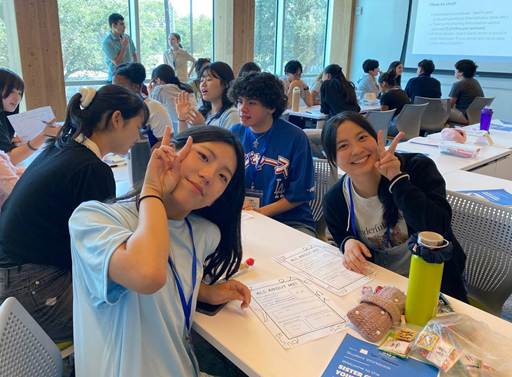
Choi Seo-hyeon (l.) with fellow San Antonio Summit participants at orientation.
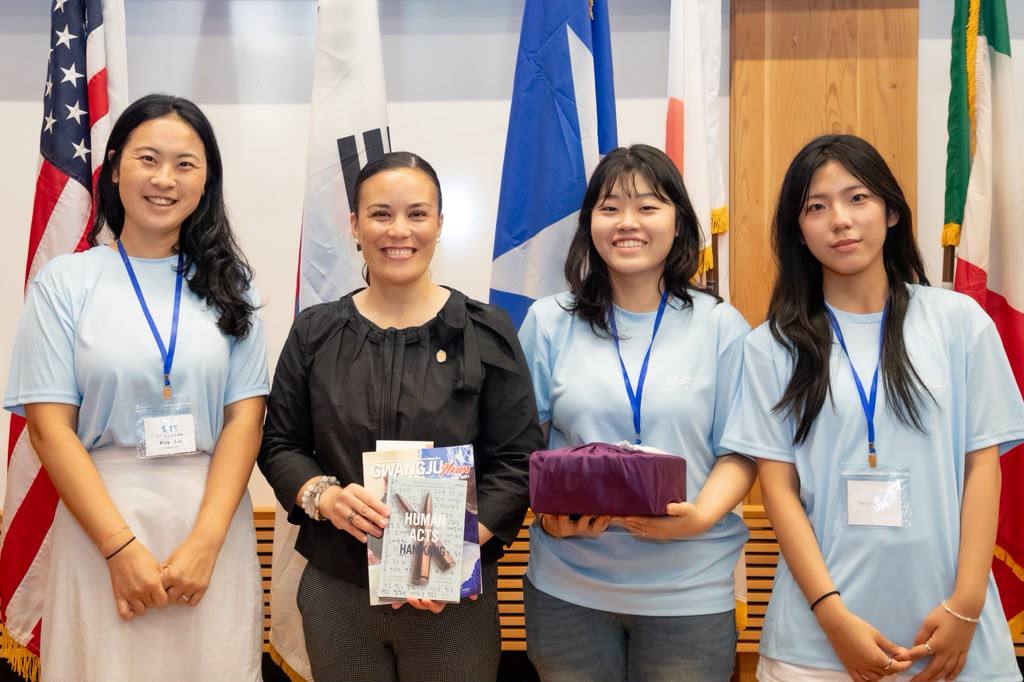
Team leader Lee Boram (l.) and Gwangju delegates Lee Chaewon and Choi Seo-hyeon with San Antonio Mayor Gina Ortiz Jones.
Working in international teams throughout the week, we discussed what we had learned, exchanged ideas, and developed solutions for a more sustainable future. Despite our different languages, cultures, and backgrounds, we shared a common goal of creating better communities for future generations. On the final day, each team presented its ideas during the Final Pitch presentations.
One of the most valuable lessons I learned was that sustainability is not a challenge faced by a single city or country. It is a global issue that requires cooperation, creativity, and shared responsibility. By listening to different perspectives and learning from one another’s experiences, we were able to develop stronger ideas and broaden our understanding of the world.
Although the summit lasted only one week, it left a lasting impact on me. I built new friendships, gained a deeper appreciation for cultural diversity, and strengthened my sense of responsibility as a global citizen. The Youth Summit showed me that meaningful change begins when people from different backgrounds come together with a shared purpose, and it has inspired me to continue working toward a more sustainable and connected world. [By Lee Chaewon]
The Interactions Between Participants
While the Sister Cities Youth Summit centered on sustainability in San Antonio, the interactions I had with students from six different countries became the most meaningful part of the experience. During the week, we introduced our cities, explored local attractions together, and communicated beyond the barriers of language and culture. Most importantly, I made friendships that I will always treasure.
Before attending the summit, I had thought it would be difficult to become close to students from different countries because I had always been surrounded by people who spoke the same language and shared the same culture as mine. However, once I started talking with the other delegates, my perspective completely changed. They were not different; they were the same. Even though our languages and cultures were different, we shared many of the same experiences as teenagers. We naturally found common interests, and those similarities quickly brought us together.
I was also surprised by how popular K-culture was. It would not be an exaggeration to say that I became friends with about half of the students because of our conversations about K-pop, Korean dramas, or other aspects of Korean culture. Seeing how far Korean culture has spread around the world made me feel proud of my country. Our similarities helped us become friends more quickly, while our differences made us curious about one another. Instead of creating distance, our different backgrounds gave us more to talk about and learn from each other.
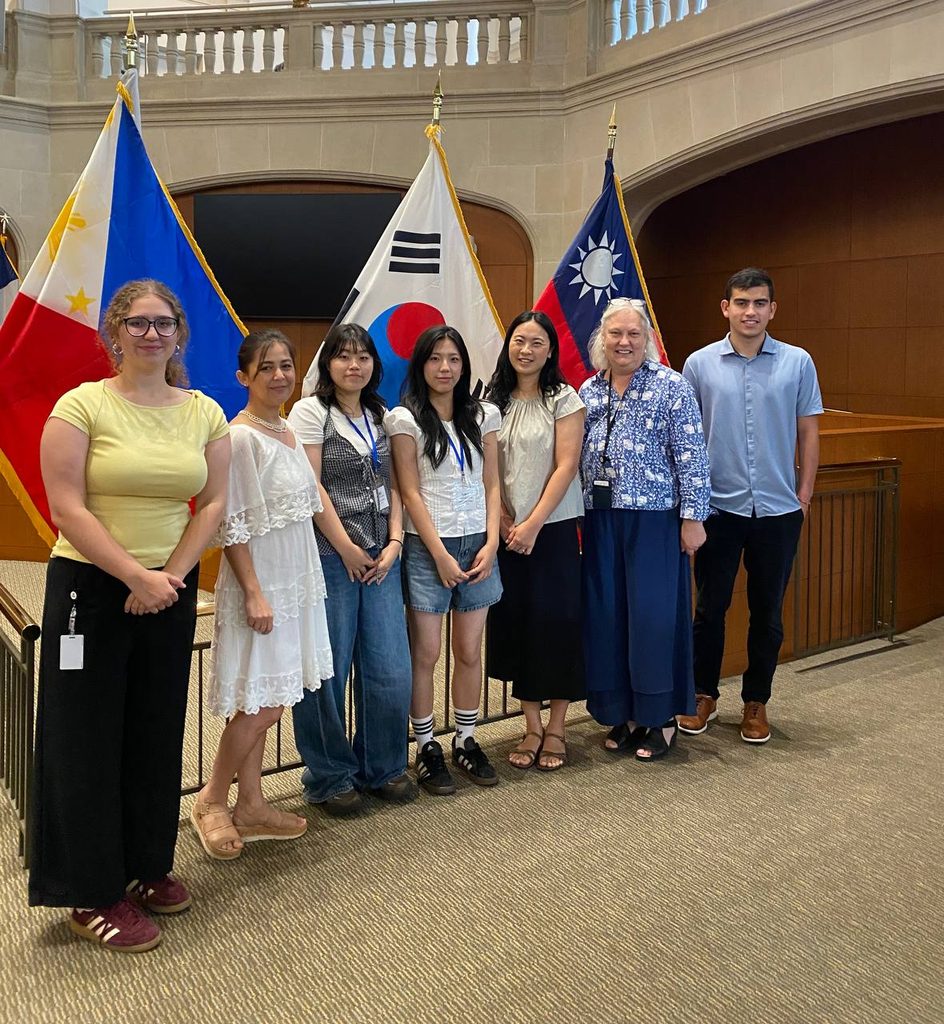
The Gwangju delegation (c.) to the Summit with members of the City of San Antonio’s International Relations, Global Development team.
Another memorable part of the summit was discovering how differently people from different countries think. Whenever I had a question or a concern, I asked my new friends for advice. I was fascinated to hear such a wide variety of answers. Each person’s perspective was shaped by their own culture and experiences, so every solution was unique. Through these conversations, I felt that I could learn not only about the individuals themselves but also about the cultures they came from.
As I learned about other cultures, I also found traditions that I truly admired. One of my favorite customs was greeting people with a hug. In Korea, people usually greet each other with a handshake in formal situations or simply say hello. However, many of my friends greeted each other with warm hugs, which made their greetings feel more genuine and welcoming. It was a small difference, but it made me feel closer to them.
I also came to appreciate the culture of small talk. Before traveling to the United States, I rarely experienced casual conversations with strangers. However, from the moment I arrived at the airport, I noticed that people would start friendly conversations and freely compliment one another, even if they had never met before. Seeing this made me realize how powerful a few kind words can be. I hope giving compliments and having friendly conversations with strangers will become more common in Korea as well.
Most importantly, we never thought of each other as friends only for the Youth Summit. We exchanged our Instagram, TikTok, and other social media contacts, created a group chat, and promised to stay in touch long after the program ended. We also promised that one day we would meet again.
Before traveling to the United States, I never imagined that I would leave with friendships this meaningful. The summit gave me much more than knowledge about sustainability – it gave me lifelong memories, a broader perspective on the world, and friends from around the globe. It was truly one of the most valuable experiences of my life. [By Choi Seo-hyeon]
The Authors
Lee Chaewon is a 17-year-old student at Speer Girl’s High School. Through the Global Leadership Program organized by the Gwangju International Center, she has had the opportunity to participate in the Youth Summit in San Antonio.
Choi Seo-hyeon is a student in Gwangju. She enjoys learning about sustainability, meeting people from different cultures, and turning ideas into real actions. She believes young people can make a meaningful difference in their communities.
Photographs courtesy of the Gwangju International Center.
Cover Photo: Summit delegates from five sister cities at San Antonio’s Mission San José.