
Hangeul: Korea’s Alphabet, Designed for All
By David Shaffer ||
For anyone who has recently arrived in Korea, the Korean alphabet, Hangeul (한글), can seem at once familiar and mysterious. The letters are unlike the Roman alphabet used by English and Western European languages, yet they are remarkably systematic. Once you learn the basic letters, you can begin sounding out Korean words – even before you know what those words mean. This apparent simplicity is no accident. Hangeul was deliberately designed to be learnable. Its story begins nearly six centuries ago, with a Joseon king who was concerned that many of his subjects could speak Korean but could not write it.
A New Alphabet for a Korean Language
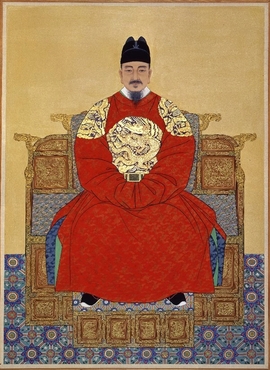
In the 15th century, Korea was ruled by King Sejong (reign 1418–1450), the fourth king of the Joseon Dynasty. The educated, upper-class Koreans could write in Classical Chinese, known in Korea as hanmun (한문), using Chinese characters (hanja, 한자), which was the written medium of government, scholarship, and the elite. This was incongruous, to say the least: being speakers of Korean but having to write in the Chinese writing system.
Korean was not Chinese. Its sounds and grammar were fundamentally different, and writing Korean with thousands of Chinese characters was quite cumbersome, taking years to learn. For people without access to elite education, which was the greater part of the Korean population, literacy was particularly difficult, and impossible for most.
King Sejong therefore initiated the creation of a writing system specifically suited to the Korean language. The new script was completed in 1443.
Three years later, in 1446, the king officially promulgated it in a book called Hunmin-jeongeum (훈민정음), meaning “the correct sounds for the instruction of the people.”
Hangeul is often described simply as having been “invented by King Sejong,” and that is essentially how the historical tradition presents it. In the introductory explanation to Hunmin-jeongeum, it states that Sejong created 28 new letters. The scholarly team associated with the royal court, however, was involved, subsequently producing the Hunmin-jeongeum Haerye-bon (훈민정음 해례본), an explanation of how the letters were constructed and used.
The reason for the new writing system was equally explicit: The Korean language had sounds of its own, and the Chinese writing system was not designed to represent them conveniently. The king wanted ordinary people to be able to learn to read and write without having to master the enormous body of Chinese characters required for a classical education. The original Hangeul system comprised 28 letters – 17 consonants and 11 vowels – designed to be simple enough for ordinary people to learn and use.
Why Do the Letters Have the Shapes They Have?
One reason Hangeul has acquired a reputation as an unusually systematic writing system is that its basic letter shapes are connected to the way their sounds are produced. The five basic consonant letters in the original system were modeled on the shapes or positions of the speech organs involved in pronunciation: the tongue, lips, teeth, throat, and related structures. Other consonants were derived from these basic forms by adding strokes according to phonetic relationships.
For example, consider the relationship among ㄴ, ㄷ, and ㅌ. The basic ㄴ represents a sound associated with the position of the tongue (“n” sound, with tongue touching top of upper teeth). Adding a stroke produces ㄷ (voiceless “d” sound), and another stroke produces ㅌ (voiceless “t” sound). The additional strokes reflect differences in the strength or character of the sound.
The vowel system follows another organizing principle. Three basic elements represented heaven, earth, and the human being: originally a dot (ㆍ), a horizontal line (ㅡ), and a vertical line (ㅣ). Combinations of these elements produced the other vowels. (The dot has transformed into the short stroke or strokes of vowel letters.)
Rather than writing a Korean word as a simple, linear sequence of individual letters, Hangeul groups them visually into syllable blocks. The word 한글, for example, groups six letters into two syllabic blocks: 한 + 글.
So Why Didn’t Everyone Immediately Start Using Hangeul?
Hangeul was designed to be easy to learn, often described as “the world’s most scientific alphabet,” but social acceptance of a writing system is not the same thing as technical simplicity. For centuries, Classical Chinese remained the prestigious written language of educated Korean society. The Joseon state was deeply influenced by Confucian scholarship, and mastery of Classical Chinese was closely connected with education, government service, and elite status. The civil-service examination system depended heavily on knowledge of Classical Chinese. Classical Chinese was the gatekeeper for the upper class.
Consequently, Hangeul acquired a lower cultural status even though it was much easier to learn. It was often called eonmun (언문), or “vernacular writing,” a name that itself reflected its perceived position below literary Chinese. For elite men, writing serious scholarship in Hangeul could be regarded as inappropriate or lacking prestige.
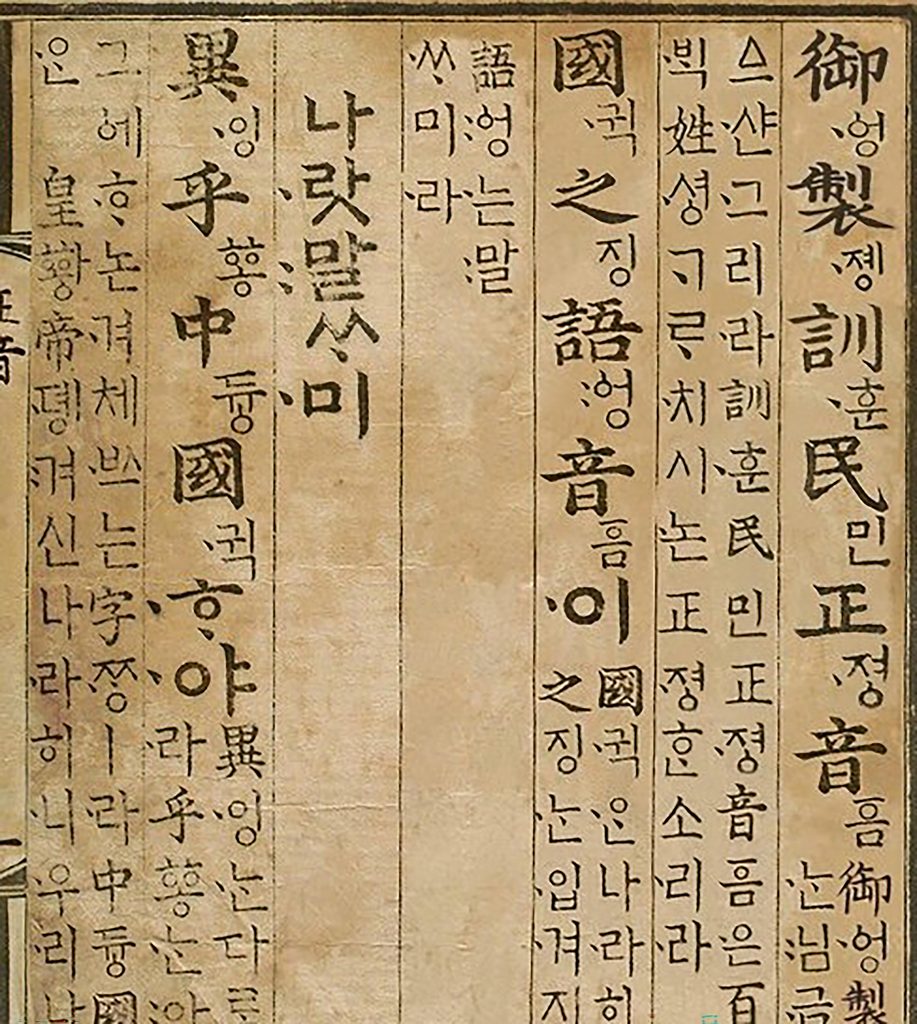
Hunmin-jeongeum, first page.
This does not mean that Hangeul was ignored. It foundparticularlystrongusesamongwomen, who were often excluded from the formal educational and political institutions that trained men in Classical Chinese. Elite women, too, became accomplished Hangeul readers and writers, producing letters, poetry, practical writings, and fiction. Hangeul was also used in religious texts, educational materials, government publications intended for wider audiences, medical works, translations, letters, songs, and popular literature.
So the story is not “Hangeul was invented and then nobody used it for 400 years.” Rather, it gradually developed an important parallel life while Classical Chinese retained its position as the prestige language of formal scholarship.
Reading Korean Literature Before 1900
Korean literature provides an extraordinary record of how Hangeul was actually used. Among the earliest major works associated with the new alphabet are Yongbieo-cheonga (Songs of the Dragons Flying to Heaven), completed in 1445, and Worin-cheongangji-gok (Songs of the Moon’s Reflection on a Thousand Rivers), produced around the same period. They are regarded as among the earliest literary works to make substantial use of the newly created script.
Other early Hangeul publications included translations and adaptations of Buddhist scriptures, Confucian classics, instructional texts, medical works, and dictionaries. These were important because they demonstrated that Hangeul could be used for far more than informal correspondence.
Over the following centuries, vernacular literature flourished. Among the works associated with the long tradition of Korean-language fiction are Hong Gildong-jeon (The Story of Hong Gildong) and Chunhyang-jeon (The Story of Chunhyang). Hong Gildong-jeon, traditionally attributed to Heo Gyun and generally placed in the early 17th century, is particularly significant as an early Korean vernacular novel. By the 18th and 19th centuries, Hangeul was increasingly important in the production of popular literature. Yet Classical Chinese continued to coexist with it and remained the dominant writing system.
The Newspaper That Changed Everything
The great transformation came in the late 19th century. Korea was undergoing political and social upheaval, and reformers increasingly saw mass literacy as essential to modernization. In 1896, the reformer and intellectual Seo Jae-pil (known internationally as Philip Jaisohn) helped establish the newspaper Dongnip Sinmun (The Independent).
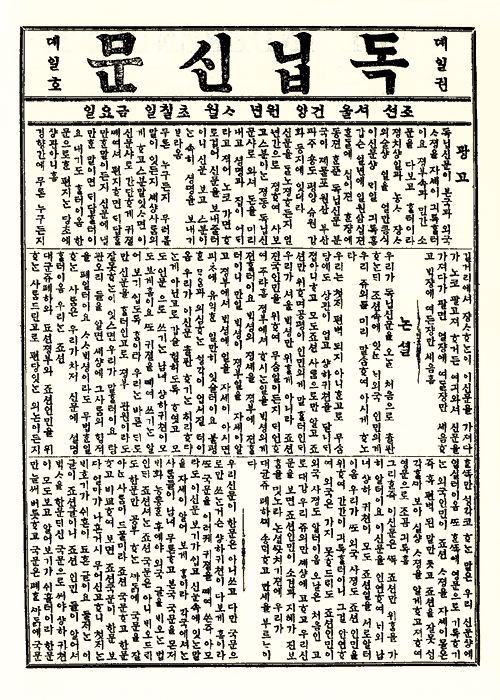
Dongnip Sinmun (The Independent), Korea’s first all-Hangeul newspaper (Read from right to left).
The newspaper was revolutionary in several respects. Its Korean-language pages were printed entirely in Hangeul rather than the traditional mixture of Hangeul and Chinese characters. It was intended to reach a broad readership and was published three times a week when it began. It also carried an English section.
This mattered enormously. By putting current events, political discussion, practical information, and public debate into Hangeul, Dongnip Sinmun helped demonstrate that Hangeul was capable of serving as the writing system of a modern society. By the beginning of the 20th century, Hangeul was moving from the margins of written culture toward the center.
From 28 Letters to Today’s Hangeul
If you could travel back to the 15th century and open a copy of Hunmin-jeongeum, you would recognize Hangeul, but you would also encounter letters that modern Korean speakers no longer use. The original alphabet had 28 letters: 17 consonants and 11 vowels. Modern Hangeul has 24 basic letters: 14 consonants and 10 vowels. Four of the original basic letters disappeared from ordinary Korean writing: ㆁ, ㆆ, ㅿ, and ㆍ. At the same time, the modern system developed additional combinations. The 24 basic letters can form double consonants such as ㄲ, ㄸ, ㅃ, ㅆ, and ㅉ, and numerous compound vowels and final-consonant combinations. Another historical feature that disappeared was the use of small tone marks, or bangjeom (방점), used in the original system to indicate tonal distinctions in Middle Korean.
From Vertical Columns to Horizontal Lines
Another change that visitors to Korea may find surprising is the reading/writing direction. Historically, Hangeul was written vertically, with characters proceeding from top to bottom and with columns progressing from right to left. This was consistent with the traditional East Asian writing environment in which Classical Chinese and Chinese-character texts were also written.
Today, Korean is normally written horizontally from left to right, much like English. The transition was gradual. Experiments with horizontal Hangeul writing appeared as early as the first half of the 20th century, but vertical writing remained dominant in newspapers, books, and magazines for decades after liberation in 1945. When this author arrived in Korea in the early 1970s, vertical writing was still quite common. The Hankyoreh, founded in 1988, became the first major Korean daily to use horizontal writing throughout. Other newspapers followed, and by the late 1990s the major newspapers had largely abandoned traditional vertical typesetting. Closely related to this is the decline of Chinese characters.
“Dongnip Sinmun helped demonstrate that Hangeul was capable of serving as the writing system of a modern society.”
What Happened to Chinese Characters?
If you look at a Korean newspaper or textbook from the 1950s or 1960s, you may be surprised by how many characters appear alongside Hangeul. For much of modern Korean history, “mixed writing” was common. Korean grammatical endings and native Korean words were written in Hangeul, while Sino-Korean vocabulary was frequently represented with hanja. Hanja could help distinguish words with identical pronunciation and was associated with formal education and intellectual tradition.
After liberation in 1945, South Korea debated intensely over whether hanja should continue to be used. The government changed policy back and forth on teaching Chinese characters in secondary schools and in use in official government documents. Newspapers gradually used fewer and fewer Chinese characters for words until the present when in newspapers, for example, they are relegated to parenthetical use only when useful for disambiguation.
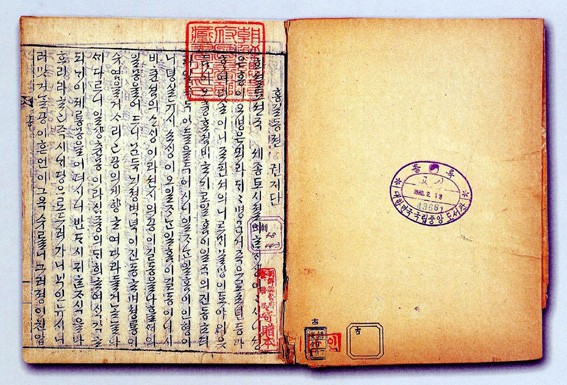
Hong Gilding-jeon (The Story of Hong Gildong), an early Hangeul novel.
Hanja, however, has not disappeared completely. It remains visible in historical documents, dictionaries, academic contexts, personal names, calligraphy, signs, and the occasional newspaper appearance. But ordinary contemporary Korean is overwhelmingly written in Hangeul, and one can live comfortably without any knowledge of hanja.
North and South: Similar Alphabet, Different Conventions
North and South Korea still use closely related forms of the same basic writing system, but their standards have diverged since the division of the peninsula. There are easy-to-notice differences in spelling, for example. South Korean spelling changes certain initial ㄹ and ㄴ sounds in particular positions, whereas North Korean spelling generally retains them. For example, the word for “dragon” is spelled (and pronounced) 룡 in North Korea, while in the South, it is 용. Nevertheless, the underlying writing system remains unmistakably similar on both ends of the peninsula.
How Hangeul Day Began
Every October 9, Korea celebrates Hangeul Day (Hangeul-nal), but the holiday itself is much younger than the alphabet. The first organized celebration took place in 1926, when the Korean Language Research Society (Joseon-eo Yeongu-hoe) marked the 480th anniversary of the promulgation of Hunmin-jeongeum. The day was then called Gagya-nal (가갸날), a name derived from the traditional way beginners learned Hangeul syllables. The name was changed to Hangeul Day in 1928. Hangeul Day became a public holiday in 1946, lost its public-holiday status in 1990, but regained this status in 2013.
How Hangeul Day Is Celebrated
For someone living in Korea, Hangeul Day can be a good opportunity to experience a side of Korean culture that goes beyond food, music, television, and popular entertainment. National and local events commonly include exhibitions, lectures, calligraphy demonstrations, competitions, language activities, typography and design exhibitions, children’s programs, and opportunities to learn about the history of the alphabet. The celebration is increasingly international as well. Korean Cultural Centers abroad have organized Hangeul calligraphy competitions, Korean-language contests, exhibitions, workshops, and lectures for non-Koreans.
“Social acceptance of a writing system is not the same thing as technical simplicity.”
Hangeul Leaves Korea
Hangeul’s influence has also crossed Korea’s borders in a more literal sense. One of the best-known examples is Cia-Cia, an Austronesian language spoken in and around Baubau on Buton Island in Indonesia. Cia-Cia traditionally had no widely established writing system of its own. In 2009, a project involving South Korean linguists and the Hunmin-jeongeum Society developed a way of representing Cia-Cia using Hangeul. A Cia-Cia textbook was published that year, and classes began at a local elementary school. The experiment demonstrates something significant about Hangeul: Because its basic principles are phonetic and its letters can be combined systematically, the writing system can be adapted to languages other than Korean.
What Might the Future Hold?
Hangeul has already undergone several transformations: from a royal project to a vernacular writing system; from a script used alongside Classical Chinese to Korea’s dominant writing system; from vertical columns to horizontal lines; and from hand-written manuscripts, hand-carved woodblocks, and metal type to computer keyboards, smartphones, digital fonts, and artificial intelligence.
Its future may be equally dynamic. Today, Hangeul is part of Korea’s global cultural presence. People encounter Korean letters on K-pop albums, television programs, cosmetics, clothing, restaurant signs, social media, websites, and advertisements. Korean-language programs offered by King Sejong Institutes and other institutions have also brought Hangeul to learners around the world.
And perhaps the most fitting aspect of Hangeul’s future is that its original purpose remains relevant.
Sejong’s writing system was created to make communication more accessible – to give people a practical means of recording the language they actually spoke. Nearly 600 years later, people who arrive in Korea from other countries face their own version of that challenge. The signs on the subway, the menus in restaurants, the notices in apartment buildings, and the names of streets can initially seem like an impenetrable wall of symbols.
But Hangeul is unusually welcoming once you understand its logic. Learn the consonants. Learn the vowels. See how they combine. Notice how a syllable block is assembled. Listen to the sound and connect it with the shape. Suddenly, that wall begins to break apart.
And that may be the most remarkable legacy of Hangeul. It is not simply an old Korean cultural artifact. It is a living writing system whose creators explicitly intended it to help people communicate – in Korea, in Korean, in Hangeul, and beyond.
The Author
David Shaffer first encountered Hangeul when he came to Korea in the early 1970s, a time when he needed to also learn Chinese characters to be able to understand the mixed writing system in common use at that time. Dr. Shaffer is now the editor-in-chief of the Gwangju News.
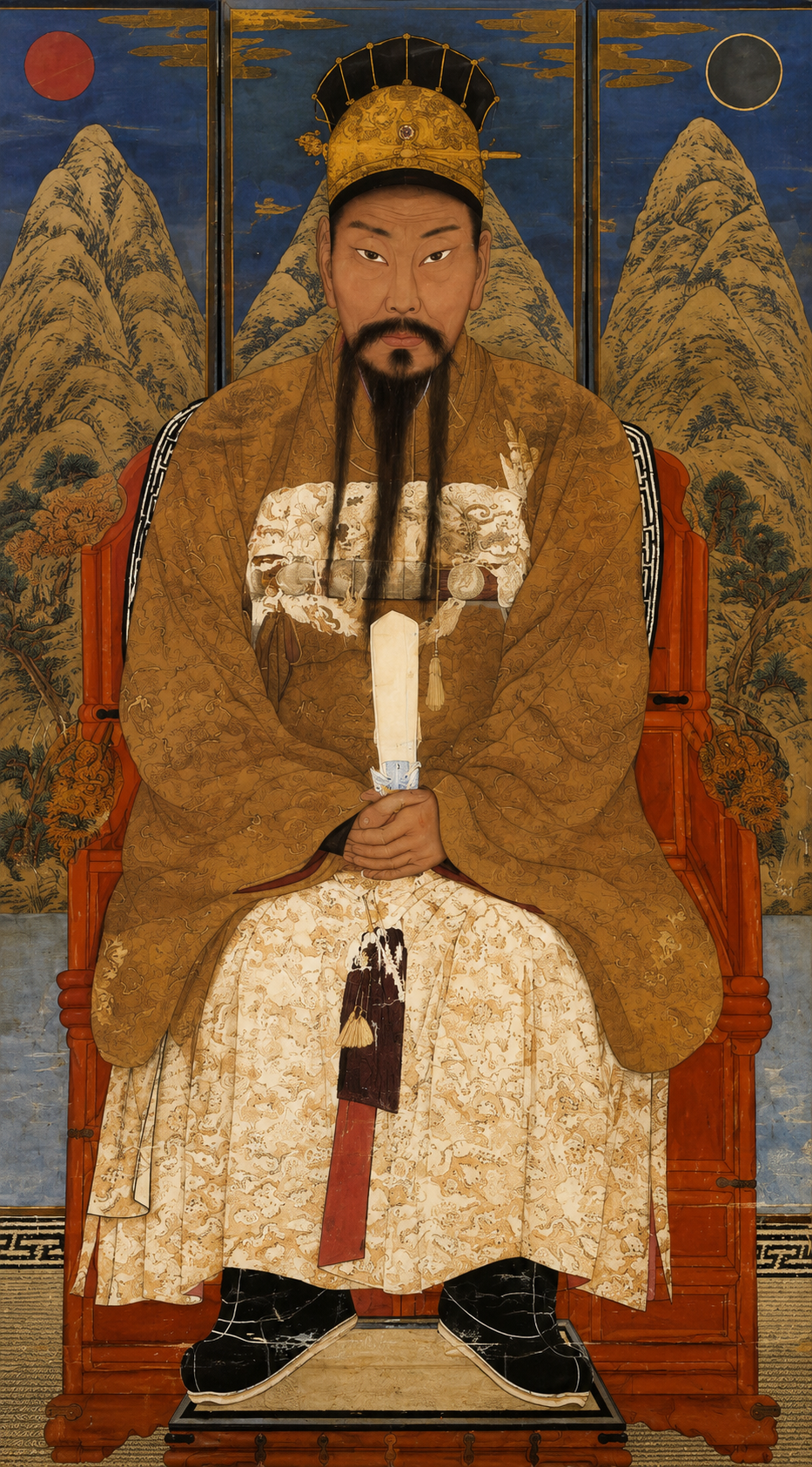
Cover Photo: King Sejong, creator of Hangeul (r. 1418–1450). (Original artist Kim Ki-chang)