

Mysterious Mahan: Visiting the Naju National Museum
By Don Baker ||
When I lived in Gwangju in the early 1970s, people who knew I was interested in Korean history would tell me that from about 2,000 years ago to around 1,400 years ago the Korean Peninsula had been divided into three kingdoms: Baekje in the southwest, Silla in the southeast, and Goguryeo in the north. They also told me that Gwangju was part of Baekje, which, they claimed, had been founded in 18 BCE. No one at that time mentioned the name Mahan.
Our picture of early Korean history has gotten more complicated since then. We now know that Baekje did not become a full-fledged kingdom until the 4th century. This means that the claim that the Jeonnam area was part of the Baekje kingdom for several centuries is incorrect, since Baekje went out of existence in the second half of the 7th century. Moreover, Baekje did not completely absorb the Jeonnam region until the early 6th century. Jeonnam was controlled by Baekje for only around a century and a half.
Before Baekje absorbed the Jeonnam region, there was another culture, and confederation of small chiefdoms, here called Mahan. Mahan existed for several centuries before Baekje absorbed it. In fact, a 3rd-century Chinese report on the Korean Peninsula describes Mahan (which it says was composed of 54 different autonomous polities) but doesn’t mention a separate kingdom called Baekje. The report doesn’t pay much attention to Baekje because in the 3rd century what later grew into the Baekje Kingdom was nothing more than a small settlement along the Han River. Though Baekje in its early stages may have been one of the groups that the Chinese considered part of Mahan, the core Mahan region in the southwest and Baekje farther north had different cultures, evident in different burial practices. Such cultural differences persisted well into the 6th century.
Mahan’s existence has been gaining more attention lately. A new national museum dedicated to Mahan opened in Naju in 2013. Last year, I decided to visit that Naju National Museum. I knew I was getting close when I noticed a sign on the road heading there that read “Welcome to Mahan.”
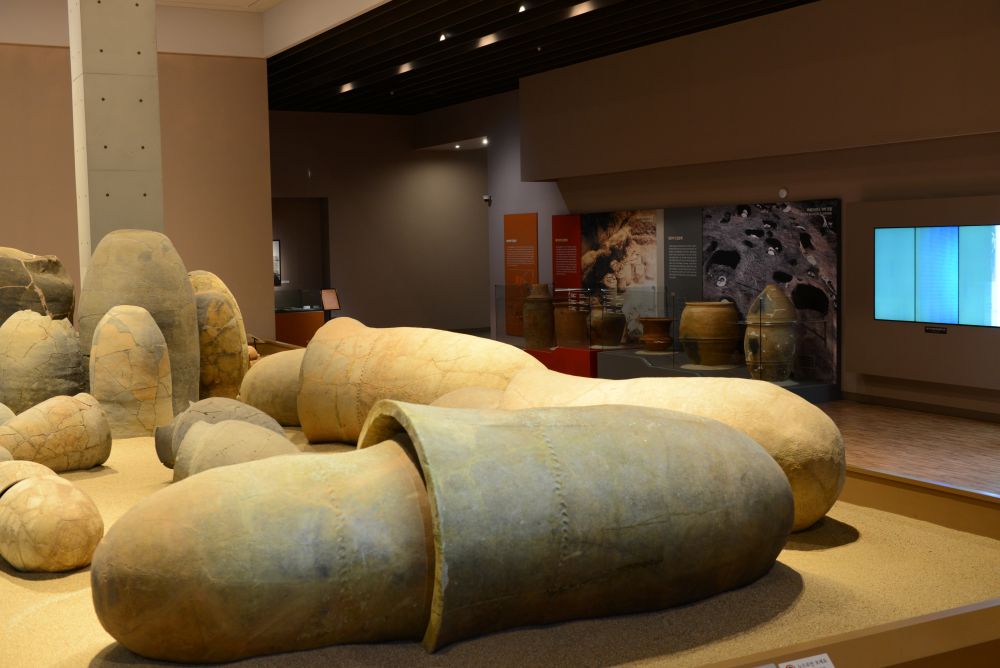
One of the exhibition halls in that museum is dedicated to the distinctive burial practice of Mahan: jar coffins. In the Mahan region, from at least the 4th through to the 6th century, the bodies of the recently deceased were placed in jars, with the head and upper part of the body in the larger jar and the rest of the body in a smaller jar with a rim that would be placed inside the larger jar. Apparently, this was done to lock in the spirit of the dead person so it could not escape!
No other region on the Korean Peninsula, including Baekje, practiced jar burials. In addition, Mahan placed several individuals in the same jar, while Baekje preferred to give each corpse its own coffin. Over in the southeast, archaeologists have found a few cases of several individuals in the same grave, but that appears to be because of a practice of human sacrifice to ensure that a high-ranking individual would have the same servants in the afterlife that he or she had in this life. Mahan did not do that.
A mystery that archaeologists and historians of ancient Korea are still unable to solve is why Mahan was the only place on the entire Korean Peninsula to bury their dead this way. Archaeologists often distinguish prehistoric cultures and ethnic groups by their burial practices. To them, it is clear that the Mahan region had its own unique culture. Does that mean that the people of Mahan were also a separate ethnic group? We don’t have any written documents from Mahan, so we don’t know for sure that the people of Mahan considered the people of Baekje and Silla to be their relatives. However, it is likely they did, since we can find evidence of substantial economic and cultural interactions between Mahan and the other polities on the peninsula 1,500 or more years ago. Moreover, no evidence has been unearthed so far of organized armed resistance to the slow advance of Baekje deep into Mahan territory in the 5th and 6th centuries.
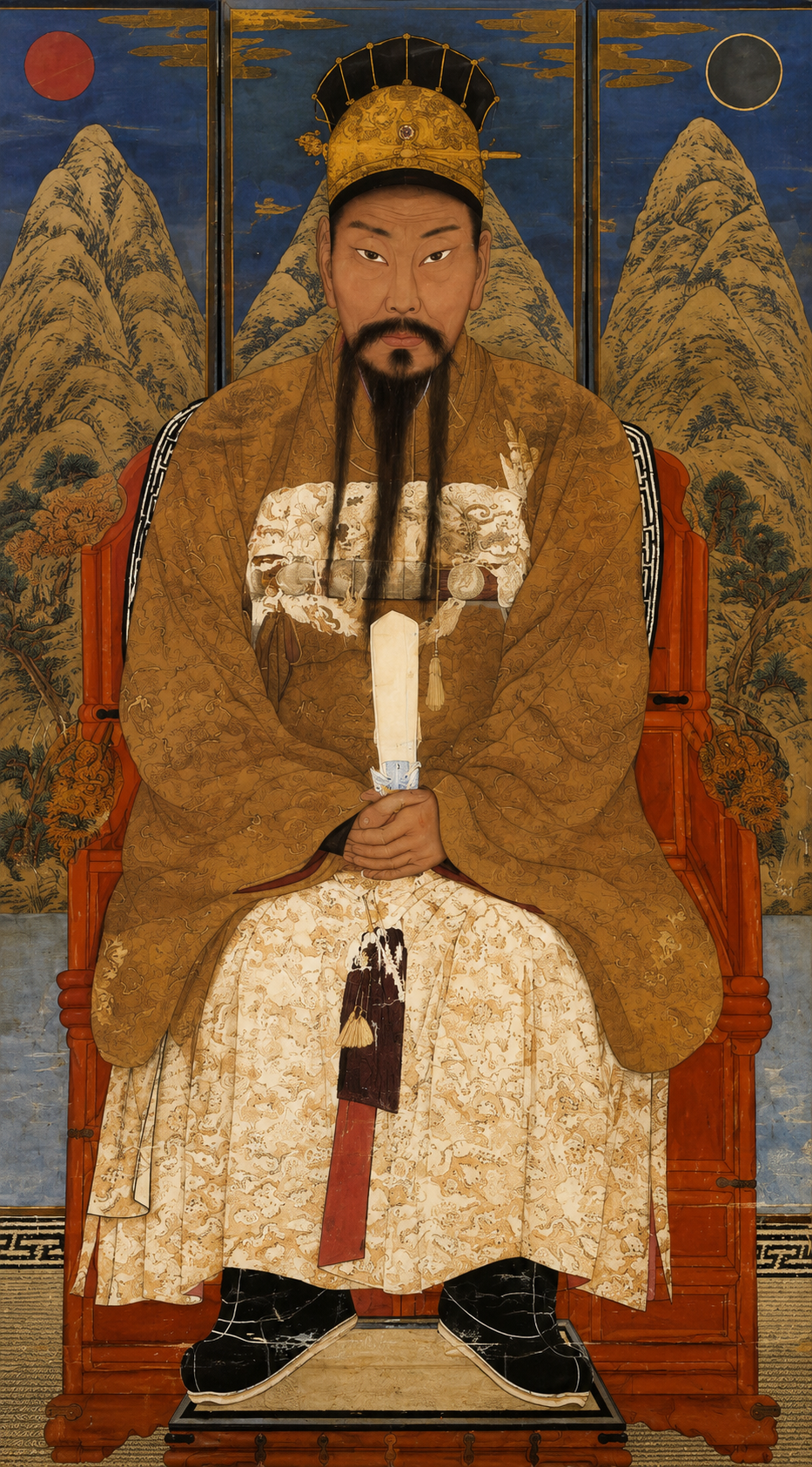
(GN with ChatGPT)
Another mystery that has yet to be solved is the political character of Mahan. The 3rd-century Chinese record clearly describes Mahan as a group of small, loosely connected self-governing polities. And none of the earliest histories of Korea written by Koreans describe Mahan as a kingdom. Mahan does not appear to have had the centralized administration, headed by a king, that we associate with kingdoms.
Yet, if you visit the Naju National Museum, you will see a gilt-bronze crown (unless it is out on loan) that was unearthed from one of the burial mounds you can see from the museum parking lot. These burial mounds appear to date from the 5th century, before Baekje gained control of that area. The crown resembles crowns worn by the kings of Baekje and Silla but is different enough that we know it is not a crown for a ruler of either of those kingdoms.
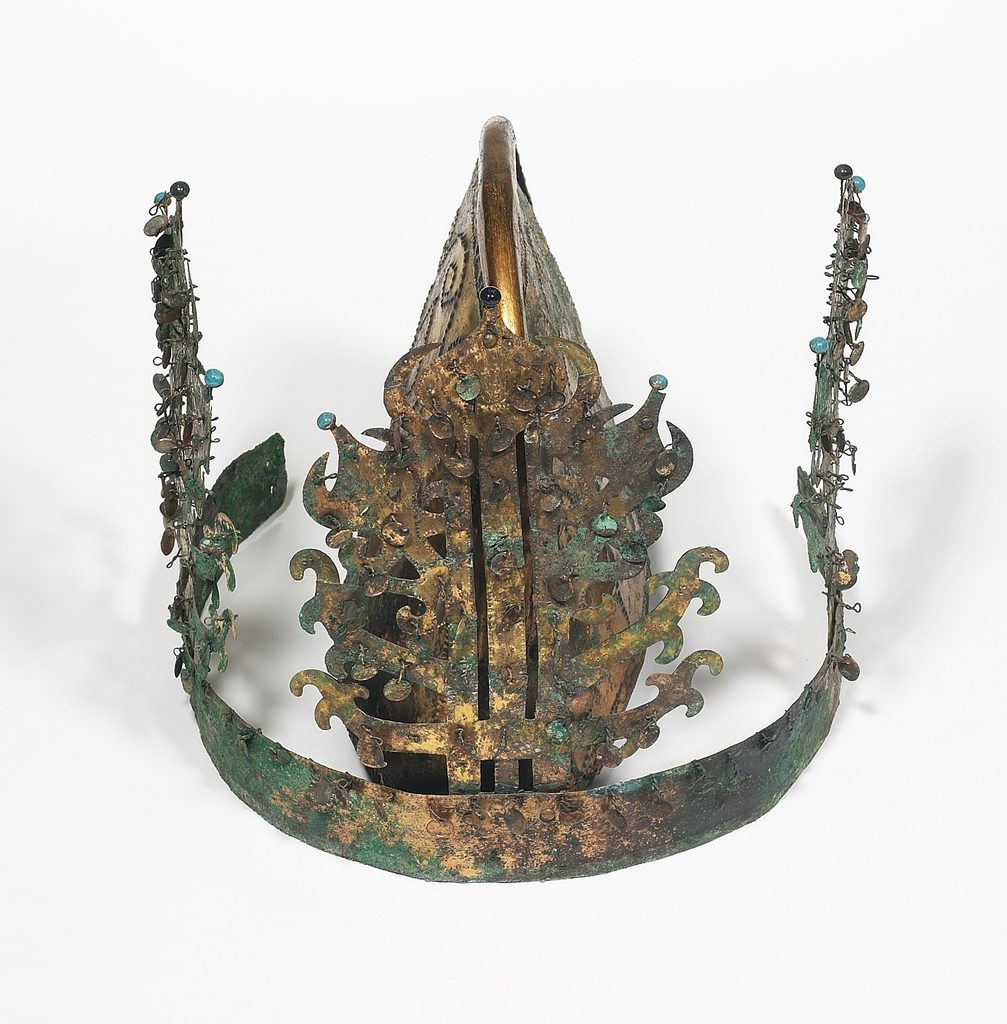
Mahan crown. (Naju National Museum)
The question then arises: Who was that crown worn by? Was the crown bestowed on the most powerful person among the leaders at that time of the various polities that constituted Mahan? Did that person consider themself a king or queen? Or was it a gift from the king of Baekje to a person he considered a subordinate, and his representative in Mahan, much as emperors in China granted formal recognition to rulers of vassal states? Unless we find written documents stating who wore that crown and for what reason they did so, we will not be able to speak definitively about what the existence of that crown tells us about Mahan.
There are some other unanswered questions about the ancient history of the Jeolla region that the Naju National Museum does not address. For example, why do Hwasun, just south of Gwangju, and Gochang, just across the border in Jeonbuk Province, have some of the largest number of dolmens (huge boulders placed over graves) in the world? Are they the tombs of local rulers in the pre-Mahan period? And why have archaeologists recently found some 6th-century tombs near the Yeongsan River that appear to be smaller versions of the keyhole-shaped tomb mounds as the graves of the political elite in Japan at that time? Had some people moved to Mahan from the Japanese islands? All these unanswered questions add to the mystery of Mahan and the Jeolla region in prehistoric times.
- More information on Mahan and its distinctive characteristics can be found in a YouTube lecture by the American archaeologist Jack Davey: https://www.youtube.com/watch? v=89Iuk4xd5i4
- You can also watch a video tour of the Naju National Museum at: https://www.youtube.com/watch?v=Y1s-GCcmaNE . The narrator of this video calls Mahan a kingdom, which most scholars do not do.
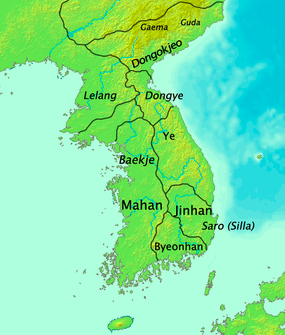
(Von Ulanwp¹)
The Author
Don Baker taught English in Gwangju as a U.S. Peace Corps volunteer from 1971 to 1974. He later earned a PhD in Korean history from the University of Washington and taught Korean history and culture at the University of British Columbia from 1987 until his retirement this year.
¹ CC BY-SA 3.0, https://commons.wikimedia.org/w/index.php?curid=47221772
Cover Photo: Mahan jar coffins. (Naju National Museum)