
Dangun: Son of Heaven, Guardian of the Korean Peninsula
By Murdock O’Mooney ||
One of the first mythological tales I heard when I arrived in Korea in 2009 was the legend of Dangun. The way I remembered it, a bear and a tiger had a human baby, and that was Dangun. He was divine and watched over the Korean Peninsula. He also helped shape Korea’s cultural, social, and educational values.
I was right about Dangun’s influence but wrong about how he came to be, although his mother, according to legend, was a bear that had been transformed into a woman. After her transformation, she became known as Ungnyeo and married Dangun’s father, a divine being named Hwanung. Hwanung was sent to earth by his father Hwanin, a central figure in Korean mythology known as the Lord of Heaven.
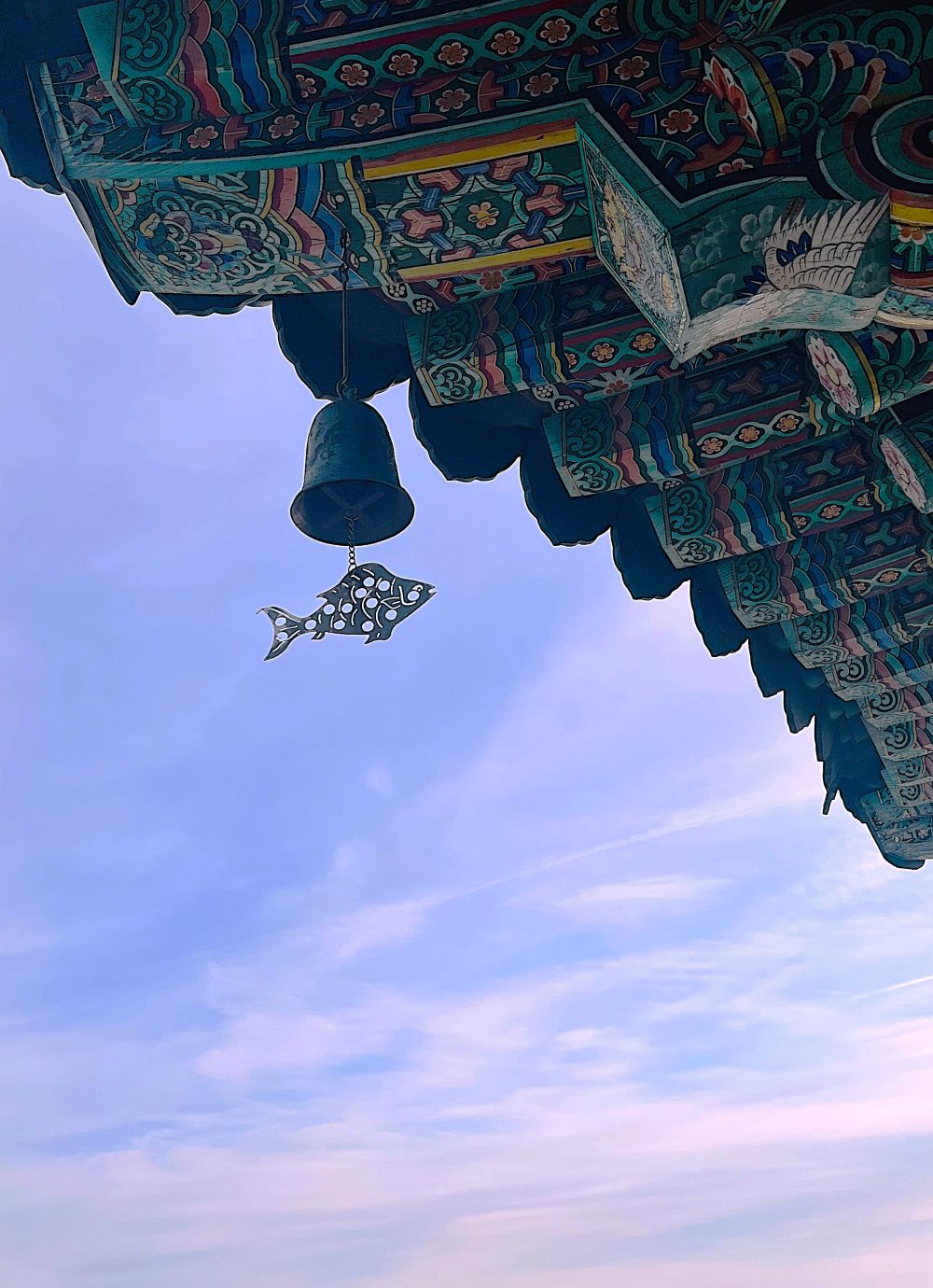
Legend has it that Hwanung longed to go to Earth and experience life among humans. After some convincing by Hwanung, his father, Hwanin, sent him to Earth with three sacred items and 3,000 followers. These three sacred items, or chun-bu-in, (천부인) consisted of a sword, a mirror, and a bell. These relics match actual Bronze Age artifacts uncovered in Korean archaeological digs. The mirror represents spiritual foresight, the bell is for rituals, and the bronze sword is for military authority. With these sacred items and his 3,000 followers, Hwanung descended to Mount Taekbaek (also known as Mount Baekdu) and established the City of God, or Sinsi.
Hwanung’s impact on the human world was immediate and substantial, as he became known as a bringer of order and peace. His entourage included three ministers – The Masters of Rain, Wind, and Clouds – and with the ministers’ help, he taught humans agriculture, medicine, law, morality, and over 360 other human affairs. These efforts helped birth the Kingdom of Gojoseon, founded in 2333 BCE, which is largely accepted as the first kingdom on the Korean peninsula.
These specifics are recorded in historical texts, most notably the Samguk Yusa, written in the 13th century.
Word of Hwanung’s successful leadership spread to the animal world and soon a bear and a tiger wanted in on the action, asking Hwanung to make them human. Hwanung agreed, but they had to pass a test: They had to stay in a cave for 100 days eating only mugwort and garlic. If they could complete this challenge, they would be transformed into humans.
The big cat, with its fickle ways and sensitivity, gave up after some days. But the stubborn bear persevered and was turned into a human woman by Hwanung. Her name was Ungnyeo, and she made such an impression on Hwanung that he married her. Soon thereafter, she gave birth to Dangun. The myth helps emphasize the union between two very different groups, one advanced heavenly society (Hwanung) and a more traditional earth-worshiping tribe (Ungnyeo).
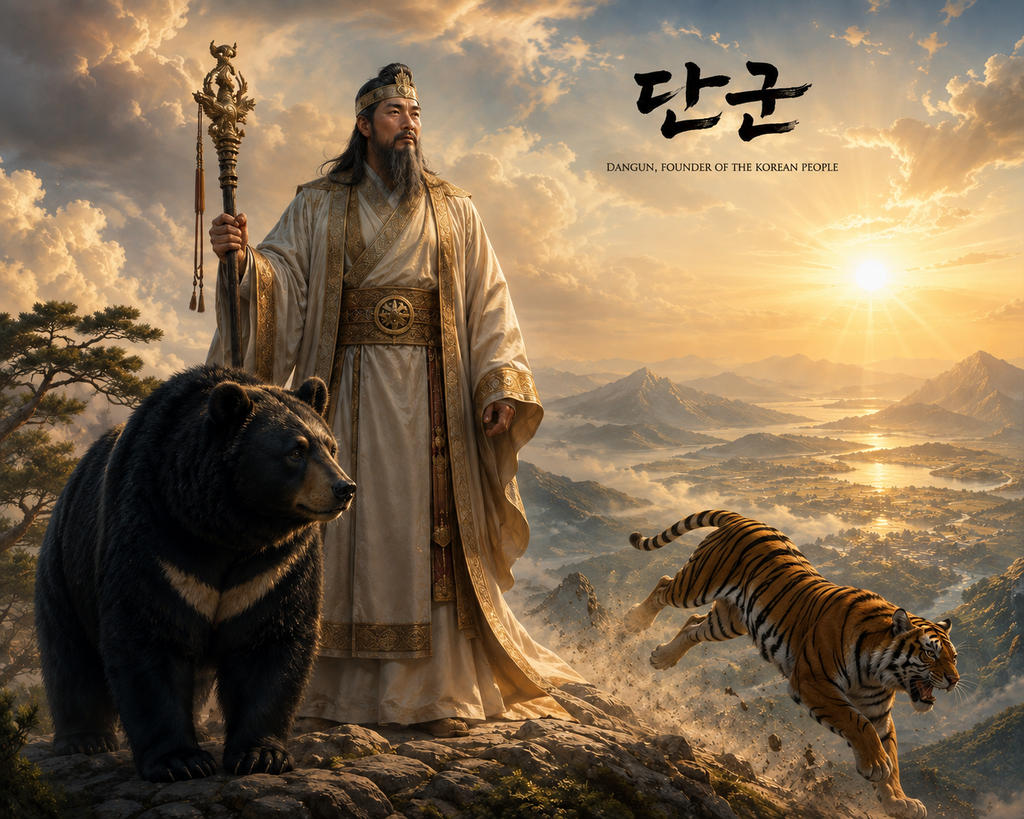
(GN with ChatGPT)
As the chief sansin (mountain spirit or mountain god), Dangun is also believed to literally watch over the Korean Peninsula. Mountain spirits in Korean mythology are caretakers who safeguard villages, help balance nature, and answer the prayers of ordinary people seeking health, protection, and good harvests. Basically, they tirelessly aid and help humanity for nothing more than respect, reverence, and the occasional celebration in their honor.
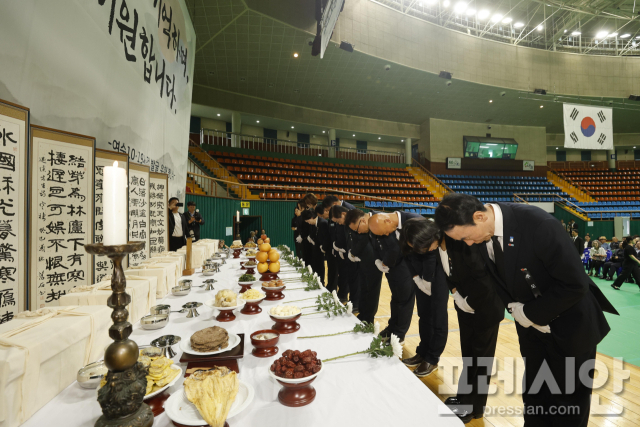
The legend of Dangun can be observed in modern-day Korea through the celebration of Foundation Day, or Gaecheon-jeol, on October 3. The name of the holiday translates to “the day the sky opened” and marks the beginning of the Gojoseon Kingdom. As this is a public holiday in Korea, there are many events that take place, such as sacred ancestral rites known as cheonje rituals. One of the most well known of these rituals takes place at the summit of Mount Mani on Ganghwa Island to thank heaven for the nation’s birth. Commemorative services are also held in Seoul at the Dangun Shrine in Sajik Park and at various regional altars as well.
The Korean government hosts major civic ceremonies as well, often at venues like the Sejong Center for the Performing Arts, focusing on Dangun’s philosophy of hongik ingan, which roughly translates as “benefiting all mankind.” Hongik ingan has become Korea’s national founding philosophy and serves as a guiding principle in civic values and the nation’s public education system.
Beyond being divine, having a mother who was once a bear, and being profoundly philosophical and wise, Dangun also lived to be 1,908 years of age, according to legend. That’s pretty old! At this time, he changed forms once again and became a mountain spirit. Korean scholars view 1,500 years as the symbolic lifespan of priest-kings. Not only did Dangun live well beyond 1,500 years, but his transformation into a mountain spirit reinforces Korean shamanic beliefs regarding ancestors protecting the homeland.
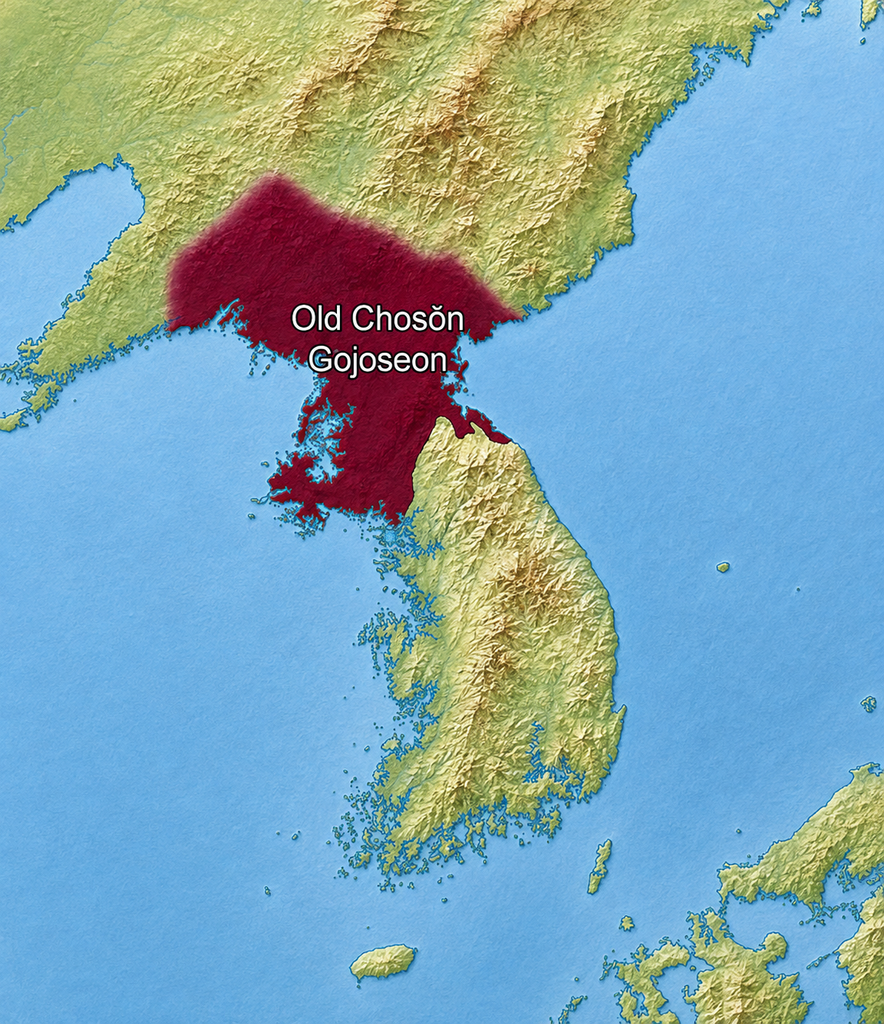
Expanse of the Gojoseon Kingdom at about 100 BCE.
There is also a religion dedicated to Dangun known as Daejonggyo. This Korean religion was founded in 1909 by Na Cheol. The faith treats Hwanin, Hwanung, and Dangun as a Holy Trinity (Samsin) representing the creator, the teacher, and the ruler. During the early 20th century, Daejonggyo served as a major spiritual engine for the anti-Japanese armed independence movement in Manchuria, and gave Korean fighters a metaphysical edge.
The story of Dangun gets even more interesting when we consider the Cold War Era, when North Korea claimed to have actually found his physical remains. In 1993, Pyongyang announced the discovery of the “Tomb of Dangun” near Mount Taebak. The site was complete with ancient human bones, and North Korea constructed a massive pyramid tomb at the site, utilizing the Dangun legacy to reinforce nationalism and legitimacy.
Personally, I take comfort in the idea of deities such as Hwanin, Ungnyeo, and Dangun watching over us and protecting us. Maybe Korean independent fighter and intellectual Kim Gu (1876–1949) got it right in his essay My Wish (Baekbeom Ilgi) when considering the legend of Dangun. He wrote, “I believe that hongik ingan – to broadly benefit all humanity – our founding principle visioned by our founding father Dangun, is the culture that can bring peace to our people, and the world.” Amen.
Sources
Equibal, R. (2024, December 4). The myth of Dangun. Spine Online. https://spineonline.co/mythology/dangunmyth
Jung, J., & Lee, J. (2019, October 4). Array of events commemorate Nat’l Foundation Day. Korea.net. https:// www.korea.net/NewsFocus/Society/view?articleId= 175850
Kim, V. (2014, August 14). Dangun, father of Korea: Korea’s foundation tale lends itself to many interpretations. Korea.net. https://www.korea.net/ NewsFocus/Culture/view?articleId=121092
Gojoseon Period, Buyeo Kingdom, Samhan Period. (n.d.). National Museum of Korea. https://www.museum.go.kr/ENG/contents/E0201030400.do?showHallId=760&showroomCode=DM0048
Daejongism. (2026, July 18). In Wikipedia. https://en.wikipedia.org/wiki/Daejongism
The Author
Murdock O’Mooney is an educator and writer and a believer in the divine. He treads carefully over this beautiful Earth garden and shows respect to Hwanin, Ungnyeo, and of course, Dangun, whom he is sure has kept him safe in Korea a time or two.
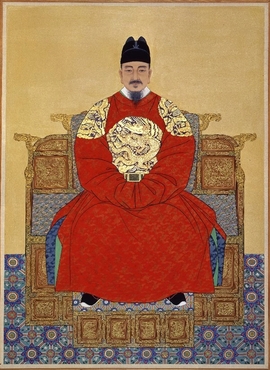
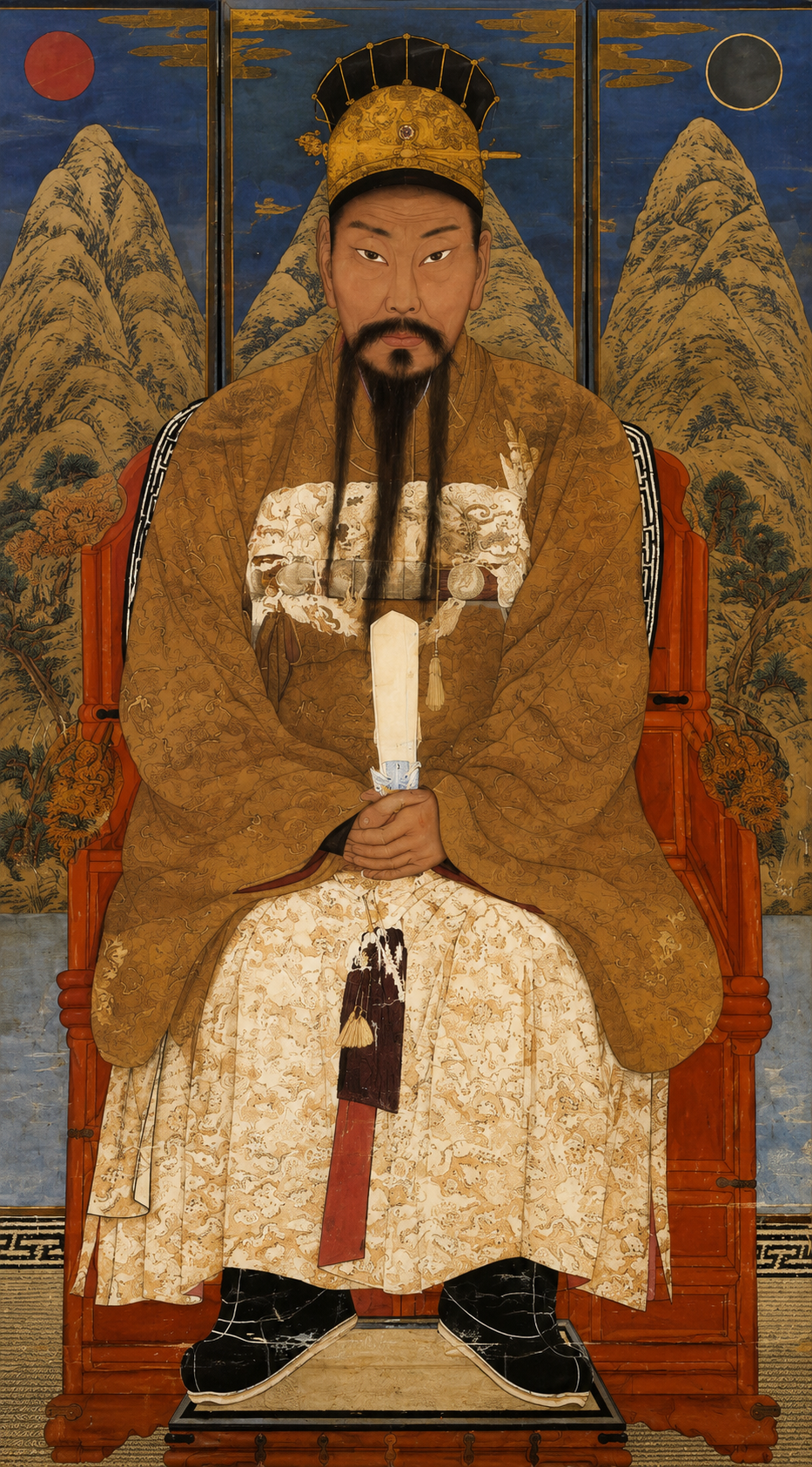
Cover Photo: Portrait of Dangun by Chae Yong-sin (1850-1941). (Restoration by ChatGPT)