

Coffee Shop Review: Tradition Meets Night Out – TeaSoha in Dongmyeong-dong
By Jacqueline L. Becerra ||
Time and time again, Korea continues to show me new combinations. With the robust popularity and expansion of the matcha market, the food industry has capitalized on this, giving us iconic matcha-flavored roll cakes, Levain cookies, and Dubai chewy cookies. Alcohol, however, is not excluded, with matcha highballs and makgeolli (rice wine) suddenly hitting local bar menus. Though matcha has secured a strong position, other tea varieties like Earl Grey or Ceylon have had a longer presence in the liquor market, both readily available at convenience stores.
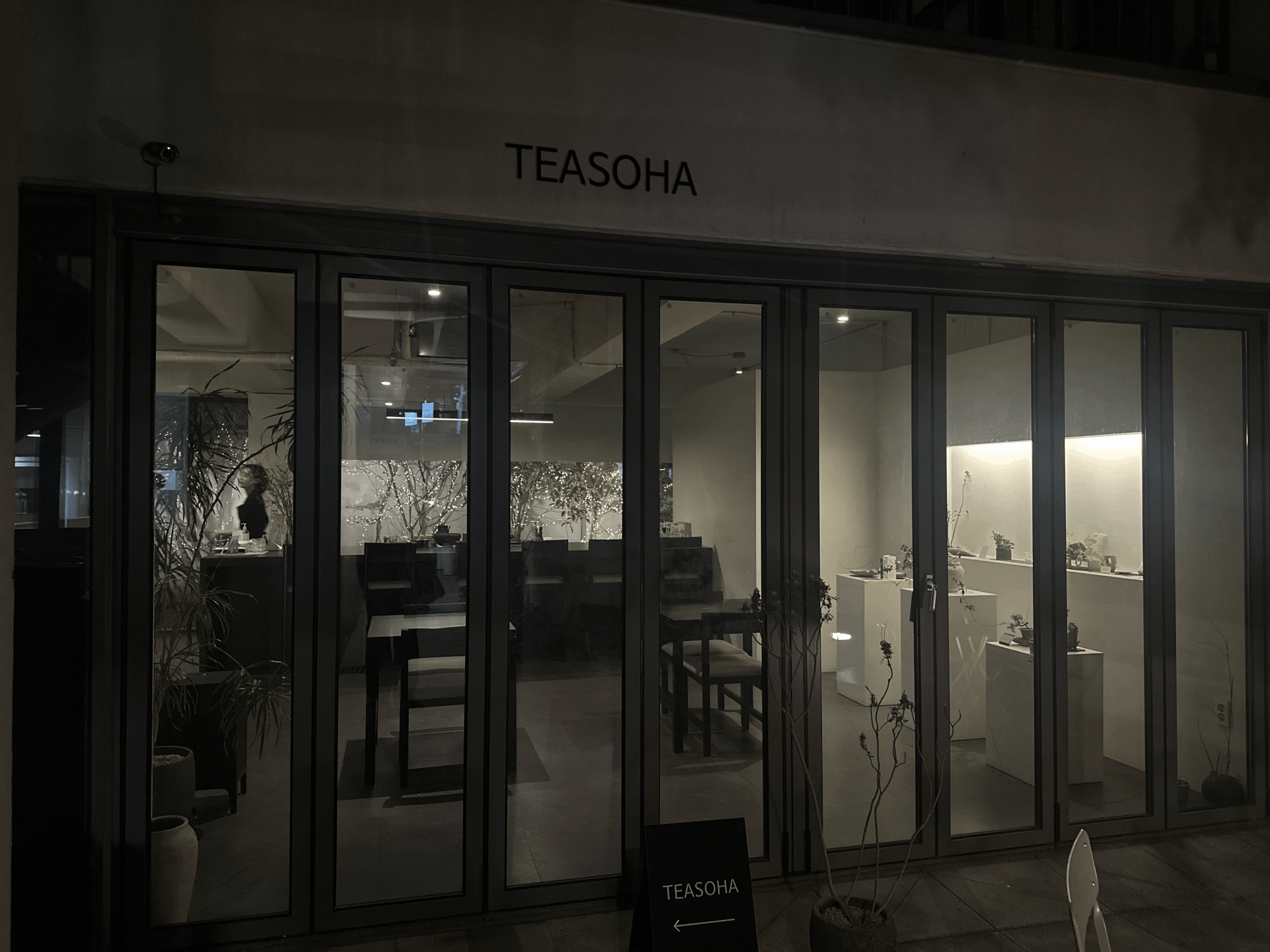
These specific tea–alcohol mixes can be thought of as common, but other teas like oolong or white tea are quite rare and often left out. One café, however, TeaSoha in Dongmyeong-dong, includes these options. On my last trip to Gwangju, I had liked TeaSoha for their teas, but this time I decided to check out their unique tea cocktail menu. Tucked away in central Dongmyeong-dong, TeaSoha requires a bit of navigation and a sharp eye to see its illuminated signpost. Following their sign, a narrow path to the side of the building will lead you to its doors.
Futuristic Tea Space
Upon walking in, one of the workers led my friend and I to a seat, which was a miracle, as most were taken despite the café closing in an hour. The atmosphere was calm, filled with piano music as a background for light conversation and casual dates. Young people had filled the room. With a variety of seating options from standard tables to bar seating, guests can choose their preference. Amidst the ivory upholstery and outdoor fairy lights, the open bar occupies a space. There, the tea brewing process can be seen, made evident in the array of green-tinted matcha whisks, bowls, and teaware on display. Different from what people would imagine a tea house to be, TeaSoha embraces a modern image with its monochrome interior, ambient lighting, and minimalist design. Yet, with a time-honored art such as tea brewing, tinges of tradition with ceramic pottery and tea sets remain.
Tea as Cocktails
Appreciating the modern and elegant interior, we were given the menu and guided on how to order via a small kiosk at the counter. Though my focus for this visit was exclusively for their tea cocktails, TeaSoha is a café with tea, coffee, and simple desserts to pair. Tea, however, takes the spotlight with its extensive line-up of six types of tea for their dagwan(다관, teapot) set, five types of matcha, one oolong, and a mugwort latte. For non-tea drinkers, two types of drip coffee are available. And if wanting more than just a drink, their matcha parfait holds title for their signature, but they also have other light treats like handmade yanggaeng(양갱, traditional Korean jelly) and Basque cheesecake. For the tea cocktail menu, there is a selection of four items: lime matcha, melon oolong flower, white peach, and Christmas valentine. All of them use tea as their base, like Kyoto Uji matcha, oolong, and white and black tea. These drinks can be adjusted to be non-alcoholic with the exception of Christmas valentine, which includes Ballantine, a well-known scotch whisky.
TeaSoha emphasizes tea is their focal point; the first listed ingredient being tea with no description on the type of alcohol used or its percentage. Being aware of this, we went ahead and ordered two drinks: a white peach cocktail and a melon oolong flower. Our initial reaction was that they were low in alcohol content, very light, and subtly sweet. Yet, each had its own distinct flavor profile; one was clearly melon, and the other peach. The accompanying ingredients fused together in a balanced way. The melon oolong flower was fresh and tropical with hints of coconut and dill. After sharing a couple of sips, my friend commented that it was almost reminiscent of a less sweet, more refined version of a Melona bar. The white peach drink was light, fruity, and sweet, but not as much as typical peach-flavored iced tea syrups. To someone, like myself, who does not drink regularly, these cocktails are not overwhelming but rather delicate.
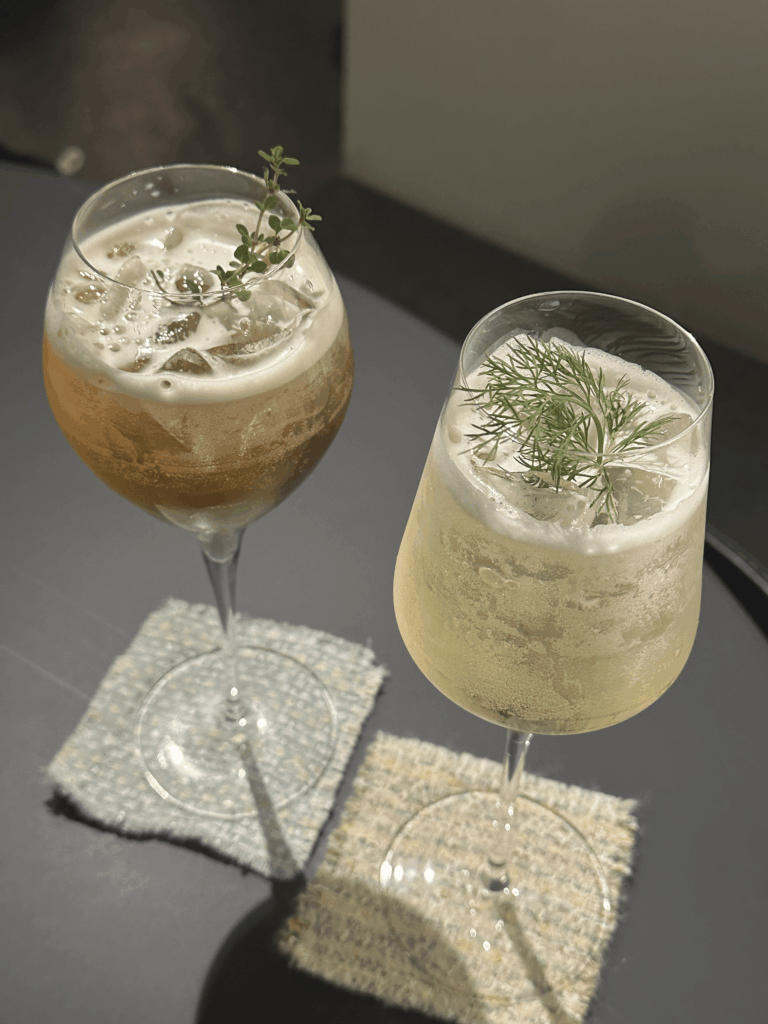
Tea cocktails for two.
My Final Verdict
In my time studying tea, I thought of tea as incompatible with drinking culture. Tea is often known as traditional and ceremonial, and practiced for its health benefits, like clarity and rest, along with being served as a conduit for connection. While alcohol is also understood to bring people together, it also harbors undesirable effects with consumption. These two beverages are theoretically not harmonious, with most tea cocktails overemphasizing alcohol content over tea. Yet, my mind expands once more with creative tea sommeliers making new experiences of tea. TeaSoha has created its own aesthetic and brand with these balanced fusions of tea cocktails for a wider audience, but does so while honoring the properties and flavors of tea. As such, I highly recommend visiting TeaSoha for both an afternoon cup of tea and an elegant night out.
The Author
Jacqueline Becerra is a past Critical Language Scholarship recipient at Chonnam National University and reminisces back on those memories of humid summer nights. Through her writing at Gwangju News she wishes to convey the same fondness the city gave to her.
Cover Photo: TeaSoha clocking out for the night.
Photographs by Jacqueline L. Becerra.