

Beyond Cherry Blossoms: Under-Appreciated Ways to Enjoy Spring in Korea
By Murdock O’Mooney ||
When people think of spring in Korea, images of cherry trees and the “pink snow” they create probably come to mind. There are over 300 varieties of cherry blossoms, but the most ornamental and coveted is the blossoms of the Japanese cherry tree, or Prunusserrulata. And while cherry blossoms are undeniably majestic, beautiful, and enchanting, there are many other wonderful ways to appreciate spring in Korea that don’t involve Prunus serrulata.
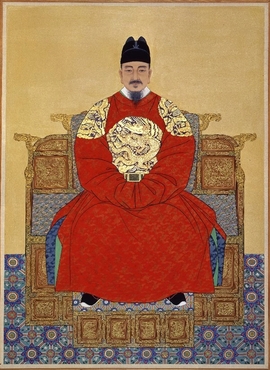
In the Joseon Dynasty, royals prioritized apricot (maehwa), plum, and peony trees over cherry blossoms, for their stunning visual displays. Historically, azaleas were considered the “people’s flower for spring,” while the plum blossom was considered the “scholar’s flower.” It might also be worth noting that the cherry blossoms came to prominence in Korea during the Japanese colonial period.
Flower designations aside, it would be hard to find a better place to experience budding spring trees than Changdeok Palace in Seoul. Changdeok-gung offers the coveted “double-flowering red-plum blossoms,” which were supposedly a gift from China over 400 years ago. They are also considered more sophisticated and ornate than cherry blossoms.
Buyongyeong Pavilion is also at Changdeok Palace and is a favorite spot for spring picnics. The royals used to not only appreciate flowers here, but participate in fishing and poetry writing contests. To get the creative juices flowing, they drank cheongju (clear rice wine), which was floated in cups back and forth on a winding manmade watercourse in the garden – a practice known as yusang-goksu. If a courtier couldn’t recite a poem before their cup floated past, they had to drink the entire cup as a penalty – a sort of ancient version of the modern Korean drinking trope “One-shot!” I suppose.
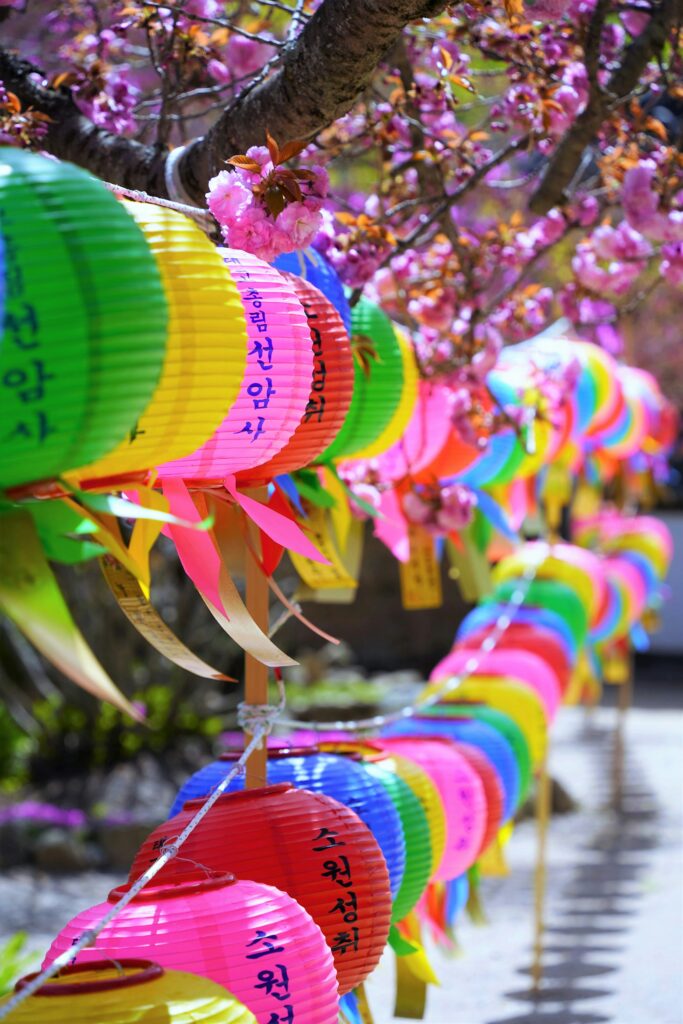
Roadside lanterns at Suncheon’s Seonam Temple. (KS Kyung, Unsplash)
For the gastronomically minded reader, and for a true “taste of spring,” consider trying your hand at making some hwajeon, or flower-infused rice cakes. Traditionally, Korean women would gather on the 3rd day of the 3rd lunar month (Samjin-nal) and make pan-fried rice cakes adorned with real pedals of azaleas, or jindallae.
A great place to sample hwajeon, and other dishes of spring, is the 2026 Gwangyang Maehwa Festival, which runs from March 13 to 22. The festival celebrates the first spring plum blossoms in Seomjin Village in Jeollanam-do. Plum trees line the river and provide stunning white, pink, and red blooms amid a hilly and scenic backdrop. The festival is also known for local organic plum food products such as ice cream, candy, and tea.
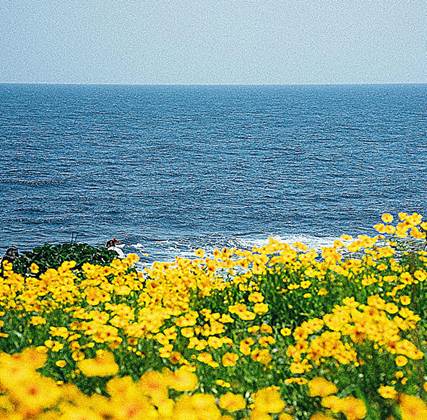
Canola flowers on Jeju Island. (WS Chae, Unsplash)
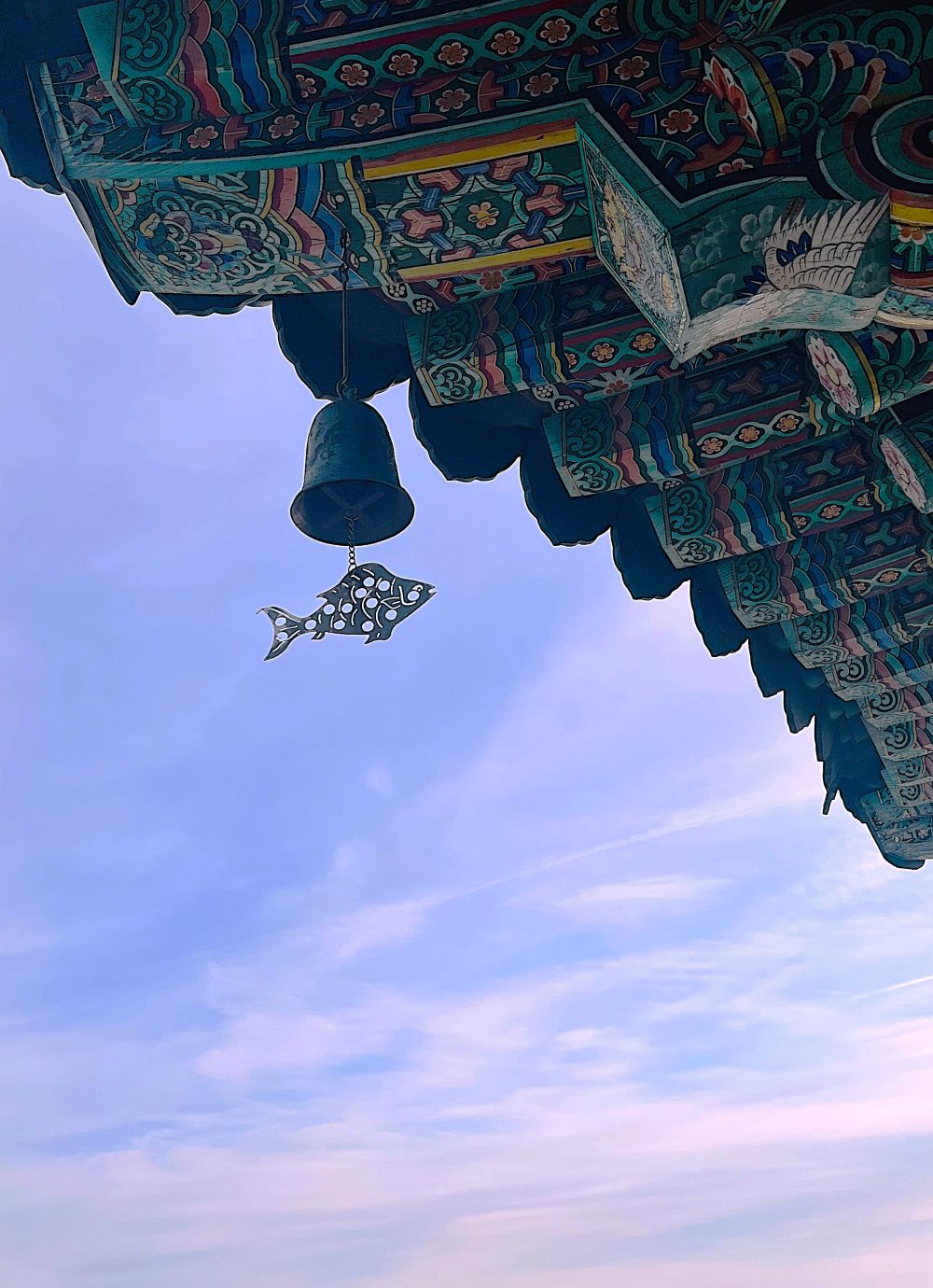
If cooking isn’t your fancy, consider taking to the budding Korean mountains to do some temple visiting. Of course, Mudeung Mountain in Gwangju offers top-notch temple viewing, but another popular choice near Suncheon is Songgwang Temple and Haein Temple in South Gyeongsang Province. These temples are known for their vibrant traditional paint colors, or dancheong, which contrasts nicely with the fresh green buds of the mountain flora, as noted in Korean Buddhism. For an even more engaging experience, consider a temple stay.
To experience a “miracle,” check out the 2026 Jindo Miracle Sea-Parting Festival, which runs from April 17 to 20. This phenomenon is a literal parting of the sea due to seasonal tidal changes. At certain times of day, the Jindo Sea Road becomes visible for about an hour, allowing visitors to walk out onto the ocean floor and collect abalone and octopus, or just take in the views and snap some selfies. The road is around 2.8 kilometers long and 40 meters wide, and connects Jindo Island with the smaller Modo Island. The festival also features live music, a ssireum wrestling competition, and an EDM night show. The locals refer to the event as Korea’s “Miracle of Moses.”
To experience spring in motion, take the short drive to Hampyeong and partake in the Hampyeong Butterfly Festival. The festival takes place at the Hampyeong Expo Park from April 24 to May 4 this year and has visitors experience the release of millions of butterflies into vast gardens of canola flowers (rapeseed/yuchae) and other wildflowers. Beyond the millions of butterflies, the park also offers an ocean of floral varieties, insect and educational exhibits, and even a 14-meter-high floral tower.
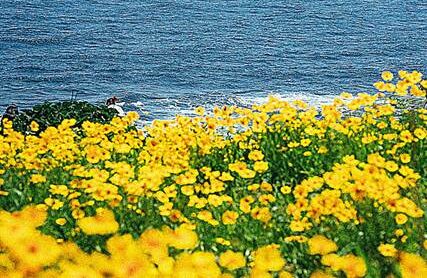
For a yellow spring, take a flight or ferry to Jeju Island and hike through the fields of wild canola flowers, which cover the island in a vibrant yellow carpet. The flowers peak in early March to late April, and some of the best spots for viewing them are Sangbang Mountain, Eongdeongmul Valley, and Seopji-koji and Gwangchigi Beaches at Seogwipo.
Overall, spring is beautiful in Korea, and personally, I think it’s hard to go wrong when choosing a way to enjoy the season (even if this involves cherry blossoms). Just be sure to get outside and enjoy yourself – may the coming of spring be blessed with great happiness.
The Author
Murdock O’Mooney is an educator and writer based in Albuquerque, New Mexico, USA. He lived in Gwangju, and worked at Chosun University, from 2015 to 2022. He’s interested in geopolitics, education, and trying to help build a more just world.