

Preparing for Buddha’s Birthday: History, Happenings, and Ways to Celebrate
By Murdock O’Mooney ||
The Buddha is god for approximately 500 million people worldwide. Between 17–23% of South Koreans are followers, and this year, May 24 marks the Buddha’s birthday, or Seokga Tansin-il, which is a national holiday in Korea that is celebrated on the eighth day of the fourth lunar month. However, celebrations and festivities run from early April, all the way into the summer. The first hint that Seokga Tansin-il is near, is the sight of lotus lanterns hanging near temples and in civil spaces in early April. Seeing the lanterns undulate in the wind, reminds me of a famous Buddha quote: “If you want to fly, give up everything that weighs you down.”
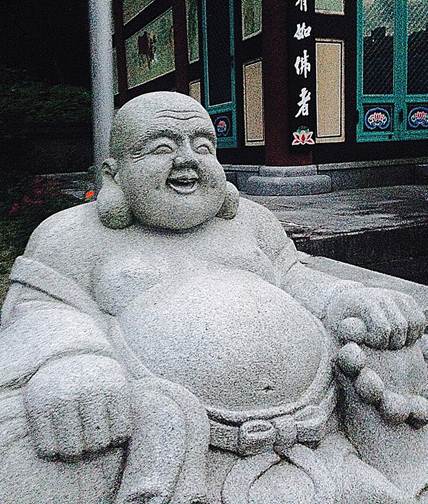
Stone sculpture of the monk Podae, the Laughing Buddha.
Modern-day Buddhists prepare for Buddha’s birthday, or Vesak in Sanskrit, by cleaning and decorating their houses, and asking for purification and reprieve from their suffering. They will also visit temples, sometimes around dawn, and recite mantras and engage in intense meditation and prayer. It is also encouraged for devotees to do some type of charity, volunteering, or provide food to the hungry.
The Buddha began life as Prince Siddhartha Gautama and lived in the 5th and 6th centuries BCE. He was born in Lumbini, or modern-day Nepal, and at 29 years-old, left his father’s palace to begin his spiritual quest – an event known as “The Great Renunciation.” Upon seeing The Four Sights (an old person, a sick person, a corpse, and a wandering ascetic), he understood that life inherently entailed suffering and death, no matter a person’s status or wealth.
For the next six years, Siddhartha undertook his spiritual journey, studying under various teachers and mystics. However, as a wandering ascetic his body began to fail due to malnutrition, so he adopted a more balanced approach known as the “Middle Way” by accepting a bowl of milk and rice from a village girl named Sujata. Siddhartha then traveled to Bodh Gaya (modern-day Bihar, India) and sat beneath a pipal tree, now known as the Bodhi Tree.
There he meditated for 49 days and was tempted by the demon Mara, who used fear and desire to distract him. But the young seeker was steadfast and as the morning star rose, he achieved enlightenment and became the Buddha. He spent the next 45 years traveling and teaching across northeastern India, eventually dying at age 80 in Kushinagar, India, around 400 BCE.
It took another 600 years or so for Buddhism to make its way to Korea, first being introduced around 372 CE during the Goguryeo Period, with the monk Sundo bringing scripture and images from the Qin Dynasty in China. Then, in 521 CE, the monk Ado-hwasong (also known as the “black monk,” or “traveler”) finally convinced the court of the Silla Kingdom to adopt Buddhism as its official religion. Thus began Buddhism’s tenure in Korea.
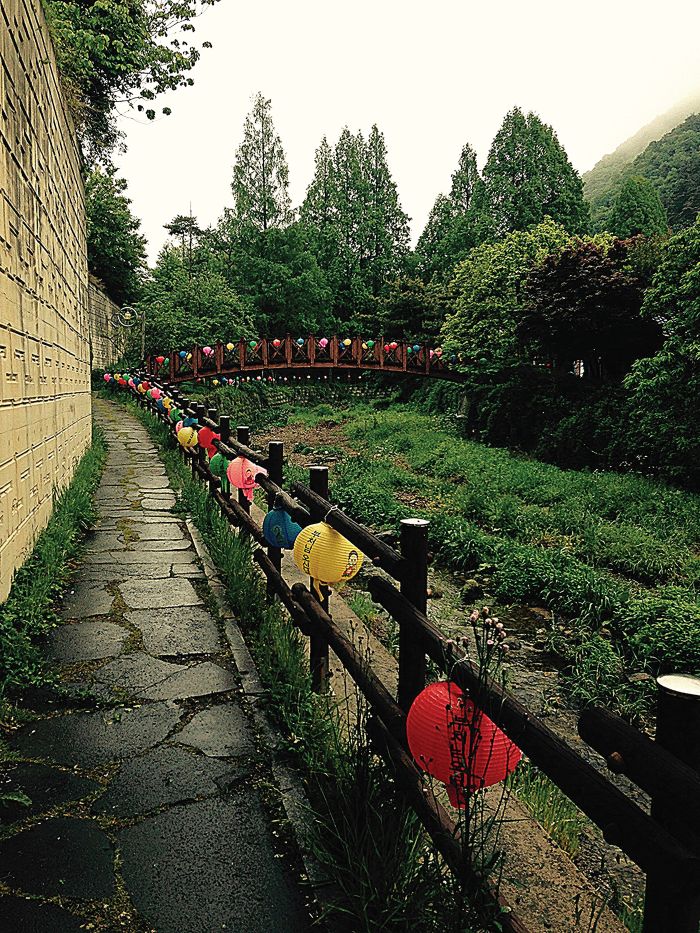
Lotus lanterns along a path.
Without going into too much detail, believers follow the “Four Noble Truths.” Dukkha is the idea that life involves pain and dissatisfaction, samudaya claims that suffering results from craving, nirodha asserts that one can end suffering by letting go of attachments, and magga is the idea that the way to end suffering is a guide to ethical living, meditation, and wisdom, known as the Eight-Fold Path.
South Korea is one of the best countries to experience Buddha’s Birthday celebrations and festivities. The country boasts 20,000 Buddhist temples of various sizes and quality, including 900–983 “traditional temples,” which are centuries old and located in remote mountainous regions. For the ultimate urban celebration of Buddha’s Birthday, partake in the multi-day Lotus Lantern Festival, or Yeondeung-hoe, which is celebrated in all major cities in Korea, including Gwangju. The festival was recognized by UNESCO as an Intangible Cultural Heritage of Humanity in 2020, but unofficially it dates back over 1200 years.
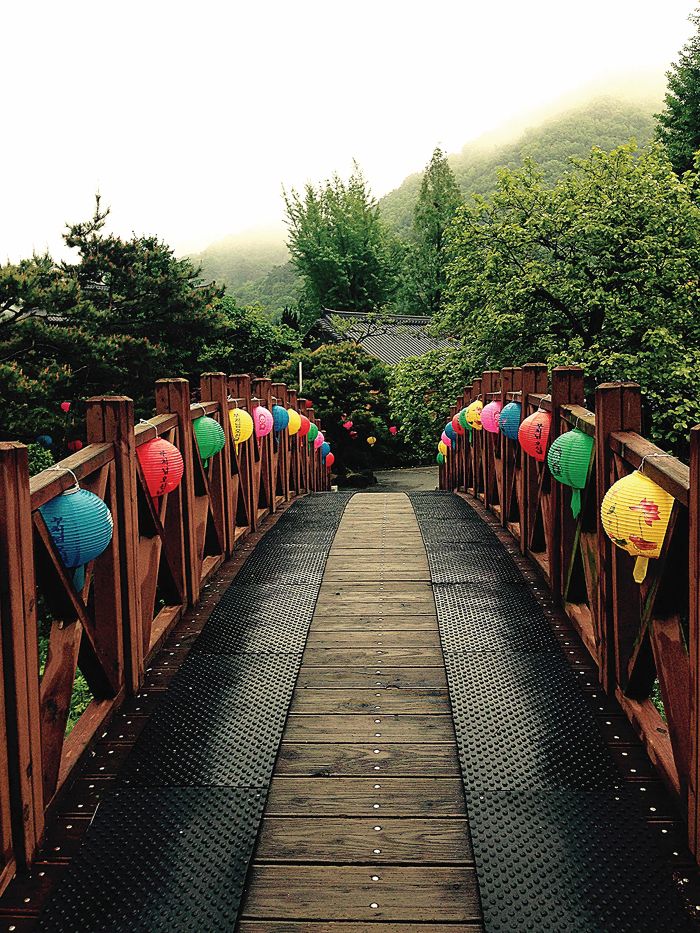
Lotus lanterns lining a bridge.
Lanterns begin adorning temples and cities in early April, but the main parade is usually the third Saturday in May – for 2026, it’s May 16. In Seoul, this parade runs from 7:00–9:30 p.m. in the central part of the city along Jong-ro street. Before the parade, crowds gather at Dongguk University Stadium (a Buddhist university) for Eoulim Madang, or Dharma Ceremony and Cheer Rally. This event sees followers wearing hanbok and other traditional garb, and builds energy for the parade, which stretches along two kilometers from Dongdae-mun to Jonggak Station. There are hundreds of parade-goers that line the streets, as well as an afterparty where revelers dance and gather near the historic bell pavilion Bosin-gak.
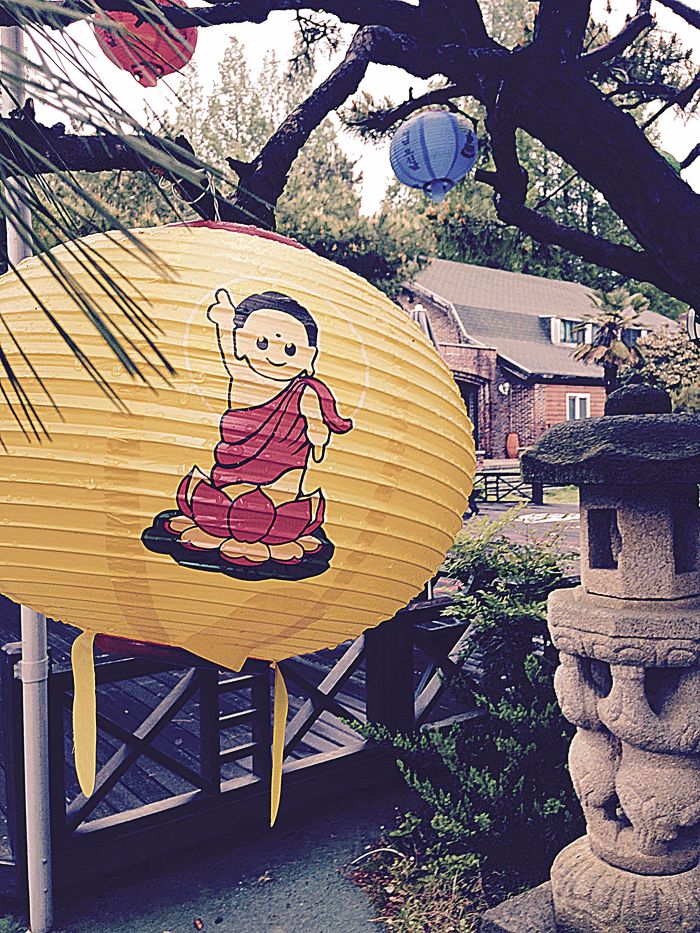
Paper lotus lanterns hanging from a tree by an aging stone lantern.
As a precursor to Buddha’s Birthday, Seoul also hosts the International Buddhist Expo, which runs during April 1–5 at the COEX Convention Center. This event features DJ monks, such as “NewJeansNim,” meditation sessions with virtual reality headsets, scripture readings and panel discussions, and vendors selling Buddhist garments and accessories. The Expo is organized by the Jogye Order of Korean Buddhism and came about from the idea of “Think fresh, to bring in fresh believers.”
Maybe the best way to celebrate Buddha’s Birthday is to take a mindful walk, or hike, to a temple or a nature area in your locale. You can practice being mindful, compassionate, intentional, and consider how to apply some of Buddha’s wisdom to your own life. If you are in a transitional state, remember, “The mind is everything; what you think, you become.” If you are at odds with someone, consider, “Hatred does not cease by hatred, but only by love; this is the eternal rule,” and if you are looking for answers, understand, “Quiet the mind, and the soul will speak.” Happy Birthday, Buddha.
Sources
- Korean Buddhism. (2026, March 20). In Wikipedia. https:// en.wikipedia.org/wiki/Korean_Buddhism
- Lopez, D. S. (2024, January 20). Four noble truths.
- Britannica. https://www.britannica.com/topic/Four-Noble-Truths
- Religious Landscape and Change in East Asia. (2024, June 17). Pew Research Center. https://www.pewresearch. org/religion/2024/06/17/religious-landscape-and-change-in-east-asia/
- Stueckert, H. (2024, April 22). The Lotus Lantern Festival event guide. The Soul of Seoul. https://thesoulofseoul.net/the-lotus-lantern-festival-event-guide/
The Author
Murdock O’Mooney is an educator and writer based in Albuquerque, New Mexico. He finds value in Buddha’s teachings and as “The Dude” in the film The Big Lebowski reminds us, when life gets too heavy, “Just take it easy, man.”
Photographs by the author.