
At the World Human Rights Cities Forum 2026: Gwangju Leading Efforts Against Authoritarianism and Populism
By Luis Andrés
Gwangju hosted the 16th World Human Rights Cities Forum from May 13 to 15, 2026. Once again, our city opened its doors to academics, activists, public officials, students, and organizations from around the world to exchange knowledge, experiences, and concerns surrounding human rights cities. This year’s Forum felt particularly significant because participants heard directly from the United Nations High Commissioner for Human Rights about the importance of local governments, especially cities, in protecting human dignity in increasingly uncertain political times.
The yearly event began on May 13 with Gwangju not only welcoming international guests, but also setting a reflective and provocative atmosphere regarding democracy and human rights. This first day traditionally allows participants from abroad to visit important historical landmarks such as the 5.18 National Cemetery and the May 18 Democratic Square downtown. These visits are, however, not symbolic tourism; they remind participants that Gwangju’s role as host of the Human Rights Cities Forum is deeply connected to its history of democratic struggle and collective resistance.
The Forum also included a special session organized by the Chonnam National University May 18 Institute, which explored how Gwangju’s democratic memory continues to shape the city’s institutions and civic culture today. More than simply preserving history, the session emphasized how local communities can actively transform historical trauma into contemporary practices of solidarity, participation, and human rights advocacy. In many ways, this is what gives Gwangju a distinct voice within global discussions on democracy.
This year, the Forum centered around the broad theme of “Cities Against Authoritarianism and Populism.” And, as much as I would love to give a clean and easy definition of these concepts, one of the things repeatedly mentioned during the sessions was precisely how difficult these phenomena have become to identify in the contemporary world. We used to imagine authoritarianism as something obvious: centralized political power, visible repression, censorship, military control, and open violations of human rights. Basically, the kind of dictatorship that history books and documentaries warn us about.
Populism, meanwhile, was often discussed as authoritarianism’s close companion. Political actors claim to represent “the real people” against corrupt elites, while simultaneously excluding groups that think differently or do not fit within their national vision. Whether governing or opposing the government, populist discourse frequently weakens democratic dialogue by turning politics into a battle of enemies rather than a process of participation and negotiation.
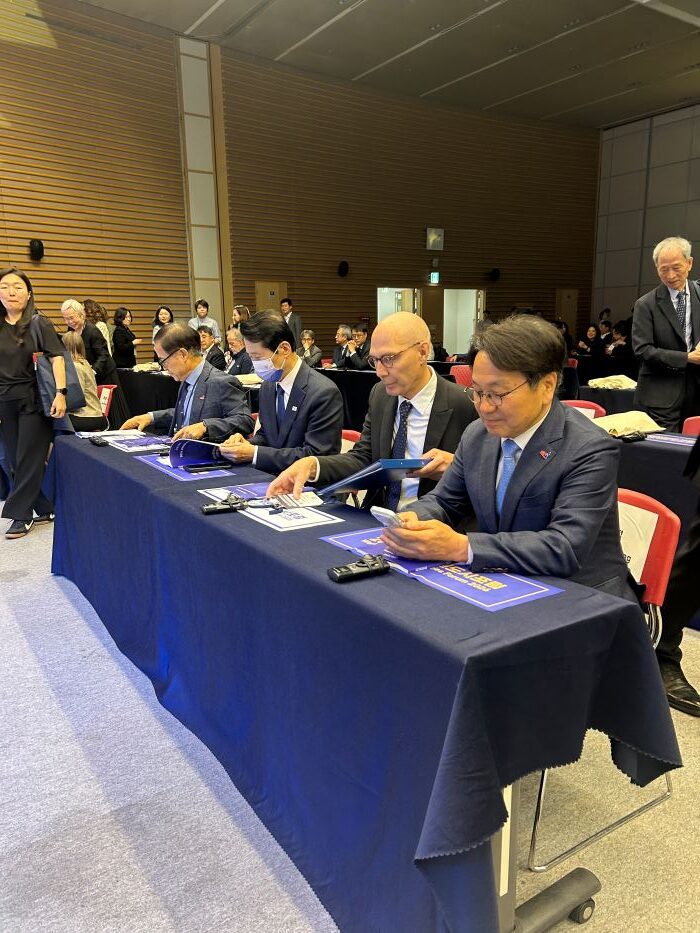
Gwangju Mayor Kang Gi-jung (left) and UN High Commissioner Volker Türk (next) at a session of the Forum. (L. Andrés)
Yet the contemporary situation feels more complicated than those older definitions. Many countries still hold elections. Institutions formally exist. Constitutions remain intact. Politicians continue speaking the language of democracy and freedom. But despite all of this, societies increasingly experience polarization, hate speech, distrust, and attacks against minorities. Rights may continue existing on paper while simultaneously becoming fragile in everyday life.
One of the most repeatedly discussed concerns during the Forum was exactly this: Modern authoritarian tendencies do not always arrive wearing military uniforms anymore. Sometimes they arrive through social exhaustion, disinformation, algorithmic radicalization, or political narratives that slowly normalize exclusion.
And sometimes it feels like the entire world has become one giant angry comment section.
Several speakers pointed out how social dynamics now reward outrage more than dialogue. Political actors benefit from polarization because conflict generates visibility, engagement, and loyalty to support them, while excluding those people that disagree with them, making them the villains, the elites, the enemy, and the others.
This is precisely why local governments and human rights cities matter so much today. Cities remain the places where people actually experience politics in their daily lives. Public transportation, migrant support centers, accessibility for people with disabilities, anti-discrimination programs, labor protections, housing policies, education, healthcare, and public spaces are not abstract ideological debates there. They directly determine whether people can live with dignity or not.
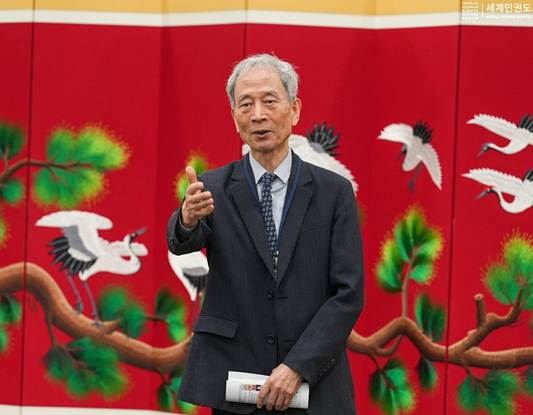
GIC Director Shin Gyonggu speaking at the VIP pre-forum reception. (WHRCF)
The purpose of the Human Rights Cities Forum is therefore not simply academic discussion. It is about local and regional governments exchanging practical experiences and strategies for protecting human dignity within immediate communities. Discussions in the second day of the Forum frequently focused on how cities can continue defending rights even when national political environments become polarized or restrictive. In many sessions, participants highlighted examples of local governments creating inclusive policies despite broader national tensions.
During his keynote speech in the opening session, the United Nations High Commissioner for Human Rights, Volker Türk, acknowledged that the global panorama for human rights may currently appear discouraging in many regions. However, he also described cities around the world as beacons of light where meaningful work continues to happen. He highlighted efforts related to housing, transportation, labor rights, access to water, and discrimination-free environments as examples of human rights being implemented through local governance rather than remaining abstract principles.
Hearing these words in Gwangju carried emotional weight.
As a foreign resident in Korea, I could not help but think about how human rights are often experienced locally before they are experienced nationally. The city where you live determines whether you feel welcomed, ignored, protected, or excluded. It shapes whether diversity is treated as a threat or as something valuable. No city in the world is perfect, of course, and Gwangju itself still faces important challenges and contradictions, but the willingness to openly discuss those issues already matters.
In a global environment where many political actors prefer easy enemies and simplified narratives, the act of continuing difficult conversations may itself become a form of democratic resistance.
The Forum certainly did not present Gwangju, or any other city, as a flawless model. During plenary sessions and thematic discussions, representatives from different regions openly addressed ongoing failures, institutional weaknesses, and unresolved tensions within their own societies. Speakers, including the Commissioner of the New York City Commission on Human Rights, the National Human Rights Commissioner from Thailand, and scholars from international human rights institutes, repeatedly emphasized that democracy is not something permanently achieved. It requires continuous reflection, criticism, and adaptation.
Corruption also emerged as a central topic, especially in the plenary session. Several speakers argued that corruption should not only be understood as an economic or administrative crime, but also as a human rights issue. When public resources intended for communities are diverted toward private interests, the consequences extend far beyond financial loss. Corruption directly affects people’s access to housing, healthcare, education, labor protections, and public safety. In that sense, corruption is not only about money. It is about dignity, inequality, and power.
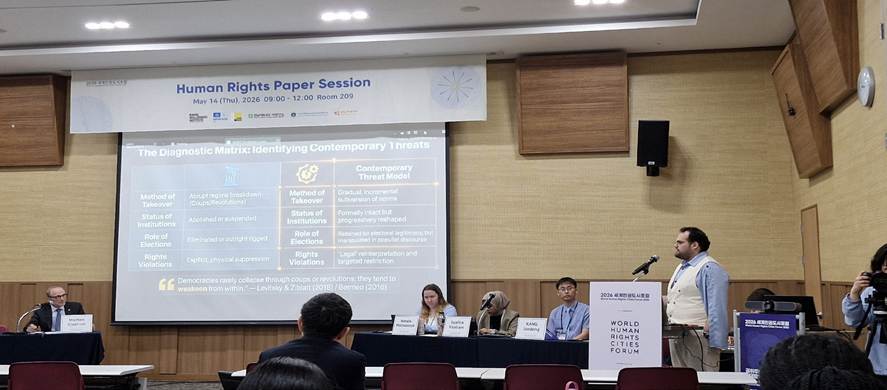
The author presenting a session on identifying contemporary threats to democracies. (Chung Hyunhwa)
Young researchers, students, and activists were also a major part of this year’s Forum. During the paper presentation sessions, younger participants raised concerns regarding artificial intelligence and digital governance, and the difficulties of human rights protection in armed conflict or dangerous environments. Beyond proving that younger generations remain deeply engaged with global issues, these discussions demonstrated something equally important: People are still imagining alternatives.
Throughout the event, participants discussed gender inequality, disability rights, sports, children’s rights, migration, climate vulnerability, and urban governance from a local human rights perspective. The diversity of topics reflected the reality that human rights are not isolated issues. They shape everyday life in countless interconnected ways. Representatives from around the world will now return to their communities carrying both practical ideas and difficult questions that may continue influencing local discussions long after the ending of the Forum.
Ultimately, the World Human Rights Cities Forum is not simply about declaring that democracy and human rights are important. Most people already agree with that in theory. The harder question is whether societies are still willing to practice these values consistently when fear, polarization, and uncertainty become politically convenient.
And perhaps that is precisely why Gwangju continues to matter. Not because it claims to have solved every contradiction, but because it continues insisting that democracy, dignity, and human rights must remain living conversations rather than simply historical slogans.
The Author
Luis Andrés González is a Mexican GKS scholar and master’s student in cultural anthropology at Chonnam National University. He advocates for LGBTQ+ rights and gender equality, and explores global affairs through pop culture. He is the founder of Erreizando, a digital magazine. Instagram: @luisin97 / @erreizando
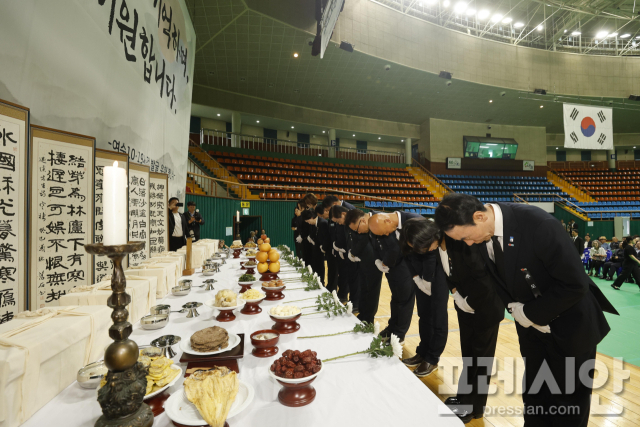
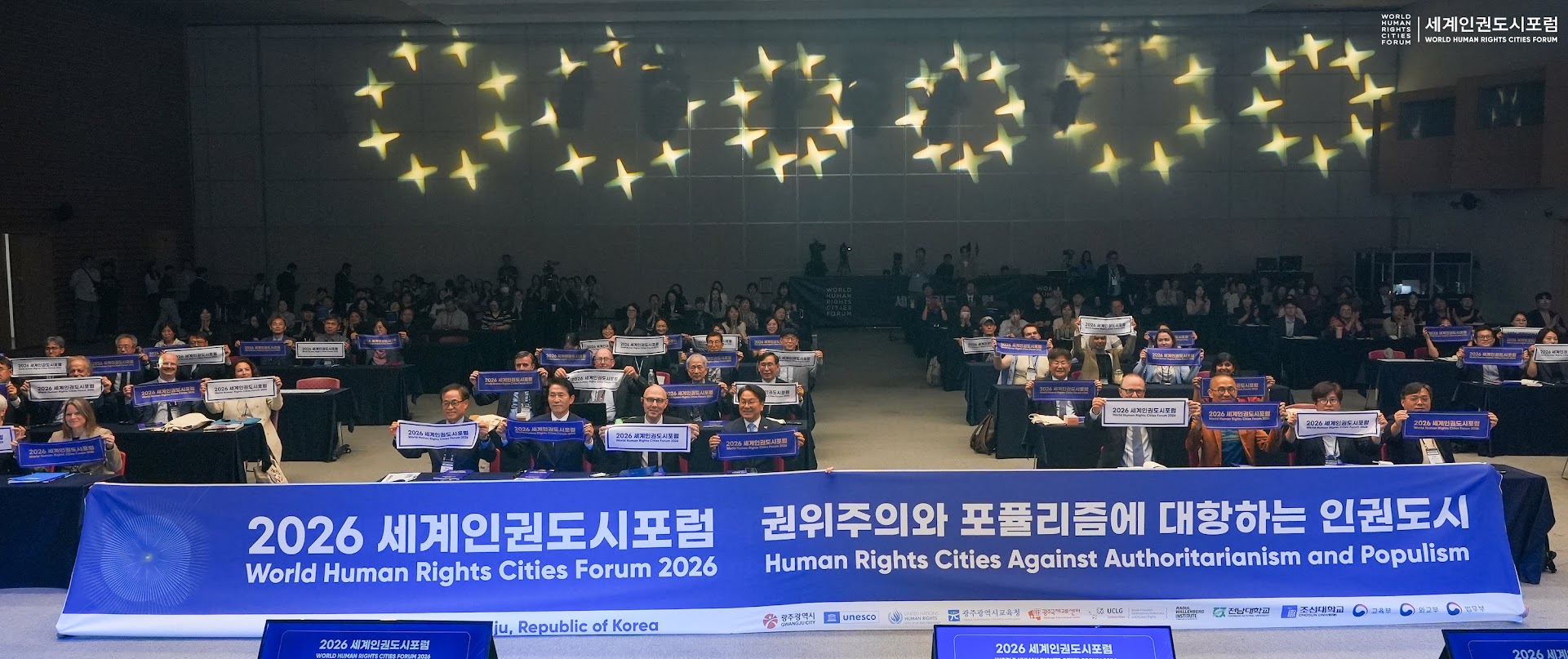
Cover Photo: The opening ceremony of the Forum. (WHRCF)