




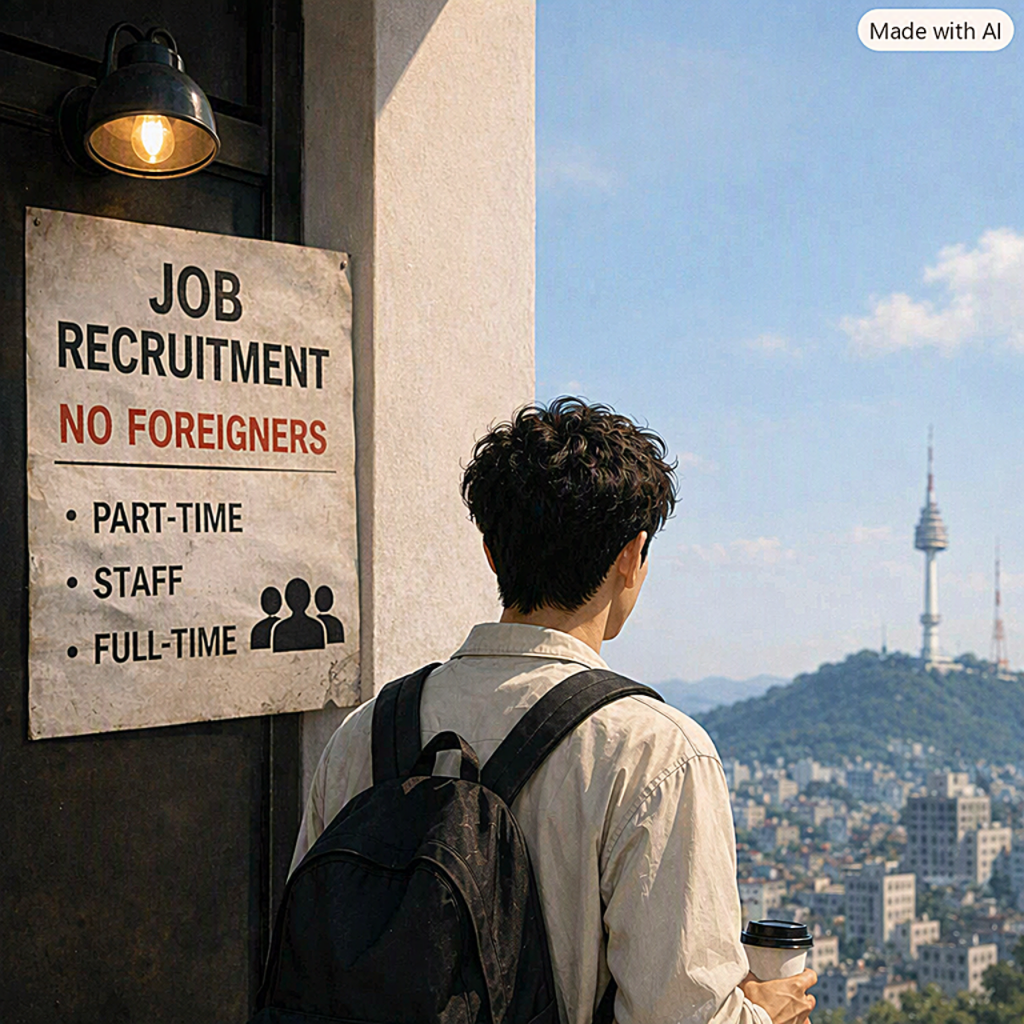
When “No Foreigners” Becomes More Than a Sign
By Luis Andrés
It happened again. I had applied for a part-time job using my Korean name on the recruitment app. The employer called almost immediately. We spoke in Korean, arranged an interview, and agreed they would text me the address. Near the end of the conversation, the recruiter casually asked how long it had been since I had “lived abroad.” Unsure of the question, I explained that I had lived only in Mexico and now in Korea. There was a brief silence… “Ah, so you’re a foreigner.”
The interview never happened.
The same employer continued advertising the position. In fact, I even received automated messages encouraging me to apply again. When I asked whether foreigners were welcome after all, the answer was simple: “No, thank you.” No
questions about my Korean ability. No questions about my visa. Just… no.
As an international student who has spent years in Korea, I have always understood that every country has its own social history and anxieties surrounding immigration. Korea is no exception. For decades, the country saw itself as ethnically homogeneous, and its rapid transformation into a multicultural society is still relatively recent. Understanding that history, however, is different from accepting discrimination as inevitable.
When I first arrived in Korea, I occasionally heard about bars or clubs refusing entry to foreigners. It was unpleasant but hardly unique to Korea. Nightlife has always been one of the spaces where prejudice tends to show itself most openly around the world.
Over time, though, I began noticing something different: job advertisements openly stating “foreigners not accepted.” Part-time positions with almost no customer interaction rejecting foreign applicants. Even positions where speaking English would seem an advantage. At some point, it became clear that language wasn’t always the deciding factor.
Recently, another example entered public discussion: Users discovered that some businesses on Naver Booking – including nail salons, beauty salons, and other appointment-based services – had the option to refuse reservations from foreign users altogether. Following criticism and concerns about discriminatory practices, Naver removed that feature, recognizing that allowing businesses to reject customers solely because of their nationality raised serious questions about equal access.
The conversation did not begin because discrimination suddenly appeared; technology is only making it more visible.
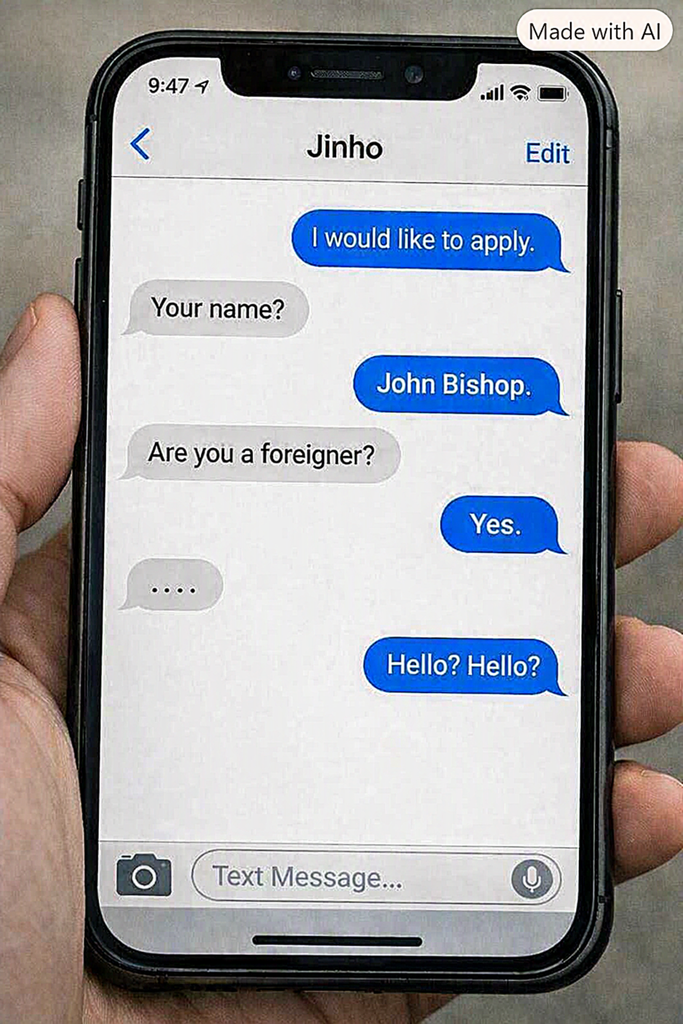
(GN with Copilot)
I experienced something similar while trying to rent a car. I hold a Korean driver’s license, obtained through the same tests and mandatory education required of every licensed driver in Korea. I also have more than a decade of driving experience in Mexico. Yet finding a rental company willing to rent to foreigners has become increasingly difficult (outside the largest and often most expensive companies). Some car-sharing services explicitly restrict foreign users, while many smaller rental agencies simply choose not to serve them.
Legally, private businesses often have broad discretion over whom they serve. Employers likewise retain significant freedom in hiring decisions. And because South Korea still lacks a comprehensive anti-discrimination law covering nationality in many private settings, challenging these practices is far from straightforward, even though complaints can be brought before the National Human Rights Commission.
This is where the conversation becomes important: when it becomes a human rights issue.
Korea has invested enormous effort into becoming a global society. Universities actively recruit international students. Cities like Gwangju proudly promote themselves as hubs of democracy, human rights, and international exchange. Companies seek global talent, while Korean culture reaches audiences on every continent.
These are remarkable achievements. But integration does not end when someone receives a visa. It continues when that person can realistically build a life: find housing, get a part-time job, rent a car for a weekend trip, or simply make a reservation without wondering whether their nationality will matter more than their qualifications.
None of this means ignoring legitimate concerns businesses may have. Language barriers, insurance policies, unfamiliar legal procedures, or previous negative experiences can all create practical challenges. The problem is that those concerns should be addressed individually. Nationality itself cannot become a shortcut for exclusion.
As someone who genuinely loves living in Korea, I hope the country continues choosing the harder path: replacing assumptions with fair assessment. After all, one of Korea’s greatest strengths has always been its ability to adapt to change. Perhaps becoming a more inclusive society will be one of its next great successes.
The Author
Luis Andrés González is a Mexican GKS scholar and master’s student in cultural anthropology at Chonnam National University. He advocates for LGBTQ+ rights and gender equality, and explores global affairs through pop culture. He is the founder of Erreizando, a digital magazine. Instagram: @luisin97 / @erreizando
Cover Photo by GN with Copilot and ChatGPT.