


The April 3 Jeju Tragedy: Stories of Those Who Could Not Return
By Shin Joseph Kanghyob ||
Several years ago, my maternal grandfather finally returned to Jeju. He came back as white ashes in an urn, having lived past the age of 100. My mother was born in 1945, the year of liberation, and was called a “liberation baby.” My mother, uncle, and grandmother rarely spoke of my grandfather, but piecing together the fragments of their stories, the circumstances were roughly as follows.
After the liberation of Korea from Japanese colonial rule, my grandfather sent his young son and two-year-old daughter ahead of him to Jeju from Japan, in the care of their mother. He planned to settle his personal affairs in Japan and follow his family, but an urgent message arrived from home telling him not to return to Jeju, explaining that if he came now, he would be killed. This was when the April 3 (4.3) Incident was just erupting. Burdened with many difficult circumstances thereafter, my grandfather was never able to return to Jeju, and he only came to rest in his homeland after the end of his life. Because of the 4.3 Incident, countless people of Jeju were forced to leave the island and could not return. And many of those who did not leave even lost their lives.
The Historical Background
At the time of liberation, under the U.S. Military Government, Jeju was experiencing extreme turmoil. People who had believed that everything would work out once independence came faced enormous suffering. The U.S. Military Government failed to accurately grasp the realities of Jeju, and as a result, the people of Jeju had to endure very difficult conditions. Immediately after liberation, Jeju was beset with severe unemployment among returnees; the criminalization of trade with Japan, cutting off remittances from the Japanese labor market; and shortages of essential goods. Then, as 1946 arrived, a cholera epidemic swept through the island, compounded by a severe barley crop failure. In 1947, approximately 3,000 young men who had returned to Jeju crossed back to Japan.¹ The difficult economic conditions stemming from the governance failures of the U.S. Military Government further deepened all manner of corruption and misconduct in society.
Politically, Jeju was mired in compounding chaos. In the immediate aftermath of liberation, various intellectuals in Jeju society worked to purge the remnants of pro-Japanese collaboration while seeking to improve the difficult lives of island residents. Though they held diverse ideologies, they appear to have been left-leaning and also holding strong nationalist tendencies. That said, the leftist forces in Jeju did not have close ties to the socialist movement on the Korean Peninsula. During the Daegu October Uprising, for example, Jeju did not join the socialist movement on the mainland. The Jeju left adopted an independent path and can be viewed as a political force that placed the lives of Jeju islanders more squarely at the center of their activities.
However, as the Second World War concluded, the fierce Cold War confrontation between left and right that was sweeping the globe took root in Jeju as well. The U.S. Military Government and right-wing forces that had seized control of the southern part of Korea were preoccupied with ideological conflict rather than purging pro-Japanese collaborators, and as a result began to eradicate the leftists in extreme fashion. Tragically, this political purge was extraordinarily violent and deeply inhumane.
“Shoot on sight or arrest!’”
The March 1 Shooting Incident: The Spark
On March 1, 1947,² the March 1 Shooting Incident at Gwandeok-jeong became the fuse for the Jeju 4.3 Incident. During a demonstration by residents angered by difficult economic conditions and corruption, a child was knocked down by a police horse. When police opened fire on those protesting the incident, six people were killed and six were injured. When police opened fire again at the provincial hospital where the wounded had been taken, two more were seriously hurt. This incident deepened social conflict and became the starting point from which the situation escalated into what has come to be called the 4.3 Incident – when signal fires were lit in the hills on April 3, 1948.
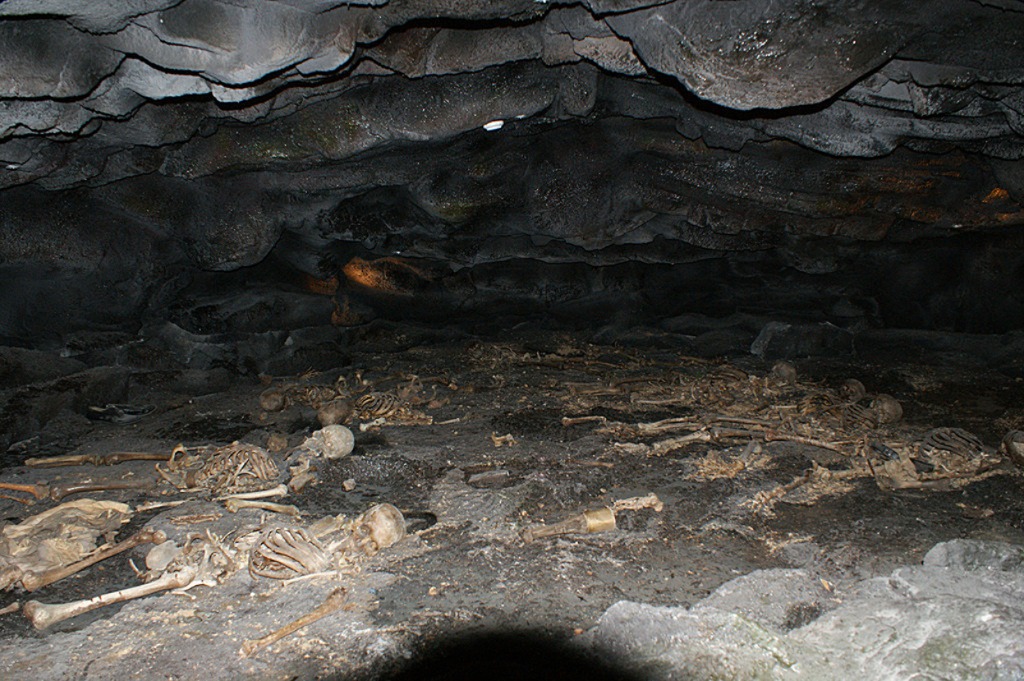
Recreation of the Daranshi Cave massacre on Jeju Island. (지구벌래, CC BY 2.0 kr)
One important fact about this shooting incident is that the police who fired were not local Jeju officers, but support police dispatched from the mainland. These support police had no understanding of or experience with the Jeju situation whatsoever, and it appears that they had perceived Jeju residents as radical leftist demonstrators, treating them as enemies. In the wake of this incident, resentment toward the U.S. Military Government grew. On the other hand, the right-wing forces had been acquiring political power in the Military Government and in South Korea. They mobilized the support of police forces and militia units, and they dispatched the so-called Northwest Youth Association, an extreme right-wing organization, to Jeju, where it carried out brutal massacres.
“Tragically, this political purge was extraordinarily violent and deeply inhumane.”
The propaganda slogan of the Northwest Youth Association at the time – “Crush the Communist Devils and Build a Unified Korea!” – clearly shows how intense the hatred and contempt for the opposing side had become. The deepening of the Cold War, the extreme left–right confrontation on the Korean Peninsula, and the extreme mutual hatred and contempt ultimately resulted in massacre. According to the government’s official investigative report, 14,442 people were killed; estimates put the figure between 30,000 and 80,000. Given that the population of Jeju was 280,000 in 1948, roughly two in ten, or three to four in ten, residents perished. According to the April 3 Investigative Report, a large number of the victims were killed by the military-police suppression forces (the “scorched earth” units).
At the time of the 4.3 Incident, the armed uprising forces – who took up arms due to the severe pressure from the U.S. Military Government and right-wing regime – numbered only approximately 350 to 500 people. The extreme hatred and contempt for leftist forces, and the anti-peace Cold War born of war, gave rise to extreme confrontation and violence between people. While it also brought losses to both left and right ideologues, tragically it slaughtered surrounding innocent civilians many dozens of times over.
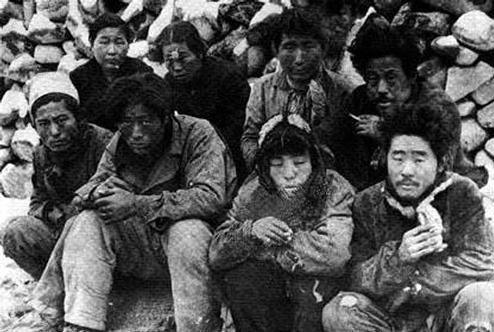
Jeju citizens awaiting execution in May 1948.
Personal Testimonies: Faces of the Tragedy
It is impossible to know exactly how my grandfather lived through that time, but in some ways, the life of a fugitive fleeing to survive may have been the luckiest choice available to ordinary people then. What became of those who were not even given that chance?
In fact, my wife was also recognized as a bereaved family member of the 4.3 Incident in 2023. Her hometown is Nohyeong-dong in Jeju City, the area with the greatest 4.3 damage in Jeju. Her grandfather was subjected to forced labor in Japan for two years, from 1943 to 1944. He returned to Jeju after liberation in 1945 and had a son. But when 4.3 erupted, on December 13 and then December 27 of that year, both he (the grandfather, then 24 years old) and his father (the great-grandfather, then 46 years old) were dragged away by the suppression forces and killed. Almost simultaneously, her grandmother lost the husband who had returned with such difficulty from forced labor, and found herself bereft of her father-in-law as well. How did she endure those harsh years together with her young son? There was not a single person in Jeju who did not carry such grief.
On January 6, 1949, during the military’s scorched-earth operation in the Bonggae-dong area of Jeju City, a 25-year-old mother named Byeon Byeong-saeng was shot and killed by suppression forces as she fled to the mountains with her nursing infant daughter. The mother and child were later found as bodies buried in a snowdrift. Based on this heartbreaking story, a memorial sculpture of mother and child titled “Biseol” (飛雪, falling snow) was installed at the Jeju April 3 Peace Park.
During the 4.3 Incident, the military-police suppression forces issued evacuation orders for residents of the mid-mountain areas and carried out scorched-earth operations. Residents in mid-mountain areas were unconditionally regarded as rebels and subjected to merciless operations: “Shot on sight or arrest.”
“There was not a single person in Jeju who did not carry such grief.”
An iconic example of the mercilessness of the operations of the military-police suppression forces’ is a woman in her 30s, who came to be known as “Grandmother Mumyeong-cheon.”³ She was shot by the suppression forces on January 12, 1949, losing her lower jaw, and was forced to live in pain for the rest of her life. The nickname “Grandmother Mumyeong-cheon” arose as she spent her life with her face wrapped in a plain white cloth (mumyeong-cheon, in Korean), not wanting to show her disfigured appearance to others.
The left–right ideological confrontation devastatingly destroyed the lives of ordinary people who had nothing to do with ideology, forcing them to carry those terrible memories for the rest of their lives.
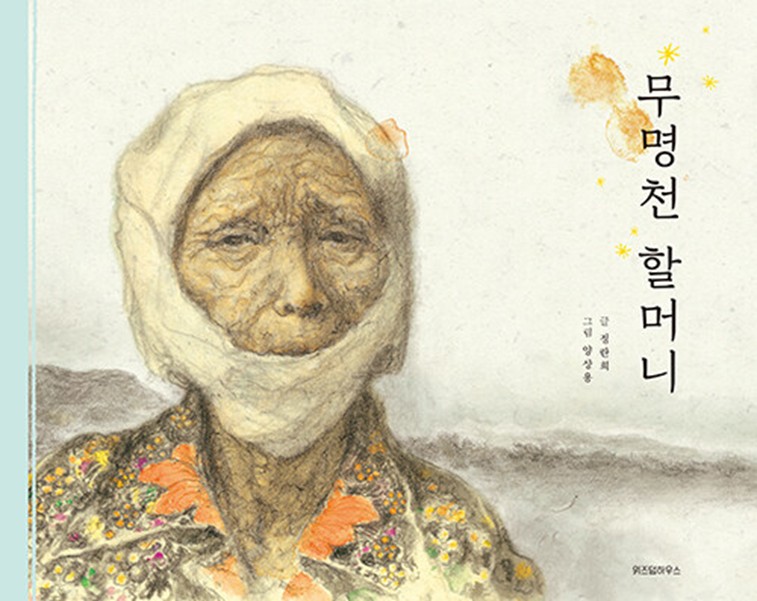
Cover of “Grandmother Mumyeong-cheon,” 70th anniversary Peace and Human Rights picturebook of 4.3. (Publisher: Wisdom House; Painting: Yang Sang-yong)
Kim Yeon-ok’s Story
In 2019, a female university student shared the story of her grandmother at a 4.3 memorial ceremony. This is the story of Grandmother Kim Yeon-ok.
“In 1948, a seven-year-old child held her parents’ hands and fled the burning village, forced to hide in one cave then another every night. The snow had fallen heavily, and her bare feet were so cold. The place where she was finally caught was a detention camp near Jeongbang Falls in Seogwipo. She might have eaten one ball of rice. When she woke up from sleep, soldiers had taken away her grandfather, grandmother, father, mother, older brother, and baby younger brother.
And the child watched as her father, the last to be dragged away, was stomped on and beaten with clubs before her very eyes. The child wailed. At that moment, someone suddenly grabbed her and struck her head against a stone wall. She lost consciousness and didn’t know how much time had passed before she regained consciousness. The name of that child who woke up alone, and had survived, is Kim… Yeon… Ok.
“Grandmother would never eat fish. It was because she believed that her parents and siblings had all been swept into the sea and eaten by fish. From childhood, she endured and never ate even a single anchovy – a fact I only learned recently. I have only now come to understand Grandmother’s sea.”⁴
Jeongbang Falls, today a famous tourist destination on the southern Jeju coast, was the place where the bodies of those executed during 4.3 were thrown into the sea.
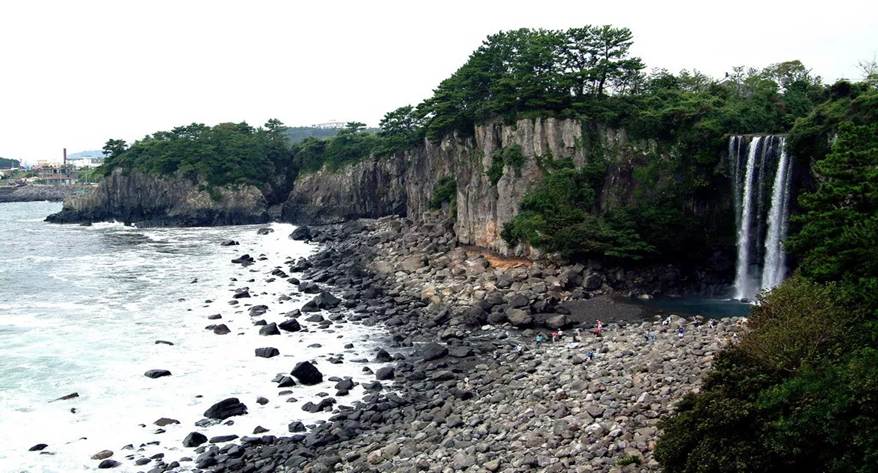
Jeongbang Falls, bodies to the sea, Jeju Island. (CC BY-NC-SA 2.0 KR)
The Aftermath and the Road to Reconciliation
How can one even begin to imagine the pain and tragedy of those who lost their lives during 4.3 – and even those whose remains could not be returned – and of the bereaved families left behind?
There were countless Jeju people who believed that when the war ended and liberation came, they would be freed from their harsh suffering and a peaceful world would return. But war and liberation did not bring peace. Instead, the ruthless lust for political power went beyond left–right ideological confrontation to breed extreme hatred and contempt for the other side, creating a bizarre history in which even inhumane slaughter was justified.
“Politically, Jeju was mired in compounding chaos.”
Cho Byeong-ok, who served as director of the U.S. Military Government’s police bureau (equivalent to today’s Commissioner General of the National Police Agency) during the 4.3 period, declared that “the people of Jeju are ideologically unsound, and if they hinder nation-building, they can be swept away entirely.” He became one of the key perpetrators driving the Jeju scorched-earth operations. Such hostile perceptions caused the 4.3 victims to be regarded as public enemies of society for 57 years.
“The left–right ideological confrontation devastatingly destroyed the lives of ordinary people who had nothing to do with ideology.”
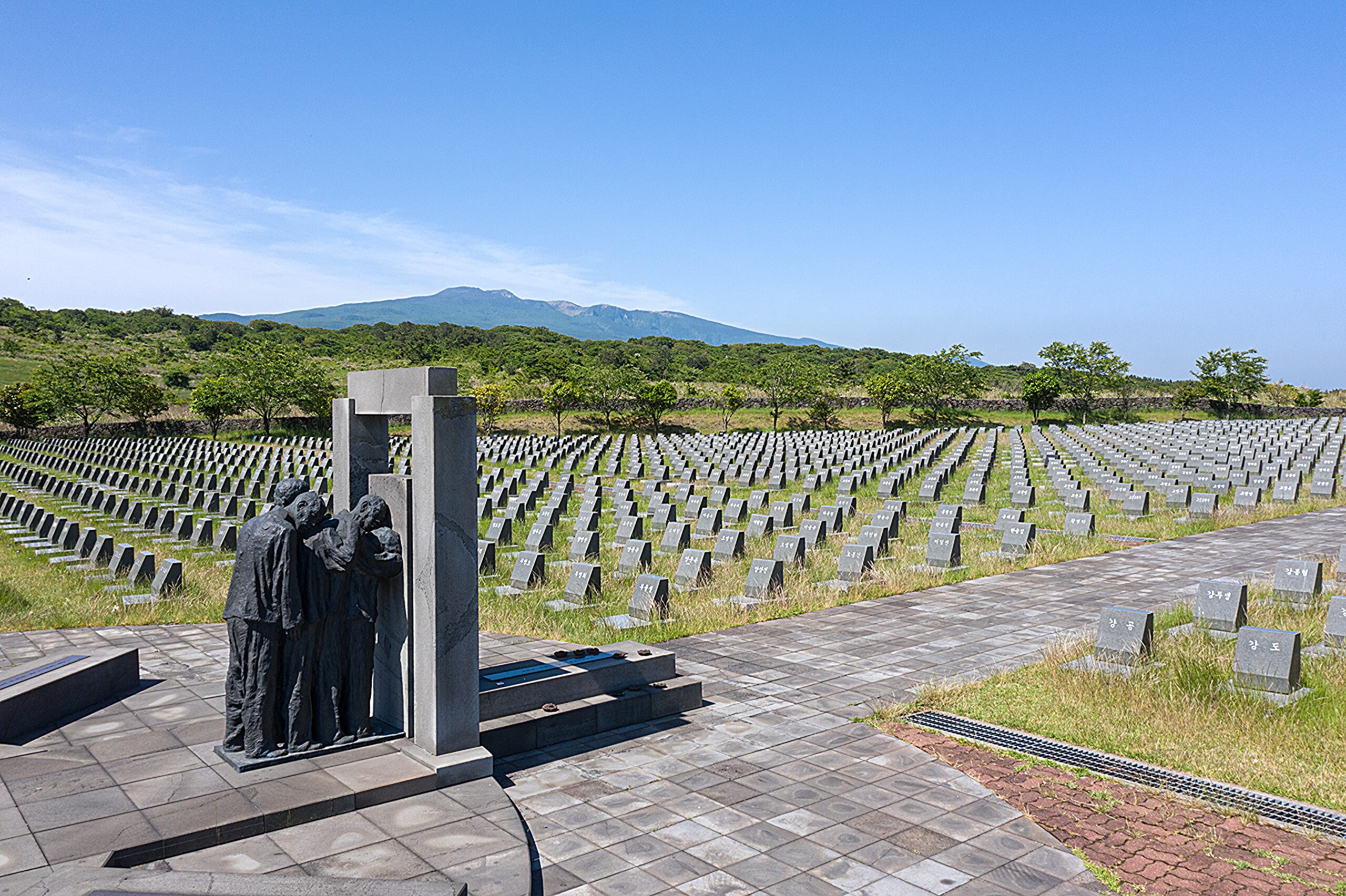
In 2005, fifty-seven years after the 4.3 Incident, the South Korean government officially apologized for state violence in the 4.3 Jeju Incident, declared Jeju an “Island of Peace,” published an investigative report, and has been making efforts toward recovery for victims. However, 4.3 remains trapped in left–right ideological debate, the full truth has not been established, and tombstones for 4.3 victims still stand with nothing written on them.
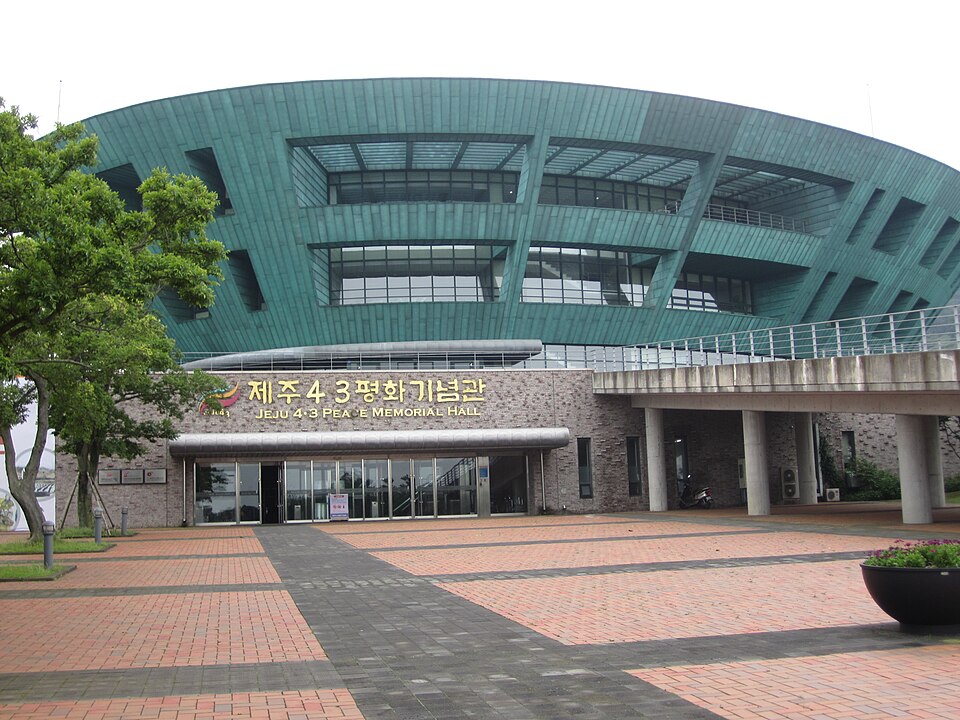
Jeju 4.3 Peace Memorial Hall, Jeju Island, 2016. (Ayn Tran, CC BY-SA 4.0)
Closing
As a descendant, I feel a quiet relief that my maternal grandfather, at least, returned – even if only as ashes. But when I remember those who were not even given that choice, who could not return even in death, and when I hear the sad stories of my wife’s family, my heart grows heavy. And yet there are still those who, through left–right ideological debate, insult even the act of mourning the souls of the dead – which only compounds the grief.
For the sake of true reconciliation, must we not continue the work of establishing historical justice – uncovering the unresolved truths of the 4.3 Incident? I believe that only through our unceasing remembrance, and our commitment to pursuing historical truth and peace, will the 4.3 Incident finally be properly named⁵ and bring forth peace.
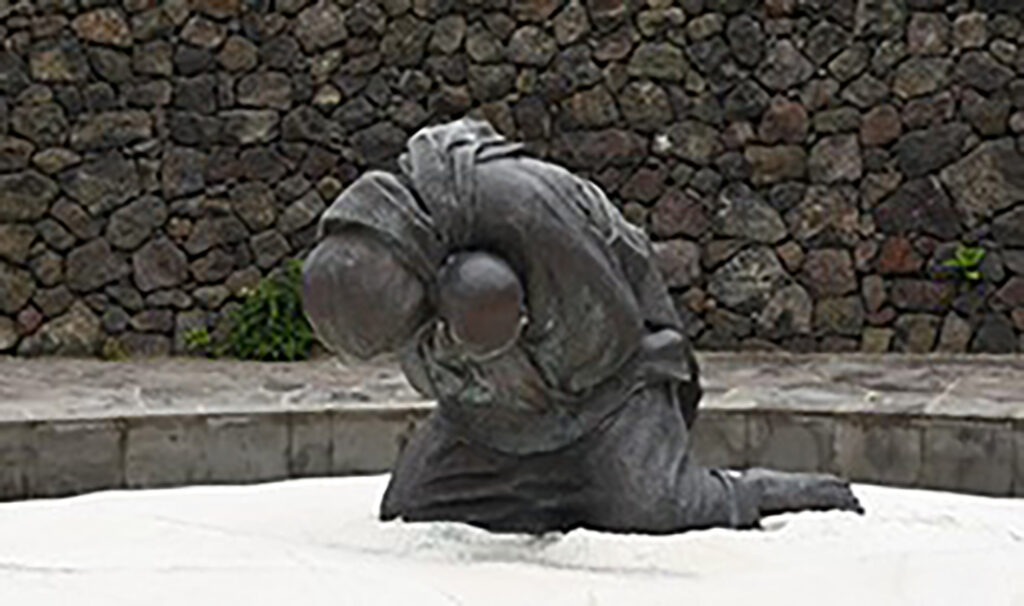
Biseol, sculture of a dying mother with her child at Jeju April 3 Peace Park. (Jeju 4.3 Peace Foundation)
Endnotes
- ¹ Cited from the Jeju 4.3 Incident Investigative Report.
- ² March 1 was the anniversary of the March 1st Independence Movement of 1919. Today, March 1 is a national holiday.
- ³ Real name: Jin A-yeong (1914–2004).
- ⁴ Lee, D. (2019, April 3). 4.3 71주년, 어느 여대생이 평화공원 온통 울음바다 만든 사연 [The 71st anniversary of April 3: The story of a female college student who filled Peace Park with tears]. Jeju Sori. https://www.jejusori. net/news/articleView.html?idxno=301309
- ⁵ The debate over how to properly name the 4.3 Incident still remains a burning issue.
The Author
Shin Joseph Kanghyob is a Jeju-based human rights activist who serves as the director and senior archivist of the Jeju Peace and Human Rights Research Institute “WHAT.”