


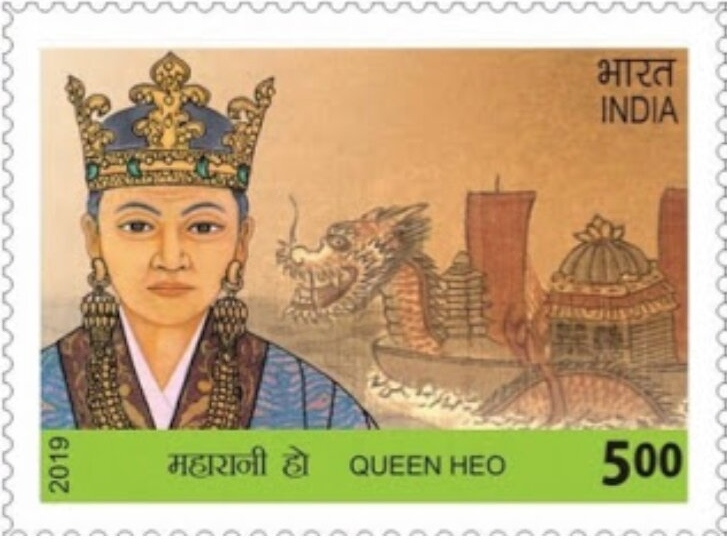
The Ancient India–Korea Connection: Two Civilizations Marry
By Siddhant K. ||
The legend of King Suro and Queen Suriratna is more than a royal romance; it is the earliest chapter in the long, largely untold story of Korea and India’s shared past.
Somewhere in the first century of the Common Era, a young princess from a kingdom thought to be in ancient India stepped onto a boat and sailed east – not out of conquest, but, if the chronicles are to be believed, out of destiny. Her name was Heo Hwang-ok (허황옥), known also as Suriratna, meaning “beautiful jewel.” She arrived on the shores of the Gaya Confederacy on the Korean Peninsula and became the queen consort of King Suro, founder of the Geumgwan Gaya Kingdom. Together, they are said to have founded a dynasty whose lineage traces, through the Gimhae Kim and Gimhae Heo clans, to tens of millions of Koreans living today.
The story is recorded in the Samguk Yusa, a 13th-century compilation of Korean legends and historical accounts by the Buddhist monk Iryeon.¹ According to this text, Suriratna arrived in 48 CE aboard a red-sailed vessel carrying stone ballast, red clay, and a stone pagoda; artefacts whose origin has fascinated historians for centuries. The Samguk Yusa describes her homeland as “Ayuta,” a name that scholars have long associated with Ayodhya, the ancient city in present-day Uttar Pradesh, India, revered as the birthplace of the god Ram in Hindu tradition.
The Ayodhya Connection
The proposed link between Ayuta and Ayodhya has moved, in recent decades, from scholarly conjecture to something approaching institutional recognition. In 2001, the state government of Uttar Pradesh formally acknowledged the connection by erecting a monument to Queen Heo in Ayodhya. In 2019, South Korean First Lady Kim Jung-sook attended the inauguration of a memorial park dedicated to the queen in the same city, a diplomatic gesture remarkable for its evocation of a bond two millennia old.²
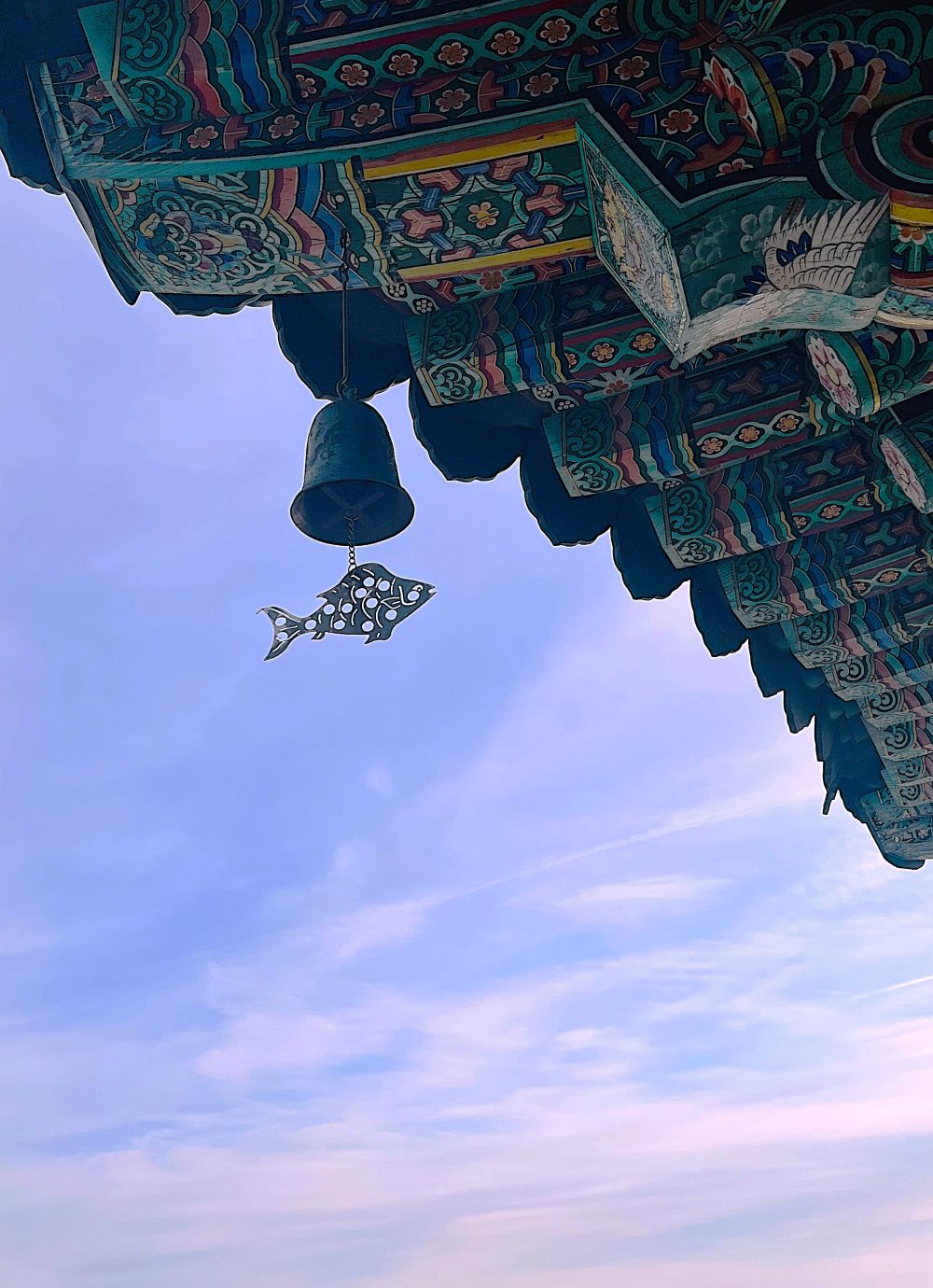
Korean scholars such as Kim Byung-mo have argued that the cultural and material evidence supports a real maritime link between southern India and the Korean peninsula in antiquity. The distinctive ssangeo-mun (twin fish) motif found in Gaya royal tombs closely resembles decorative patterns on ancient artefacts from the Ayodhya region – a coincidence, or a memory carved in stone? The fish motif also appears on the Heo clan’s coat of arms, a symbol said to have been brought by the queen herself.³
Not all scholars are convinced. Some historians, including those affiliated with the Korean Studies Institute at Seoul National University, urge caution, noting that the Samguk Yusa was compiled more than a thousand years after the events it describes and that “Ayuta” may refer to a Southeast Asian polity, or may be a symbolic rather than geographic designation. The debate, productively unresolved, continues to animate both academic conferences and public imagination.²
A Kingdom at the Crossroads
Geumgwan Gaya, the kingdom that King Suro is said to have founded around 42 CE near present-day Gimhae in South Gyeongsang Province, occupied a peculiar and powerful position in the ancient world. Sitting at the junction of Korean, Chinese, and Japanese trade networks, it was among the foremost producers of iron in East Asia. Archaeological excavations at Gimhae have uncovered an extraordinary array of burial goods: iron armor, swords, glass beads of West Asian provenance, and fine pottery, suggesting a court that was cosmopolitan by the standards of any era.⁴
The Gaya Confederacy, of which Geumgwan Gaya (42–532 C.E.) was the pre-eminent city-state for several centuries, was eventually absorbed into the Silla Kingdom by the mid-sixth century. But its cultural legacy proved durable. The Gayageum, the twelve-stringed zither that remains one of Korea’s most iconic instruments, is traditionally attributed to the Gaya period and bears the kingdom’s name to this day.⁴
“To understand Korea’s oldest royal legend is to glimpse the ancient Indian Ocean world; interconnected, restless, and very far from silent.”

Gaya in 5th-century Korea. (Overseas Koreans Agency)
Diplomacy Remembers What History Forgets
The story of Suriratna has become, in the 21st century, an unlikely but effective vehicle for Korea–India diplomacy. Both nations have increasingly drawn on the legend to frame their bilateral relationship, not as a modern convenience but as a revival of something ancient and genuine. Senior politicians in both countries have cited the Suro–Suriratna legend in addresses at diplomatic summits, and the Gimhae city government maintains a dedicated memorial complex that draws tens of thousands of visitors annually, including significant numbers from India.
In 2016, Indian Prime Minister Narendra Modi, during a state visit to Seoul, explicitly referenced Queen Heo in his remarks, calling her a symbol of the civilizational ties between India and Korea. The gesture was not incidental: India and South Korea had, by then, elevated their relationship to a Special Strategic Partnership, with bilateral trade exceeding USD 20 billion annually and cooperation spanning defense, technology, and culture.⁵
The legend thus performs a dual function: As cultural heritage, it provides Koreans with a narrative of ancient openness to the wider world; as diplomatic currency, it gives both India and Korea a shared origin story that predates the Cold War, colonialism, and modernity itself – a rare and useful thing in contemporary geopolitics.

Korean celadon vase with twin fish design. (Korea Heritage Service)
What the Story Means
History is never only about the past. The enduring power of the Suro–Suriratna narrative lies precisely in its ambiguity. It cannot be conclusively proved or disproved, and that indeterminacy keeps it alive, keeps scholars arguing, and governments investing, and clans tracing their lineage back to a shore where, two thousand years ago, a woman supposedly stepped off a boat and changed everything.
What is not ambiguous is what the legend has come to represent: that Korea was never an isolated hermit kingdom, sealed off from the world. Long before the Silk Road became a phrase in Western history books, the maritime routes of the ancient world were humming with the exchange of goods, of faiths, of people.⁶ Queen Suriratna, whether or not she came from Ayodhya, stands as a symbol of that older, more-connected world.
And in an era when two of Asia’s largest democracies are navigating a complex and consequential relationship, a queen and a fisherman-king from antiquity have found an unlikely second career as ambassadors.

Tomb of King Suro. (Kwj2772, CC BY-SA 3.0)
References
- ¹ Iryeon. (1972). Samguk Yusa [Memorabilia of the Three Kingdoms] (Trans. Ha Tae-hung & G. Mintz). Yonsei University Press. (Original work published c. 1281)
- ² Lee, Y. (2011). Ayuta and Ayodhya: A comparative analysis. Journal of Korean Studies, 16(1), 33–58.
- ³ Kim, B. (1985). The origin of Queen Heo Hwang-ok. Korea Journal, 25(4), 12–28.
- ⁴ Kim, T. (2002). Gaya archaeological studies. Gimhae National Museum Press.
- ⁵ Ministry of Foreign Affairs, Republic of Korea. (2019). Korea–India special strategic partnership: Joint statement. Seoul.
- ⁶ Sen, T. (2003). Buddhism, diplomacy, and trade: The realignment of Sino-Indian relations, 600–1400. University of Hawai’i Press.
The Author
Siddhant Kumar is a geochemical oceanographer and researcher at TMBL at the Gwangju Institute of Science and Technology (GIST). His work focuses on marine minerals, sediment chemistry, and paleoenvironmental change. He is passionate about communicating ocean science to broader communities in Korea.
Cover Photo: Indian postage stamp of Queen Heo Hwang-ok (Suriratna). (India Post, Government of India; GODL-India, 2019)