



AI as the Sixth Sense: Could Brain–Computer Interfaces Make Human Memories Digitally Immortal?
By Muhammad Umar Tahir ||
Imagine, a few decades from now, using artificial intelligence may feel very different from today. There may be no need to unlock a phone, open an app, type a question, or even speak. You may look at a person and instantly remember where you met them. You may hear an unfamiliar language and understand it naturally. You may forget a detail from years ago and have it return almost immediately. AI could quietly work in the background, connected not only to the devices around us but perhaps one day much more closely to the human brain.
For most of human history, this would have sounded impossible. We have always depended on our natural senses to understand the world. We see, hear, touch, taste, and smell, and our brain turns these signals into experiences and memories. Technology has already started extending some of these abilities. Smartphones remember numbers we no longer memorize, maps guide us through unknown streets, translation tools help us understand foreign languages, and AI can answer in seconds what once required hours of searching.
The next step could be much more personal. Instead of using AI through a screen, future technology may reduce the distance between human thought and digital information. This is where the idea of AI becoming something like a sixth sense begins to make sense. It would not be a new biological sense, but an extra layer of understanding that helps us receive information, recall memories, and interact with the world more naturally.
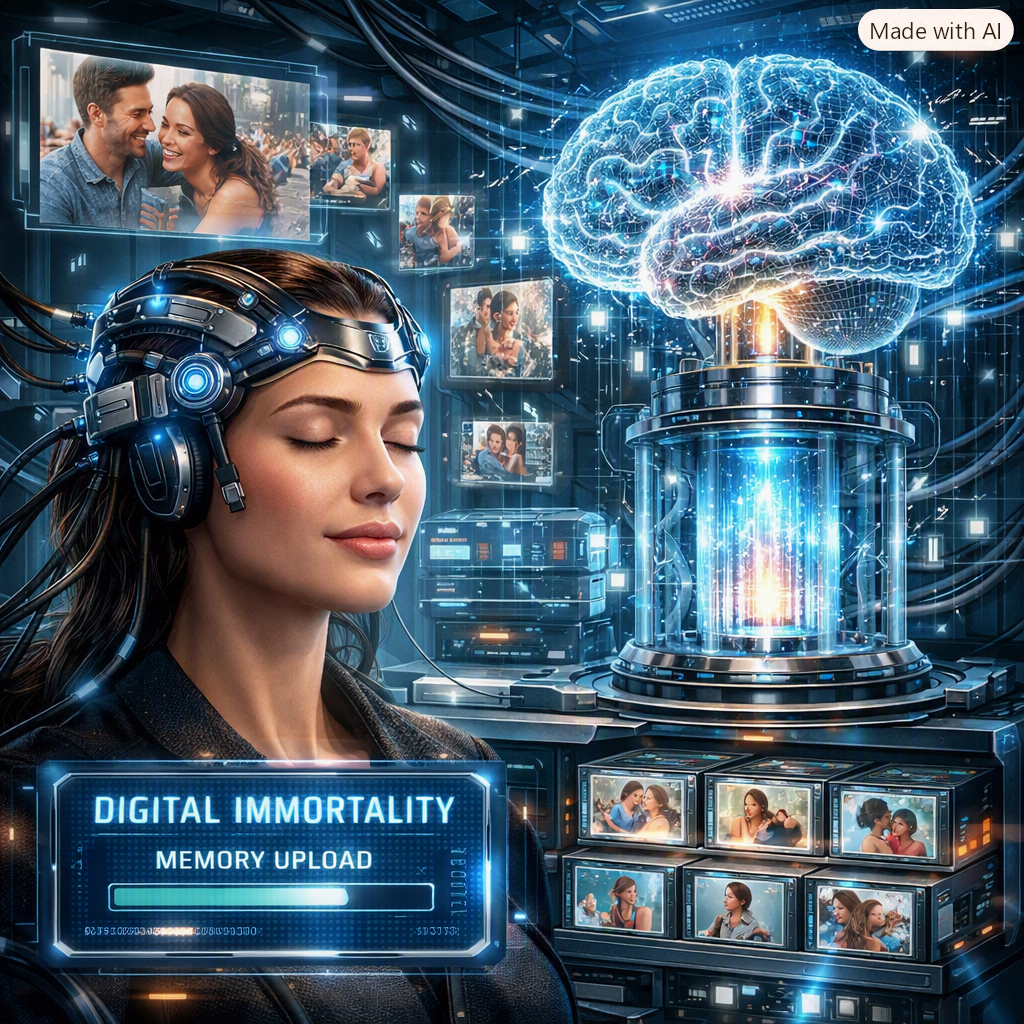
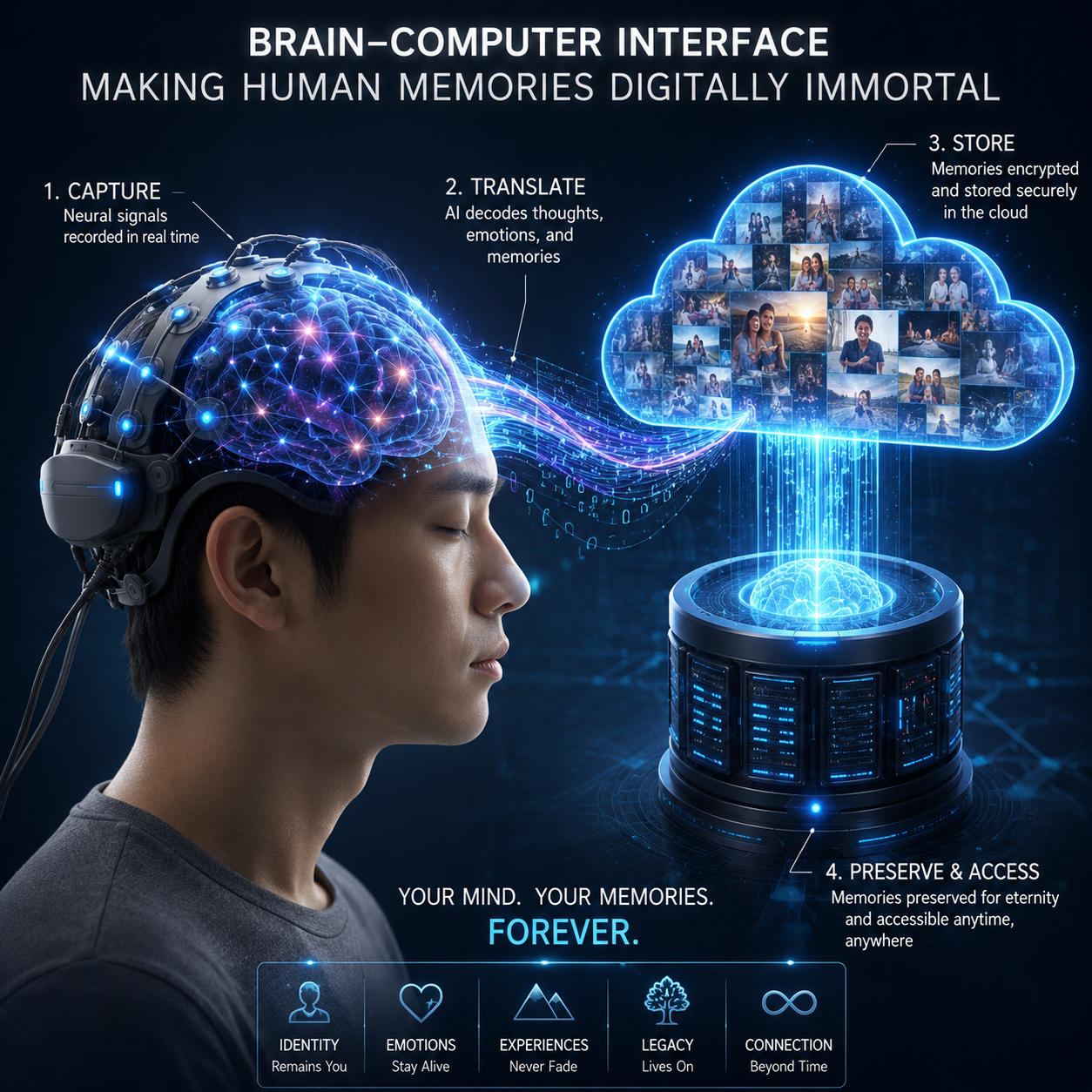
(GN with ChatGPT)
Brain–computer interfaces, commonly known as BCIs, could play an important role in this future. In simple terms, a BCI creates a communication link between activity in the brain and a computer. Researchers have already developed systems that allow some people with severe physical limitations to communicate with computers or control digital devices using brain signals related to movement or speech. These systems are still at an early stage and are mainly being developed for medical use, but they show that a direct connection between the brain and machines is no longer purely science fiction.
Now combine that connection with AI. Traditional computers mostly follow programmed instructions, while AI learns from patterns. A future AI system could gradually learn from a person’s speech, habits, preferences, decisions, reactions, and perhaps one day, certain patterns of brain activity. It would not only know about the world; it could become highly familiar with the individual using it.
That could change everyday life in surprisingly simple ways. A person could recognize an old friend but forget the name, and AI might quietly bring the missing information back. During a meeting, details from an earlier discussion could become available exactly when needed. While traveling, directions, translation, and information about the surroundings could appear naturally without constantly checking a screen. Learning a new language could become easier if AI supported understanding in real time.
In this kind of future, AI would no longer simply make us faster. It could begin extending human ability itself. In fact, we have already started moving parts of our memory outside the human brain. Many of us no longer remember phone numbers because our devices store them. We depend on navigation systems for routes, calendars for appointments, and photographs to preserve moments we do not want to forget. Cloud storage now holds years of documents, conversations, images, and videos.
The difference is that all of this memory is currently scattered across separate devices and platforms. An ordinary person’s digital life already contains an enormous amount of personal information. Photographs record places and people. Messages show how we communicate with family and friends. Emails preserve parts of our professional lives. Videos capture our voices, movements, and expressions. Music platforms know what we listened to at different stages of life. Maps remember where we traveled, while search histories reveal what interested or worried us.
Together, these details form something that previous generations never had on such a large scale: a digital record of a human life. Now consider what could happen if an AI system learned from that information for decades. It could become familiar with the way a person writes, the stories they often tell, the places they love, the decisions they make, and the subjects that matter to them. It could remember details that the person gradually forgets and organize years of experiences into something much more useful than a simple photo archive.
“AI … could eventually extend something much more personal: our ability to remember, understand, and access knowledge.”
This is where the subject becomes especially interesting: human memory itself. Human memory does not work like computer storage. A photograph can be copied from one device to another, but a childhood memory cannot simply be downloaded like a file. Memories are mixed with emotions, sounds, people, places, sensations, and countless connections inside the brain. Even one simple event may be remembered differently over time. Scientists are still far from being able to copy a complete human memory onto a chip. However, research is helping us understand more about how the brain forms, recalls, and processes information. At the same time, brain–computer interfaces are becoming better at detecting certain patterns of neural activity, while AI is becoming increasingly powerful at recognizing complex patterns.
The real future may therefore not come from one machine suddenly “uploading” a human mind. It may come from several technologies slowly growing together. AI could learn from a person’s digital history. Brain–computer interfaces could create new ways for the brain and machines to communicate. Wearable technology could record health and behavior. Virtual environments could preserve experiences in richer forms. Over time, a person’s digital memory could become more detailed, more personal, and more interactive.
A future AI might remember the places someone visited, the stories they repeatedly told, the songs they loved, their voice, their expressions, and the way they explained things. Instead of preserving only isolated photographs or videos, it could connect these pieces and create something closer to an interactive life archive.
This could completely change the way family memories are passed from one generation to another. Today, family stories slowly become shorter with time. Small details disappear, names are forgotten, and old photographs remain even when nobody remembers exactly what was happening in them. Future AI could preserve those details in a very different way. A family member could ask about an old photograph, and the system might explain the location, the people in it, and the story behind that day using information collected over many years.
This is where the idea of digital immortality begins to take shape. Human beings have always tried to preserve something of themselves. Ancient civilizations carved stories into stone. Books allowed ideas to survive for centuries. Photography preserved faces, audio preserved voices, and video preserved movements and expressions. The internet allowed ordinary people to leave behind huge amounts of personal information.
“AI would not replace the five human senses, but it could become an additional layer working alongside them.”
AI could become the next step because it can make that information interactive. A photograph stays silent. A diary contains only what was written on its pages. A video repeats the same moment every time it is played. AI, however, can connect different pieces of information, answer new questions, explain old experiences, and organize a lifetime of digital material in ways that traditional records cannot. This does not mean a complete human being would exist inside a machine. There is a major difference between preserving memories and transferring human consciousness. Science still does not fully understand consciousness, and there is no current technology that can copy an entire mind.
Digital immortality may therefore mean something different from the science-fiction version we often imagine. It may be less about creating a perfect digital human and more about preserving knowledge, memories, personality, experiences, and ways of communicating in a form that can continue to be explored across generations.
The technology could also transform life while people are still using it. A brain-connected AI might help with memory, learning, translation, navigation, and decision-making. Students may rely less on memorizing facts and more on understanding how to use information. Professionals could access years of previous experience instantly. Language barriers could become much smaller if translation becomes almost automatic.
But the closer technology comes to the human mind, the more important privacy becomes. Smartphones already contain highly personal information, but brain-related information would be far more sensitive. If future systems collect data connected to memory, attention, or neural activity, protecting that information could become one of the biggest challenges of the digital age. There is also a deeper change that may happen gradually. People may begin to question where their own memory ends and artificial intelligence begins. If AI recalls a fact exactly when it is needed, does that information still feel external? If a system has accompanied someone for decades and remembers almost everything they have experienced, does it remain only a tool?
Technology has changed human ability many times before. Cars extended how far we could travel. Telephones extended how far we could speak. Cameras extended visual memory. Computers extended our ability to calculate and store information. AI combined with brain–computer interfaces could eventually extend something much more personal: our ability to remember, understand, and access knowledge.
Future generations may even look at today’s smartphones the way we look at old wired telephones. They may find it strange that people once had to take a device out of their pockets, unlock it, type a question, and stare at a screen just to access information. For them, artificial intelligence may simply become part of everyday perception. It could quietly translate conversations, recall forgotten details, organize information with whatever a person is seeing or doing at that moment. AI would not replace the five human senses, but it could become an additional layer working alongside them.
This is why the future of AI may be far more interesting than simply building smarter machines. The biggest change could come from how closely artificial intelligence becomes connected with human experience itself. We are still far from storing an entire human memory inside a chip or creating a complete digital version of a person. But AI is becoming more personal, brain–computer interfaces are advancing, and our digital lives are growing richer every year.
Today, most of our memories still live inside us while technology preserves only fragments. In the future, those two worlds may begin to overlap much more closely. If our eyes help us see the world, our ears help us hear it, and our memory carries the past, perhaps AI could become the sixth sense that connects all three – helping us understand what is around us, recover what we once knew, and preserve what we experience for the future.
And if that happens, the most important story may not be how intelligent machines become. It may be how different human memory itself becomes when it starts growing together with artificial intelligence.
The Author
Muhammad Umar Tahir is an electrical engineer pursuing his PhD in the Artificial Intelligence Convergence Department at Gwangju Institute of Science and Technology (GIST). He is interested in applying AI to healthcare devices, particularly in advancing medical imaging technologies and brain memories, support learning, and connect digital stimulation.
Cover Photo by GN with ChatGPT.