


The Calcuttan in Korea: Jinju – A City of Returning Histories
By Reeti Roy ||
Jinju is one of those places that refuses to stay contained inside a single narrative. You arrive thinking you are looking at a regional Korean city, and you leave realizing you have been moving through layered histories of violence, labor, gender, exclusion, and resistance that feel uncomfortably familiar if you come from somewhere like India.
Jinju sits along the Nam River. Today it is calm, commercial, even tourist-friendly in parts, known for lantern festivals and riverside walks. But underneath that surface is a dense archive of siege, famine, rebellion, and social movements that shaped modern Korean political consciousness.
The first layer of Jinju is military and mythic at the same time. During the Japanese invasions of Korea in the late 16th century, Jinju became one of the most important defensive sites in the south. The most well-known episode is the Siege of Jinju (1592–1593), where Korean forces resisted a vastly larger Japanese army. General Kim Si-min is remembered for organizing the defense and holding the fortress against overwhelming odds in the first siege.
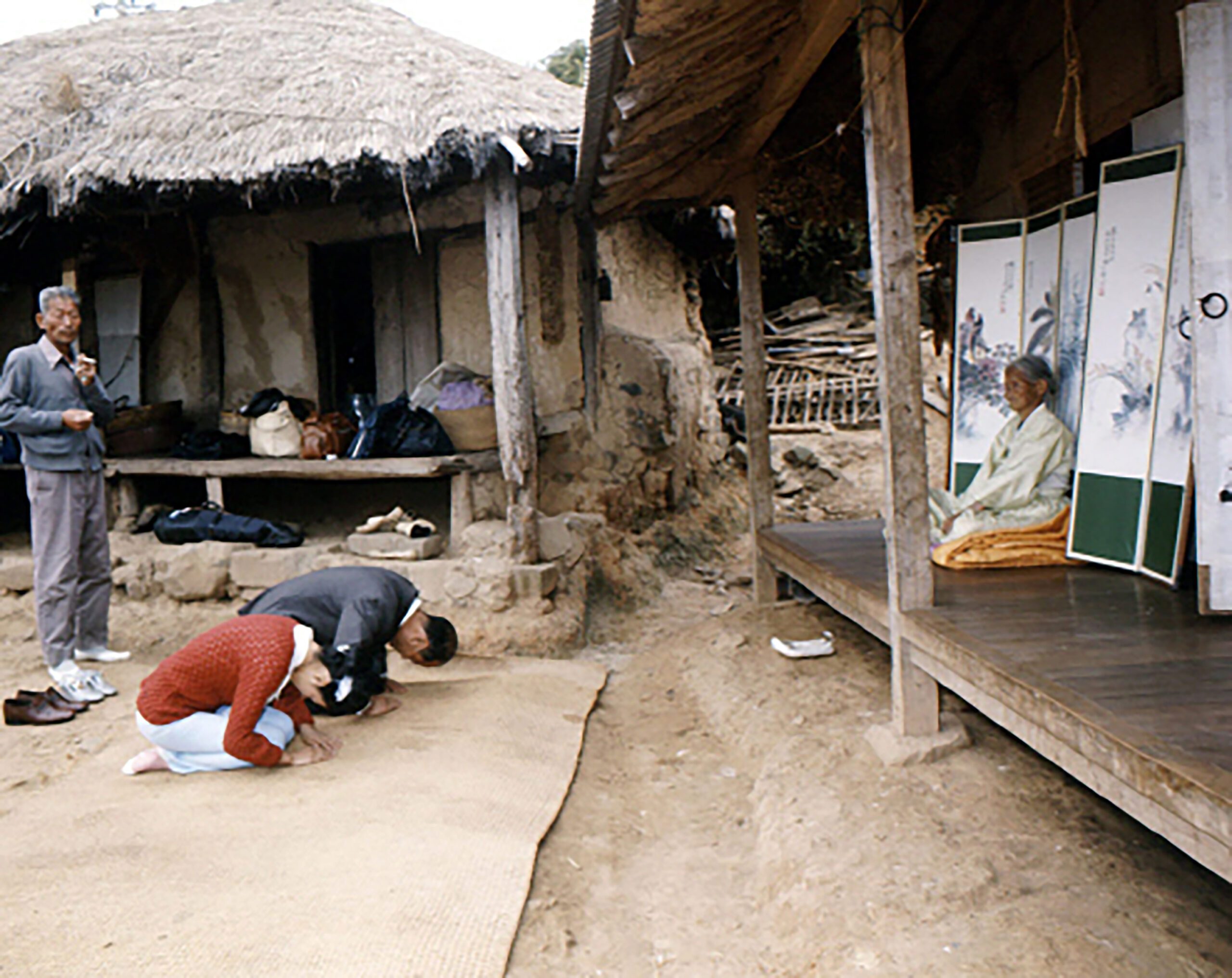
But Jinju is never just military history. It is also memory turning into story, and story turning into moral language. This is where Nongae enters. A gisaeng, trained in poetry, music, and performance, she is said to have lured a Japanese general to the edge of a cliff overlooking the Nam River and jumped off the cliff with him into the river below, killing him and herself. Whether one reads this as historical fact or cultural memory, what matters is the function it serves. It turns a woman, placed in a system of structured marginality, into an irreversible act of refusal.

Park Kyong-ni Elementary School.
The gisaeng system itself sits in contradiction. These were women trained in high culture, often deeply educated in literature and music, yet structurally denied social equality. They were central to aesthetic life and peripheral to social legitimacy at the same time. While gisaeng were often technically state-owned and operated in semi-autonomous households, this contradiction immediately reminded me of courtesan cultures in India, especially in Lucknow. India’s tawaifs occupied a similar paradoxical position. They were custodians of classical music, dance, poetry, and etiquette, shaping elite culture while being socially marginalized under colonial and postcolonial moral frameworks. Both systems reveal the same uncomfortable truth: Societies often depend on women’s cultural labor while refusing them full moral recognition.
The second layer of Jinju is agrarian violence and administrative extraction. In the 19th century,
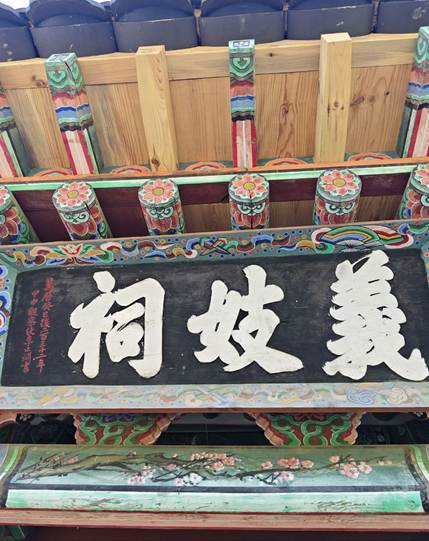
Signboard over the entrance to Nongae’s Shrine.
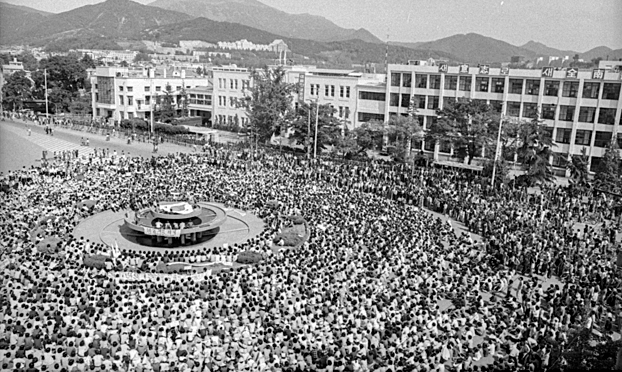
Jinju became the site of the Jinju Peasant Uprising (1862). This was not an abstract rebellion. It emerged from a taxation system that had become structurally predatory. Under the Samjeong system, peasants were taxed on falsified records, including land they did not own or family members who were already dead. The violence here is not spectacular. It is bureaucratic. It is paperwork that becomes more real than people.
When peasants rose in Jinju, it was not because they had suddenly discovered ideology. It was because endurance had reached a limit where continuation was no longer possible. The uprising spread and eventually forced administrative reforms in Joseon governance.
Three years earlier, across the ocean, Bengal was experiencing something structurally similar in the form of the Indigo Revolt (1859). Farmers were being forced into cultivating indigo under British plantation systems. Indigo was not food. It was not survival. It was extraction disguised as agriculture, feeding global industrial demand while producing local hunger. While the Jinju uprising was a reaction to feudal administrative corruption and the Indigo Revolt was a response to market-driven colonial capitalism, the structures differ but the emotional outcome is similar: Refusal emerges when survival becomes mathematically impossible.
Both uprisings led to partial reforms. The Jinju movement contributed to restructuring of taxation systems. The Indigo Revolt led to the Indigo Commission and the gradual decline of forced indigo cultivation. But in both cases, reform does not mean transformation. It means adjustment of extraction, not its disappearance.
The third layer is social hierarchy and dignity. The baekjeong community in Korea faced entrenched discrimination linked to occupation and social status. Out of this emerged the Hyeongpyeong Movement in 1923, which demanded equity, not charity. Equality here is not symbolic. It is structural. This immediately resonates with Dalit struggles in India and the political philosophy of B. R. Ambedkar. In both contexts, the demand was not for inclusion into hierarchy but for the dismantling of hierarchy itself. Education, organization, and legal recognition became tools of resistance, not assimilation.
Jinju, in this sense, is not only about land or war. It is about who is allowed to be fully human within a social structure.
The fourth layer is resistance through fragmented armies. The Uibyeong, or righteous armies, were civilian and semi-formal militias composed of scholars, monks, and peasants who resisted invasion forces. They were not centralized institutions. They were improvisations under pressure. This resembles the fragmented resistance during the Indian uprising of 1857, where figures like Rani Lakshmibai became symbolic anchors for a much wider and less coordinated resistance landscape. In both cases, resistance is not a single unified structure. It is a constellation of responses to asymmetry.
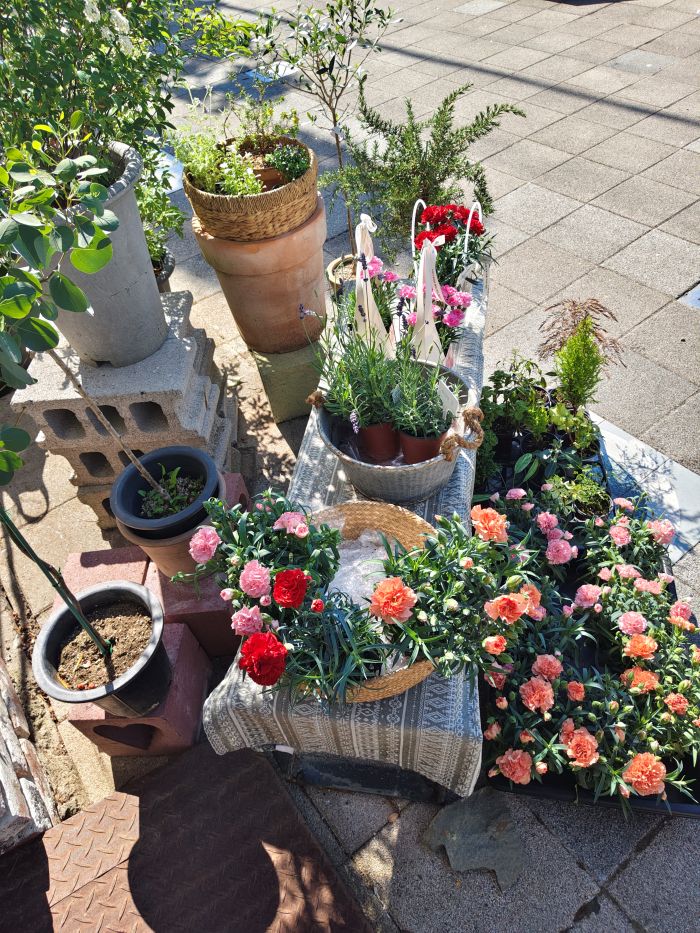
Flowers on a Jinju sidewalk.
The fifth layer is literature as afterlife. Toji (The Land) by Park Kyong-ni is where Jinju’s historical memory becomes fully literary. The novel uses peasant uprisings and rural transformation to explore how land, identity, and power are entangled. It is not simply historical fiction. It is an attempt to map how systems of land ownership and social hierarchy shape human life
at every level. In India, texts like the Bengali play Nil Darpan performed a similar function for the indigo economy, exposing plantation violence in a way that turns economic systems into narrative reality.
“Societies often depend on women’s cultural labor while refusing them full moral recognition.”
Both works show that when violence becomes structural, literature becomes a secondary site of testimony. Park Kyong-ni matters because she refuses to soften this. She does not romanticize peasants. She does not simplify elites. She writes systems. How land becomes power. How hunger becomes structure. How survival becomes negotiation.
When I visited Jinju, I also went to Park Kyong-ni Elementary School, a school named in her memory. What stayed with me there was not monumentality but normalcy. Children learning, classrooms functioning, everyday life continuing in a space named after a writer who documented dispossession and agrarian struggle. An elementary school is not designed as a memorial site. It is designed as repetition. But precisely because of that, it becomes a quiet form of memory transmission. Not dramatic. Institutional. Embedded.
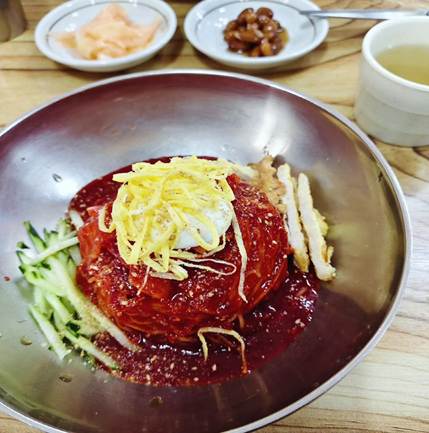
A bowl of Jinju’s bibim-milmyeon (mixed wheat noodles).
Standing there, I kept thinking about how different societies carry literary memory. In Korea, especially in places like Jinju, memory is often spatially integrated into civic life. Schools, libraries, rivers, and neighborhoods carry traces of writers and historical figures without separating them from daily function. In India, literary memory often becomes either highly canonized in academic or elite spaces, or regionally contained depending on language and access. The landscape itself is less frequently named after its writers in a way that is functionally integrated into everyday civic geography.
This difference matters because Toji itself is about geography. About land as lived reality rather than abstract possession.
When I think back to Jinju now, I do not remember it as a singular narrative of either beauty or violence. I remember it as accumulation. Siege layered over festival. Bureaucracy layered over rebellion. Art layered over marginality. Memory layered over present routine. And when I place it next to India, especially the Indigo histories and agrarian struggles, what emerges is not symmetry but resonance.
Both contexts show systems that extract until they are interrupted. Both show rural populations pushed into refusal when survival thresholds collapse. Both show reform arriving late, partially, and often in ways that preserve the underlying structure.
But there is one deeper connection that stays with me beyond comparison. In Jinju, a woman jumping into a river becomes memory. In Bengal, farmers refusing indigo become history. In both cases, literature arrives later to hold what systems could not contain.
And Park Kyong-ni is part of that afterlife. Not as monument but as documentation of how long people can endure systems before language finally catches up. What Jinju and Indigo together reveal is simple and difficult at the same time. Resistance is not always dramatic. Sometimes it is just the point at which continuation stops being possible. And everything after that is history trying to explain why.
The Author
Reeti Roy is a cultural commentator and the founder of Aglet Ink. A graduate of Jadavpur University and the London School of Economics, she is currently based between Korea and India, investigating Indo-Korean social architectures through an anthropological lens.
Photographs courtesy of the author.
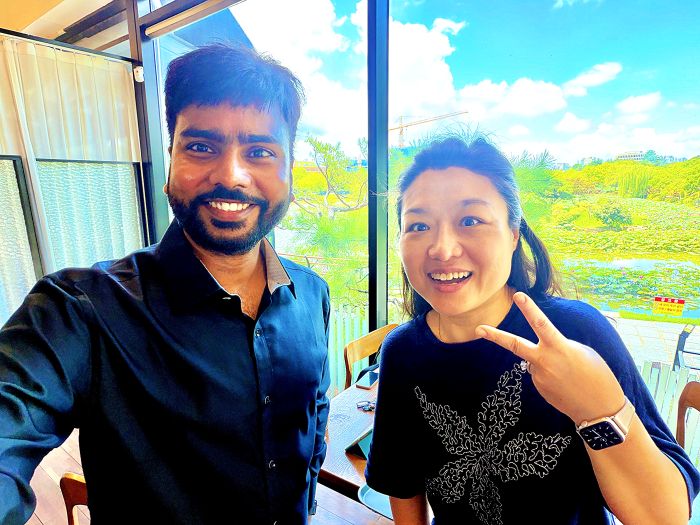
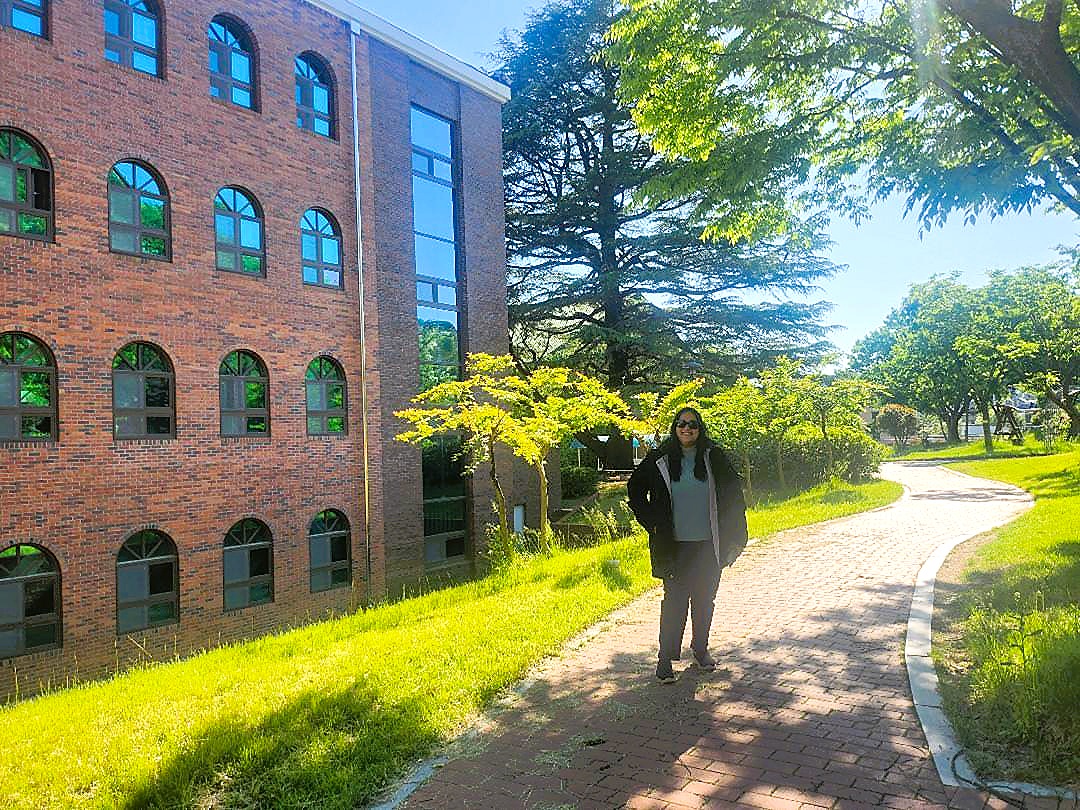
Cover Photo: Reeti outside the school where Park Kyong-ni studied.