

1st CNU 5.18 Marathon: A Morning Run That Taught Me Consistency
By Dhivyaa S. P. ||
No plan. No practice. No expectations. It started like any usual workday morning.
I woke up, got ready, and followed my routine. But instead of heading to the university for research, I went for a run. I took part in the 1st CNU 5.18 Campus Marathon at Chonnam National University in Gwangju. It was a race dedicated to the spirit and memory of the Gwangju Uprising of 1980. And somehow, without preparation, I found myself at the starting line of the 10-kilometer race.
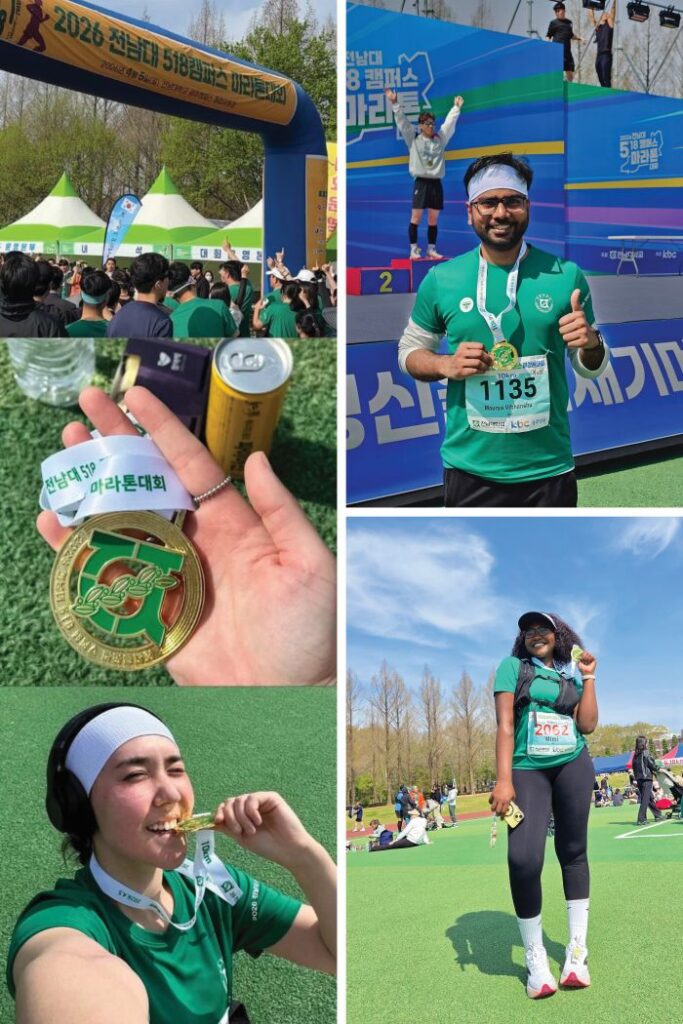
Finish-line energy of participants. (Daniyarova A., Maurya V., & N. K. Iyortsuun)
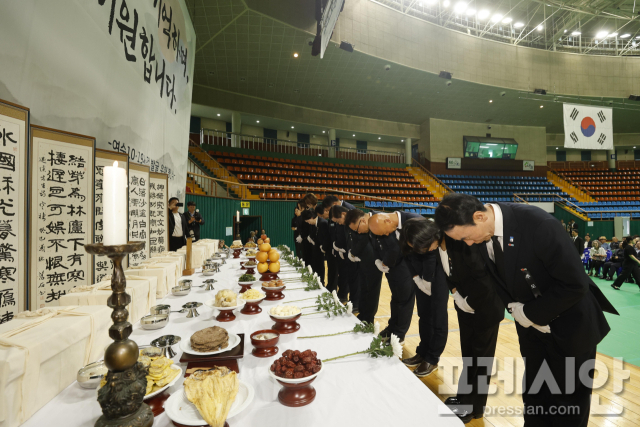
The event carried meaning even before the race began. There were two courses, each carefully designed with symbolism. The 5.18-kilometer course represented the May 18 movement, with a limited number of 518 runners to honor the date and its significance. The 10-kilometer course reflected the height of Mudeung-san, the mountain that stands over the city as a quiet witness to its history. Every number, every distance, felt intentional. It was not just about running. It was about remembering.
The atmosphere was electric from the very beginning. Runners gathered in waves, filling the campus with energy and anticipation. Shoes tapped against the pavement. Voices rose in excitement. As the clock approached 9 a.m., the crowd tightened, and the countdown began. In those final seconds, everything felt loud and alive. Then the signal came, and we started moving.
I began with a light jog, trying to keep a steady pace. At first, it felt manageable. The excitement carried me forward. But reality set in quickly. My legs grew heavy, and my breathing became uneven. I realized almost immediately that I was not ready for this distance. Still, I kept going. I slowed down. Then I walked. Then I tried jogging again. It became a rhythm of effort and adjustment. My goal was simple: Just finish. It did not matter how long it took or where I placed. I just wanted to reach the end.
The 10-kilometer course took us beyond the campus and into the surrounding city streets. We passed intersections, landmarks, and familiar roads, now filled with runners instead of cars. The city felt different. Alive in a new way. Some runners moved fast and steady. Others slowed down, conserving energy. I found myself somewhere in between, pushing forward in small steps. There were moments when I wanted to stop, when my body resisted every movement. But the presence of others kept me going. There was a quiet sense of unity that made it easier to continue.
At some point during the race, I noticed something unexpected. Even though I was tired, I felt focused. My thoughts became simple. Step by step. Breath by breath. I was not thinking about work or stress. I was just there, in the moment, moving forward. I learned something small but meaningful: I could keep going even when I felt unprepared. I could slow down and still make progress.
The final stretch felt long. Every step required effort. But the finish line was there, and that was enough to keep me moving. When I finally crossed it, the feeling was quiet but powerful. I had done it! I had finished 10 kilometers without training, without a plan, and without giving up. That was enough.
After the race, we received our medals, along with an energy drink and rice cake. It was simple, but it felt earned. Around me, runners rested and reflected. Some sat quietly. Others laughed and shared stories. Everyone had pushed themselves in some way.
For Daniyarova Altynshash, this was her first race, and the experience stayed with her in a deeply emotional way. She described feeling an immediate sense of unity as soon as the race began. Surrounded by people moving toward the same goal, she felt connected and supported, even by strangers. What stood out most for her was not just the running, but the atmosphere. The energy of the crowd, the thoughtful organization, and the meaning behind the event made every moment feel special. Running through a campus tied to such important history gave her a sense of purpose beyond the physical effort. Despite the challenge, she felt calm and aware, fully present in the moment. For her, the race became more than movement. It became connection.
For Maurya Vibhanshu, the marathon began as a simple decision to break out of routine. He had been busy with work and had fallen out of the habit of exercise. When he heard about the event, he saw it as a chance to restart. He intended to train, and for a few days he did, but daily life quickly took over. When race day arrived, he felt unprepared and nervous, especially after signing up for the 10-kilometer course. At the start, he ran slowly, unsure of how far he could go. But after a few kilometers, he found a rhythm. He kept moving without stopping, focused on one goal: to finish within two hours. As he ran, he realized how much he had neglected his physical health. The cheering groups along the route gave him energy, and crossing the finish line after just over an hour filled him with both exhaustion and pride. It was a moment of realization and achievement.
For Ngumimi Karen Iyortsuun, the race was a bold step into the unknown. It was her first time ever participating in a race, and choosing 10 kilometers felt like a serious challenge. She prepared for three weeks, unsure if it would be enough, but decided to show up anyway. On race day, the first few kilometers were difficult. Her body resisted, questioning every step. But she kept going. Around the halfway point, something changed. She found her rhythm and began to settle into the run. By the time she reached the finish line, she felt stronger than she had expected. The satisfaction was quiet but deep. For her, the race was not just physical. The meaning behind the event, tied to the history of Gwangju, added another layer. Running through those streets made the history feel real and present.
Looking back, the marathon was more than just a race. It was a reminder that you do not need perfect preparation to begin something meaningful. It was a reminder that showing up matters. That progress can be slow and still be real. Running through the campus and the city, surrounded by others, I felt connected not only to the moment but also to something larger.
That morning began like any other. Ordinary and predictable. But one small decision changed everything. I chose to run. I chose to step into something uncertain. And in doing so, I discovered something simple but deep. Sometimes, finishing is enough.
The Author
Dhivyaa believes that every action, no matter how small, contributes to a bigger change. She wishes, “May this May bring you lots of sunshine and blessings.” Up next: 2013 → 2026. Been Thirteen. Still rising.