



Inside the Gwangju News: The Merry Mexican with a Mission – Luis Andrés
Each month, this column spotlights one of our regular contributors to the Gwangju News, giving readers a chance to learn more about the diverse voices behind the magazine. These writer profiles take the form of interviews, offering a window unto their talents, perspectives, and stories — Editor
Gwangju News (GN): I’d like to begin, Luis, by thanking you for making time for this interview and by asking the first question. What did you do before coming to Korea, and where did you do it?
Luis: Thank you, for having me. I feel honored. My main activity was, and maybe still is, to get burnout. Maybe it is the ADHD or maybe just my personality, but I’ve always done a ton of things at the same time. So, I was Representative in Latin America for the University of Groningen of the Netherlands. I was also a junior lecturer at my alma mater, UNAM, and at a recently created public university, the Rosario Castellanos in Mexico. And all this was as I was involved in the creation of the Erreizando online magazine, of which I am a co-founder, and trying to increase its visibility. I was also a substitute English and Spanish teacher for children ages 5 to 18.
Before that I was mainly a university student, teacher assistant, and participant and organizer of debate contests and Model United Nations.
All this is not to flash about my experience but as a reflection of why I see myself as commited, responsible, and hardworking. Why it can appear that I am on a mission. But I should be very clear on something: I don’t do anything that I don’t love, and I try my very best to enjoy everything and convert them into lessons that I can use latter in life.
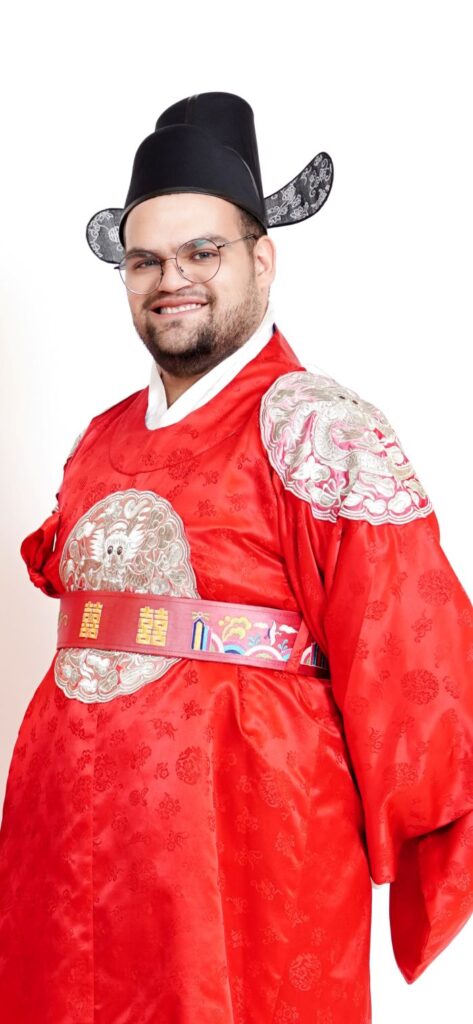
Luis Andrés.
GN: That sounds like a mission to me! What was it that made you decide on coming to Korea to study when there are so many other countries to choose from?
Luis: The answer actually starts with the first time I came to Korea. I studied at Korea University as an exchange student in 2019, and honestly, the decision was a bit random. I knew I wanted to go abroad, but many options required languages other than English. England and Australia were very competitive, and there was a rumor that older students usually got those spots.
I was slightly interested in BTS because of my best friend in Mexico, and suddenly I saw Korea University on the list. I thought, “Why not?” I took a chance, got the exchange spot, and ended up having one of the best experiences of my life.
During those six months, I started noticing questions that later became my undergraduate thesis topic: masculinities in Korean cultural industries. I became fascinated by how societies teach us what it means to “be a man.”
I knew I wanted to come back, so I applied for the Global Korea Scholarship (GKS), which now supports my graduate studies at Chonnam National University.
GN: At Chonnam, you are majoring in political science. What exactly does that discipline entail, and what specific area are you most interested in pursuing?
Luis: My bachelor’s degree is in international relations, which is basically the study of how countries, organizations, and international actors interact. Toward the end of my degree, I became more interested in culture, gender, and feminist approaches.
Originally, I came to CNU to study cultural anthropology because I wanted to continue researching masculinities. Anthropology gave me amazing tools to understand culture, identity, and everyday life. However, after some time, my professors and I realized that my questions were still very connected to politics and international relations. So, I moved to political science and diplomacy, where I continue studying gender and masculinities from a feminist perspective.
It is still not the most common approach, especially in Korean international relations, but that is also why I think it matters. I hope to continue this research through a doctorate and, hopefully, become a professor someday.
GN: How, and why, did you get involved in writing for the Gwangju News?
Luis: It has already been a year since I started writing for the Gwangju News. During the 2025 World Human Rights Cities Forum, Prof. Shin Gyonggu noticed that I was very interested in human rights and that I could express my ideas in English, so he asked if I would like to contribute.
“Maybe the problem is that people do not always see how human rights affect their daily lives.”
My first article was an interview with the director of the Gwangju Foundation for Women and Family. Since gender and social issues are right up my alley, I really enjoyed writing it. Since then, I have written almost every month. I love writing, and I think I am good at it – not necessarily creating imaginary worlds but explaining reality, processing ideas, and trying to communicate a message through words.
I also believe that through the Gwangju News, we create community: among foreigners, with Koreans, and with the city itself. We help build the place we live in through the stories we choose to tell. Hopefully, we also contribute a little bit against the pessimistic and hateful messages we see too often nowadays.
GN: In the articles that you write for the Gwangju News, many focus on some aspect of human rights. Is it this interest in human rights that has led to the founding of your magazine, Erreizando, and your advocacy for LGBTQ+ rights?
Luis: Definitely. I get sad when I see the amount of negativity and misinformation around us. I want to show that there is also kindness, understanding, and people working together. Human rights, to me, are the foundation of freedom. And I do not mean freedom only in an individual sense. Freedom is being able to search for your own happiness while contributing to the happiness of others.
I truly believe nobody is happy completely alone. We need friends, families, communities, coworkers, and even people who challenge us. Human rights are the basic standards that allow us to pursue well-being together.
That is also the purpose of Erreizando. We explain international relations through pop culture. For example, why some political decisions look like a Monopoly game, or why football and the World Cup have huge political meanings behind them. We want serious conversations to become accessible.
My advocacy for LGBTQ+ people is obviously personal in some ways, but it also comes from something I have seen in many societies. Too many people struggle silently, hide important parts of themselves, or feel that they cannot live honestly.
Of course, every context is different, and safety always matters. This is not about forcing anyone to do anything they are not ready for. It is about slowly creating societies where people can exist truthfully and freely. I just want to think that someone out there is happier, freer, and safer partly because of something I did.
GN: You not only wrote a duo of articles on this year’s World Human Rights Cities Forum; you also gave a presentation there. How would you describe that experience?
Luis: It was a ride! What I wanted was to ask a question: How are we communicating human rights today?
Sometimes people think human rights are old concepts that we already solved. But maybe the problem is that people do not always see how human rights affect their daily lives. They become abstract debates happening somewhere far away, like at the United Nations. That is why I am interested in cities and smaller communities. Human rights happen where people actually live.
A forum should not only be a place where people speak and everyone goes home. It should create conversations, reflections, and new ideas. For me, writing about the Forum was a way to continue those conversations beyond the people who were able to attend.
GN: And how would you describe your experience with the Gwangju News so far?
Luis: I don’t get paid enough. [laughs] No, but seriously, I think that actually shows something beautiful about the magazine. We are volunteer writers. The editorial team also gives their time and effort because they believe in this project.
My experience with the Gwangju News has reminded me that not all payment is monetary. Not every achievement is flashy. Not everything important gets noticed. We are a publication that believes in putting ideas out there, creating dialogue, and caring about our community. In many ways, I think that represents the spirit of Gwangju itself.
For me, it has been a learning experience and an opportunity to put a positive message into the world. I really hope to continue for as long as possible.
GN: What would be the article that you would like to write for our magazine if the opportunity arose?
Luis: Recently, I have been thinking about interviewing Assemblywoman Son Sol regarding the comprehensive anti-discrimination law proposal. There have been many attempts to create anti-discrimination legislation in Korea, and there are many debates around the topic. I think sometimes people react to the idea without fully knowing what is actually being discussed.
As foreigners living in Korea, we cannot vote and we are not directly represented in the National Assembly, but these conversations also affect us. I would like to explore how we can better understand and participate in the communities we are part of.
GN: What do you see yourself doing in, say, five or so years from now? And where might you be doing it?
Luis: Hopefully with a PhD and teaching. I really love teaching. I love seeing people become curious, ask questions, and discover that learning does not have to be boring or disconnected from life. Maybe my approach could be a little disruptive to some traditional academic spaces, but I also think that can be refreshing. I hope I can plant some curiosity in future generations.
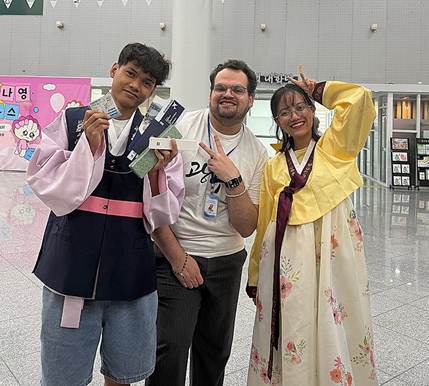
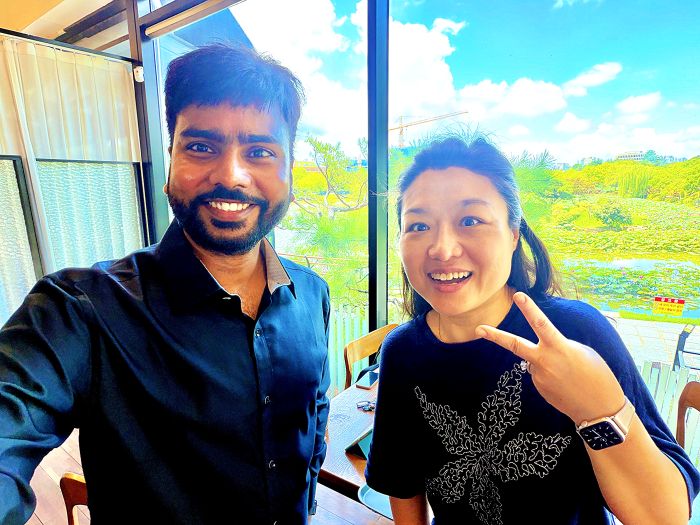
Luis actively participates in Gwangju activities for foreigners. This photo was taken on the 2026 Together World Day.
GN: I imagine you have a bucket list. What items might be at the top of that list?
Luis: If we talk about dreams: becoming a professor, writing a book, and becoming a parent someday. Those are the big ones.
If we talk about the more literal “before I kick the bucket” list: I want to skydive from a plane, bungee jump from a bridge, visit every continent that can be visited, fly in a hypersonic plane, and fly in a double-decker airplane. And maybe the most meaningful one: I want to speak at the United Nations General Assembly someday.
GN: In wrapping up this interview, is there anything else that you would like to say to our readers?
Luis: Many people from my generation remember Ellen DeGeneres ending her show with a simple phrase: “Be kind to one another.” People can have different opinions about Ellen, and I am not here to defend a celebrity. But I do defend that message.
Be kind. Not only respectful. Not only tolerant. Kind.
For me, kindness is connected to well-being, freedom, and happiness. It is what I try to practice in everything I do, and what I hope more of us can choose every day.
GN: Thank you, Luis, for those closing, and thoughtful, words. And thank you for the entire interview of thoughtful and inspiring words!
Interviewed by David Shaffer.
Photographs courtesy of the author.
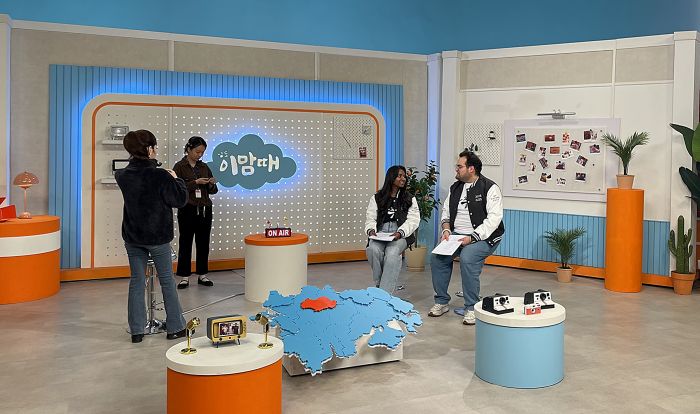
Cover Photo: Luis appeared in Gwangju KBS’s Imamttae (이맘때) as part of the Gwangju International Center’s Student Supporters.