



Learning Korean Taught Me More Than Korean: Reflections on Korea’s Language Classrooms
By Reeti Roy ||
When I enrolled in a Korean language program in Seoul, I expected to spend my days memorizing vocabulary lists, wrestling with unfamiliar grammar, and trying to distinguish between subtle differences in pronunciation. I did all of those things. What surprised me, however, was that I also found myself studying something entirely different and profoundly impactful: an educational philosophy.
Having studied English literature in India before pursuing social anthropology in the United Kingdom, I had already experienced markedly different approaches to higher education. My undergraduate years at Jadavpur University rewarded close reading, critical thinking, and vibrant debate. At the London School of Economics, seminars became spaces where ideas were collectively interrogated rather than simply received. Yet, learning Korean in Korea introduced me to another way of thinking about education altogether – one that was deeply structured, relentlessly practical, and remarkably effective at transforming absolute beginners into confident language users.
As a student of anthropology, it was impossible not to observe the classroom itself as a cultural space. Every educational system reflects deep-seated assumptions about authority, participation, and the ultimate purpose of learning. Korean language education was no exception. One of the first things I noticed was its emphasis on communication from the very beginning. Even in our first week, when our vocabulary consisted of little more than greetings, numbers, and basic introductions, we were expected to speak. There was no waiting until we had mastered every grammatical rule before attempting conversation. Instead, the classroom assumed that fluency develops through active use rather than passive preparation.
Initially, this felt uncomfortable. Like many students educated in rigid, examination-oriented systems, I was accustomed to believing that one should first acquire knowledge and only then demonstrate it. Korean language instruction inverted that assumption completely. Speaking
was not the reward for learning; it was one of the primary methods through which learning occurred. This emphasis on active participation shaped almost every lesson. New vocabulary was introduced alongside grammatical structures, which were immediately reinforced through pair work, role-playing, and guided conversations. Listening, reading, writing, and speaking were never treated as isolated skills. Instead, each reinforced the others in carefully sequenced lessons that built progressively upon previous lessons.
At first, I mistook this highly structured approach for rigidity. Coming from academic environments where discussion often wandered into unexpected directions, I wondered whether such careful planning left enough room for genuine curiosity or creativity. Over time, however, I realized that the structure itself was deeply pedagogical. Korean is a language built upon recurring patterns. Rather than encouraging students to improvise before they had internalized those patterns, instructors patiently equipped us with the linguistic tools required for meaningful communication. Creativity was not suppressed; it was simply postponed until a stronger foundation had been established.
That experience challenged many assumptions I held about education. We often celebrate originality and spontaneous expression, yet both usually emerge from repetition and steady practice. Teachers corrected pronunciation and grammar without embarrassment or criticism, and classes moved on. Students laughed at their own mistakes without fear of judgement. Rather than signaling failure, mistakes became visible evidence that learning was actively taking place.
Unlike many foreign language courses where learning ends once students leave the classroom, studying Korean in Seoul meant that every journey home became another lesson. Subway announcements reinforced listening comprehension. Menus became reading exercises. Convenience stores offered opportunities to practice numbers, vocabulary, and everyday interactions. Public notices, advertisements, and station signs transformed into impromptu reading passages. The city itself functioned as an extension of the classroom.

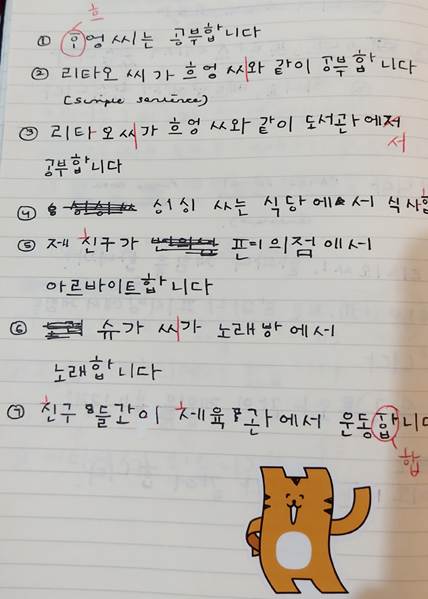
Another page of Reeti’s language-learning notes.
This immersive environment is undoubtedly one of Korea’s greatest strengths in language education. Students do not simply study Korean; they live within it. Formal lessons are constantly reinforced through everyday encounters, allowing knowledge acquired in class to be applied almost immediately. Technology further strengthened this process without attempting to replace teachers. Online exercises, vocabulary applications, recorded dialogues, and digital homework complemented classroom instruction. Rather than treating technology as an educational solution in itself, Korean programs generally used it to reinforce face-to-face learning. That balance struck me as particularly effective.
India possesses extraordinary linguistic diversity. Millions of us grow up navigating multiple languages with ease. Yet, our educational institutions have historically prioritized examinations over communication, particularly in language instruction. Students often spend years memorizing grammar and vocabulary but receive comparatively few opportunities to use language in authentic, real-world situations.
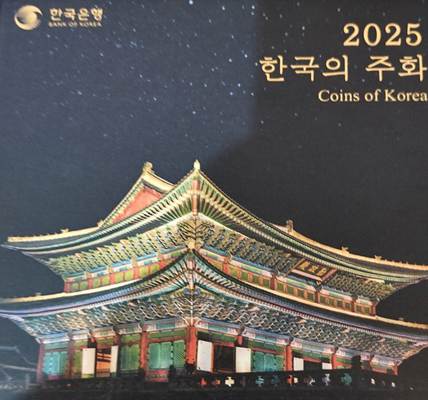
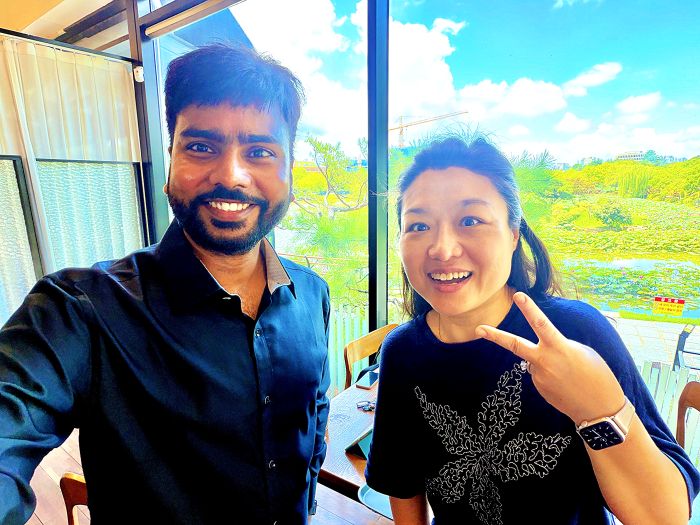
Reeti’s class was invited by the Korea Minting and Security Printing Corporation to provide strategic feedback on the development of products representing Korean national identity.
British higher education, by contrast, places considerable emphasis on discussion, independent learning, and critical engagement. Seminars encourage students to question, analyze, and debate. However, this model generally assumes that students already possess sufficient linguistic competence to participate confidently from the start.
The Korean classroom occupied an interesting middle ground. It combined careful structure with constant participation. Students were not expected to produce sophisticated arguments immediately, but neither were they allowed to remain passive observers. Every lesson required active engagement. Of course, no educational system is without its limitations. The pace of instruction can be demanding, particularly for adult learners balancing work, research, or family responsibilities. Because lessons build rapidly upon one another, falling behind can feel overwhelming. Furthermore, while the emphasis on accuracy undoubtedly contributes to high standards, it can occasionally discourage experimentation, especially among learners who already struggle with confidence.
Another challenge is that Korea’s success is closely linked to its immersive environment. What works exceptionally well in Seoul cannot always be replicated overseas, where students may have limited opportunities to encounter Korean beyond the classroom walls. Institutions teaching Korean abroad may need to create additional opportunities for conversation, cultural engagement, and practical application. Nevertheless, these limitations do little to diminish the overarching strengths of Korea’s approach.
Studying Korean ultimately reminded me that language is not merely a body of knowledge to be memorized but a social practice to be lived. We learn languages by using them, by making mistakes, by listening carefully, and by participating repeatedly in conversations that initially feel well beyond our abilities. Months after leaving the classroom, I remember surprisingly little of the vocabulary tests that once occupied my evenings. What has remained with me instead is a deeper appreciation of what good teaching can accomplish. Good teaching does not eliminate uncertainty; it creates an environment in which uncertainty becomes productive.
I traveled to Seoul expecting to learn Korean. I left with a renewed appreciation for education itself. This may be Korea’s most valuable lesson: Confidence is not something students acquire before they begin speaking. They develop it because they are encouraged to speak before they are confident.
The Author
Reeti Roy is a cultural commentator and the founder of Aglet Ink. A graduate of Jadavpur University and the London School of Economics, she is currently based between Korea and India, investigating Indo-Korean social architectures through an anthropological lens.
Photographs by the author.
Cover Photo: A page from Reeti’s Korean-learning notebook.