


Min Hyung-bae Steps Up to the Helm: Directing Korea’s Historic Special Metropolitan City as Its First Mayor
By David Shaffer ||
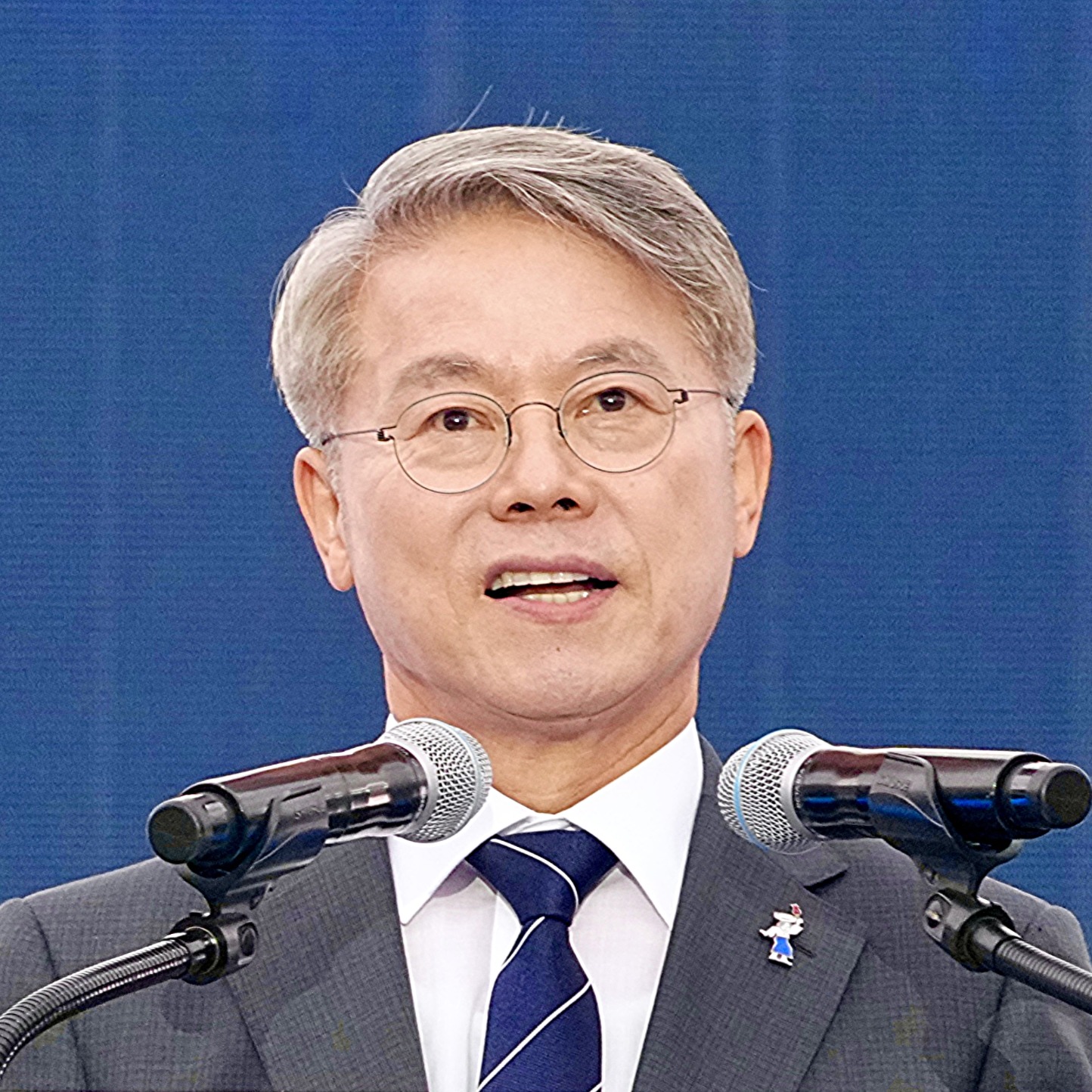
On July 1, 2026, Min Hyung-bae assumed office as the inaugural mayor of Jeonnam-Gwangju Special Metropolitan City, marking a historic milestone in South Korea’s local governance. His election represents not only a personal triumph but also the dawn of a new era for the region, which reunites the province of Jeollanam-do and the city of Gwangju after four decades of separate governance.
Born in Haenam, Jeollanam-do, in 1961, Min Hyung-bae has long been a familiar figure in regional politics. He graduated from Mokpo High School and later received his master’s and PhD from Chonnam National University. In his early career, he was a newspaper journalist and editor (Jeonnam Ilbo), a civic activist (Participatory Autonomy 21), a Blue House aide under President Noh Moo-hyun, and a Blue House secretary under President Moon Jae-in. From 2010 to 2018, he served as head of the Gwangsan-gu district of Gwangju, overseeing initiatives that improved public services and strengthened local infrastructure. Later, as a member of the National Assembly from 2020 to 2026, he championed legislation aimed at regional development and social welfare, further cementing his standing as a leader committed to the needs of ordinary citizens.
In the June 2026 election for mayor of this birthing special city, Min secured a decisive victory, winning nearly 80 percent of the vote. His closest rival, Lee Jeong-hyun of the People Power Party, trailed far behind with just over 10 percent. Other candidates, including Kang Eun-mi of the Justice Party and Lee Jong-wook of the Progressive Party, garnered only single-digit support. Voter turnout was 65.7 percent in Jeollanam-do and 54.3 percent in Gwangju. The overwhelming mandate gives Min a strong foundation to lead the newly formed city.
Min’s campaign was built on the promise of a “citizen-sovereign government,” where residents would play a central role in shaping policy. He pledged to create opportunities for young people to thrive locally rather than seek employment elsewhere, reliable care for families raisingchildren, and provide accessible healthcare and safe living conditions for seniors. His economic vision is equally ambitious: Within one year, he aims to attract a global semiconductor factory to the region, positioning Jeonnam-Gwangju as a hub of high-tech industry and innovation. As its first mayor, Min Hyung-bae carries the responsibility of proving that the merger can deliver tangible benefits to the new city’s residents.
With his roots in the region, a proven track record in governance, and a sweeping electoral mandate, Min Hyung-bae enters office with both high expectations and significant challenges. His leadership, whether outstanding or otherwise, will shape not only the future of Jeonnam-Gwangju but also the broader trajectory of regional development in South Korea.
The Author
David Shaffer is a long-time resident of Gwangju. He spent a career of four decades as a Chosun University professor. At present, Dr. Shaffer’s main involvement is as an officer in Korea TESOL, an English teaching association, and as editor-in-chief of the Gwangju News.
Photograph courtesy of Jeonnam-Gwangju Special City.