
Special City News – August 2026
Jeonnam-Gwangju Special Metropolitan City: Creating Changes in Daily Life
With the official launch of the Jeonnam-Gwangju Special Metropolitan City on July 1, South Korea’s first integrated special city was created, replacing the former province of Jeollanam-do and Gwangju Metropolitan City and bringing 22 cities and counties plus five city districts under a single administrative framework. Over the first month since the birth of this new city, home to 3.2 million people and generating 159 trillion won in gross regional product, changes have begun to appear in residents’ daily lives.
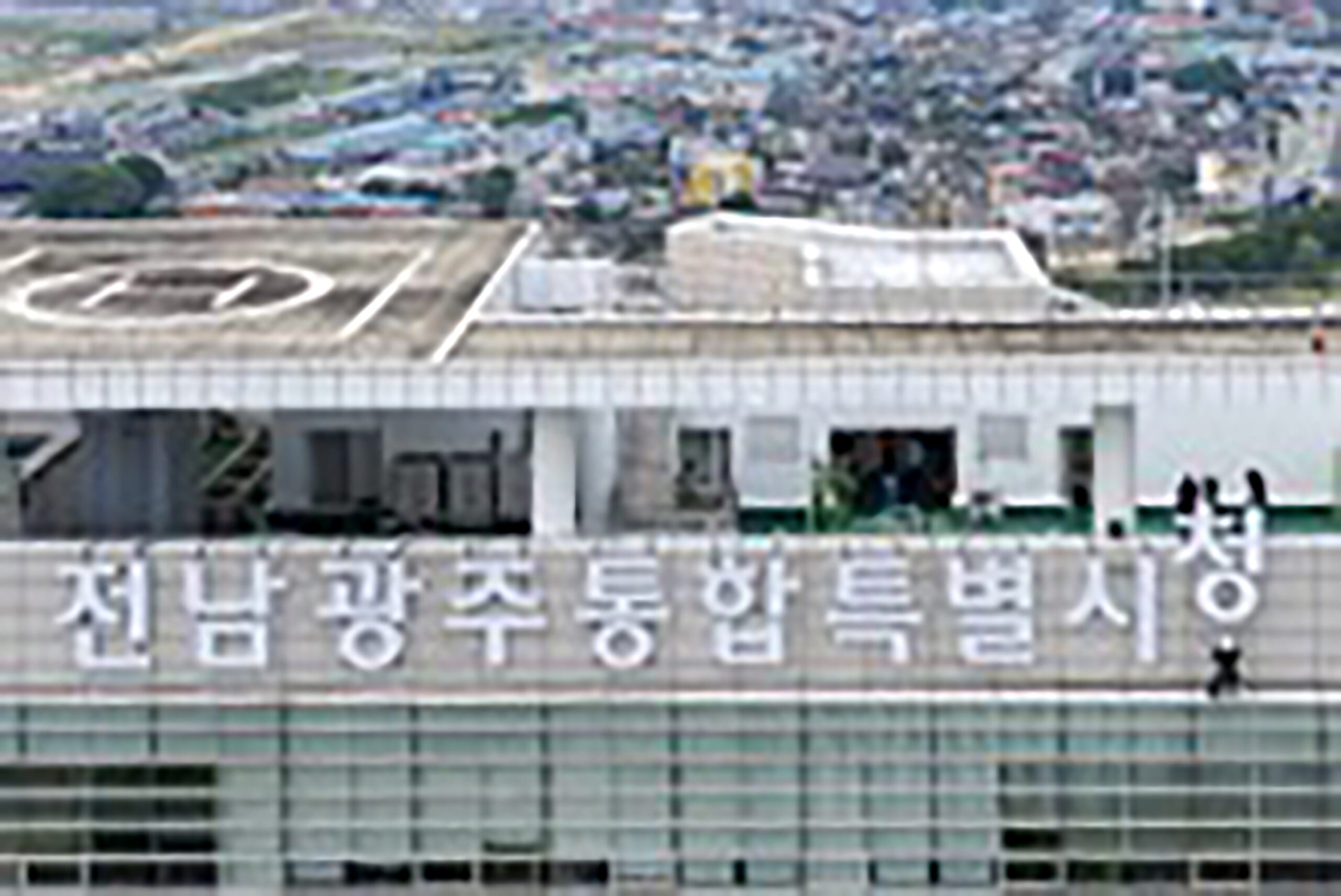
For ordinary citizens, the most visible changes have appeared not inside government offices but on maps and signboards. Address labels now carry the new name, as in “Jeonnam-Gwangju Special Metropolitan City, Dong-gu” or “Jeonnam-Gwangju Special Metropolitan City, Hwasun-gun,” and the signs on major government buildings and boundary roads are being replaced accordingly.
The new administrative system has also moved quickly to build a shared digital portal. Through a temporary integrated website, residents can access city news, online civil services, policy documents and a “Mayor’s Office of the Special Metropolitan City” menu all in one place, while the existing Gwangju and Jeonnam portals continue to run in parallel for a time to avoid confusion.
Equally important, basic documents and systems tied directly to daily life remain unchanged for now: resident registration cards, driver’s licenses, postal codes, and school districts are all still valid, and welfare and education support programs continue without interruption.
Balanced Governance: Three Government Complexes and August Reorganization
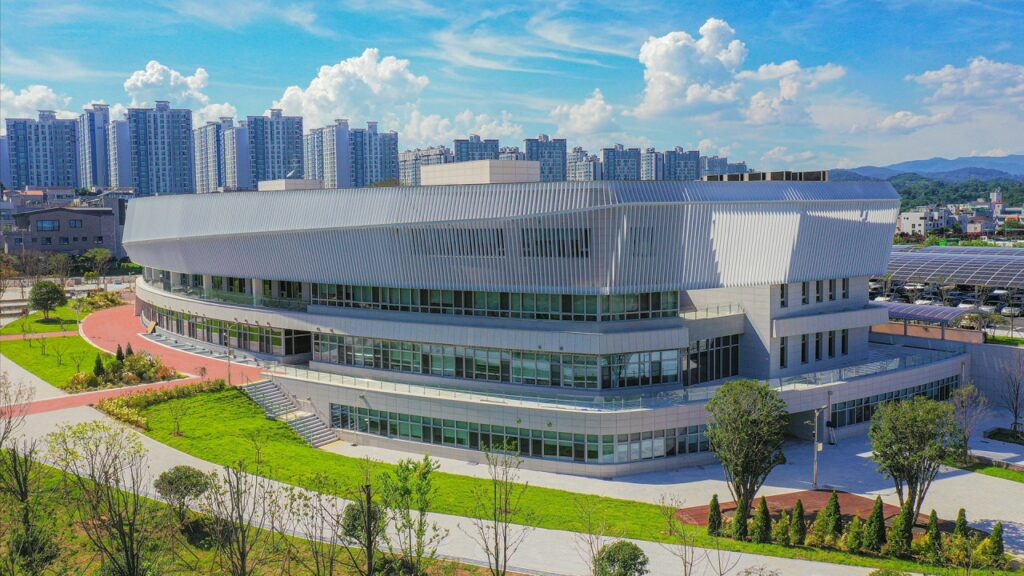
The Eastern Government Complex located in the Sindae district of Haeryong-myeon, Suncheon. (Jeonnam-Gwangju Special City)
Jeonnam-Gwangju Special Metropolitan City plans to implement balanced governance by distributing its main government complexes across three locations: Gwangju, Muan, and the Eastern Region. This so called “one city, three hubs” model is a three-complex system that allocates administrative functions to the Gwangju urban center; Muan, the existing provincial capital; and the Eastern Area. In this structure, the Gwangju complex is responsible for metropolitan strategy and urban policy, the Muan complex serves as an administrative hub where wide area departments are concentrated, and the Eastern complex handles local administration close to industrial belts and rapidly growing residential zones. By spreading core functions across these three regions, the special city aims to narrow gaps in access to public services and prevent any single area from being seen as the sole “capital” of the unified special city.
The August reorganization plan is effectively the blueprint for putting the “one city, three hubs” concept into everyday administrative practice. It calls for creating new departments in charge of strategic investment, science and technology, and integrated wide area planning, while adjusting the roles of existing departments so that each complex takes responsibility for its own region and also shares in managing the city as a whole. In addition, the city intends to establish a wide area administrative headquarters that will integrate transport, environmental, and industrial policies; coordinate decisions among the three complexes; and serve as a control tower that reflects more evenly the voices of urban, rural, and coastal communities.
Gwangju’s Five Districts Reveal the Character of the New City
Since its launch, Jeonnam-Gwangju Special Metropolitan City has drawn attention with major agendas such as semiconductor investment, an integrated government complex, and ultra regional development strategies. However, the city’s real nature is just as clearly reflected in what each autonomous district chose as the very first item of business after the merger. The “first approvals” handled by Gwangju’s Dong-gu, Seo-gu, Nam-gu, Buk-gu, and Gwangsan-gu under the new special city framework show five different sets of priorities coexisting within a single city.
Dong-gu simultaneously approved the “Mid- to Long-Term Plan for a Major Transition to an AI-Centered Economic City” and the “Plan for Establishing a Committee for a Major Transition to an AI-Centered Economic City” as its first decisions, signaling that an AI-based economic transition would be the core direction of the new district administration. By combining medical infrastructure, cultural and tourism assets, and local industries with AI technologies, the district plans to build an urban AI healthcare start up and testing valley, an AI Healthcare Tower, and a digital anti-aging industry demonstration center, effectively positioning itself as an “AI economic city laboratory” within the special city.
Buk-gu, prompted by flooding along the Seobang-cheon during heavy rains, has made the prevention of disasters in flood-prone areas and the improvement of sewerage and drainage systems its top priorities. Working with the Yeongsan River Basin Environmental Office, the district is investing 43.1 billion won in a sewerage improvement project.
Seo-gu, Nam-gu, and Gwangsan-gu have likewise revealed their own directions by making citizen participation, welfare for an aging society, and the co-design of everyday policies their first agenda items. Seo-gu is focusing on strengthening participatory democracy through citizens’ assemblies and citizens’ committees; Nam-gu is prioritizing responses to an aging society by expanding services such as welfare check-ins and care for older residents; and Gwangsan-gu is aiming to build a structure in which residents take part in setting agendas and monitoring implementation via permanent participation bodies, such as policy participation groups and citizen policy councils.
Jeonnam-Gwangju’s First Ordinance Sets a Semiconductor Course
On July 1, Jeonnam-Gwangju Special Metropolitan City held its first council meeting in the former Jeonnam Provincial Assembly chamber at the Namak Government Complex in Muan, where councilors processed 330 foundational local ordinances and regulations needed to operate the new unified government. Among these many items, the measure chosen as the symbolic first ordinance was the Ordinance on Supporting Global Semiconductor Strategic Investment for Jeonnam-Gwangju Special Metropolitan City.
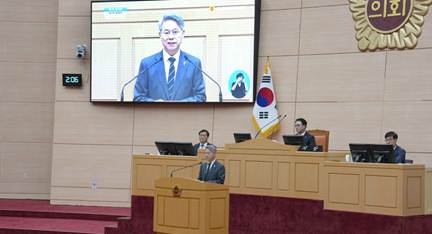
The Jeonnam-Gwangju Special City Council holds its inaugural session on July 1, adopting first the semiconductor investment support ordinance. (Jeonnam-Gwangju Special City)
This choice clearly signaled that the special city intends to grow into Korea’s leading semiconductor hub outside the capital region. The ordinance is closely aligned with the national semiconductor strategy announced in late June, in which the central government outlined plans to foster Jeonnam and Gwangju as the country’s second major semiconductor production base through an 800-trillion-won investment package and the construction of new fabrication plants in the southwestern region involving Samsung Electronics and SK Hynix.
Residents’ Visions for the Special Metropolitan City
As the Jeonnam-Gwangju Special Metro-politan City takes shape, residents’ visions are converging on a theme of shared growth grounded in democracy and balanced development. Public opinion surveys show that citizens expect the new city to realize the goals
written into the special law: narrowing regional gaps, pursuing a “New Southern” strategy, honoring the spirit of May 18, and introducing policies such as basic income and a national medical school to strengthen public welfare.
Debates over the location of the main government complex, organizational restructuring and how powers are distributed between districts and counties reveal both expectations and anxieties. Some residents fear recentralization, while others hope for more efficient governance, making questions of fairness in tax sharing and decision-making a core issue in discussions about the new system.
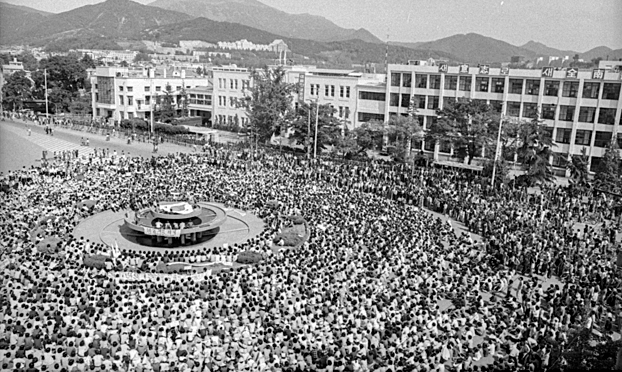
The spaces of the city themselves help symbolize the future that residents imagine. May 18 Democracy Square stands for human rights and civic participation, while rural villages, ports, and airports evoke coexistence and openness to the wider world. Together, these places reflect the values citizens want the special city to embody: democracy rooted in history, mutual support between urban and rural communities, and an outward looking spirit of cooperation.
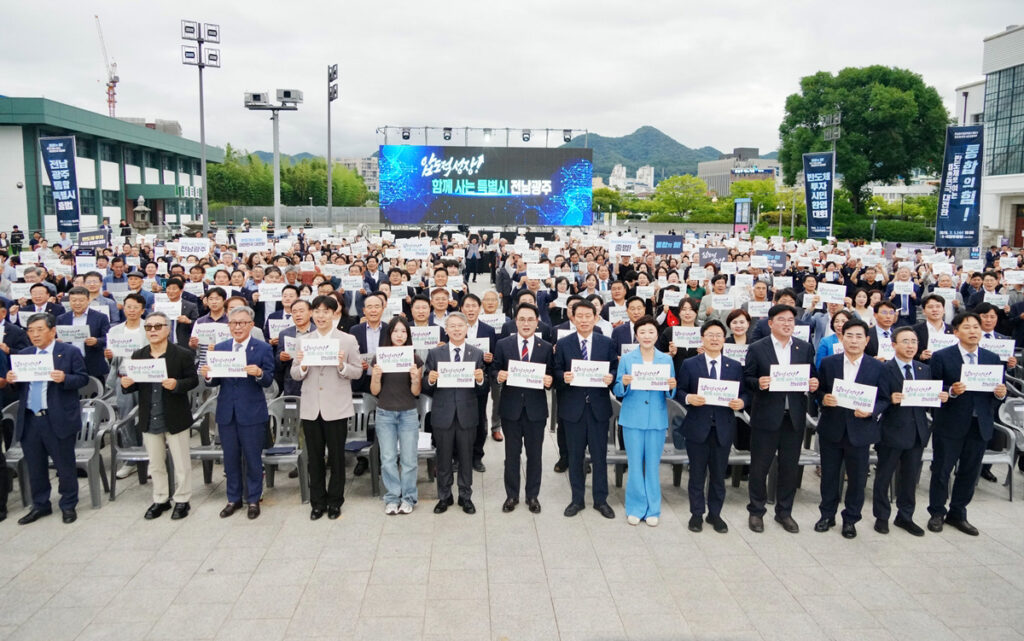
The Jeonnam-Gwangju Special Metropolitan City launch event. (Jeonnam-Gwangju Special City)
Content Creator
Jeong Chanjong has been working with the Gwangju International Center since March 2026. He is teaching humanities at Chonnam National University.
Cover Photo: New signage for Jeonnam-Gwangju Special Metropolitan City Hall in Gwangju, marking the end of forty years of separate regional governance. (Screen capture: KBS Gwangju News)