


A Journey to Boryeong: A Meeting of Mount and Sea
By Tabbu Shaikh ||
Our brains were practically scrambled eggs after weeks of staring at high-impact research papers until the text blurred into gibberish; my friends and I decided enough was enough. We traded the weight of a thousand citations for a ticket to the coast. As the rhythm of the rails replaced the heavy and pressured vibe of the research lab, our cognitive fog did not just lift – it evaporated! By the time we hit the halfway mark, we were no longer researchers; we were adventurers, feeling our clarity return with every mile, as if our minds were finally coming back online.
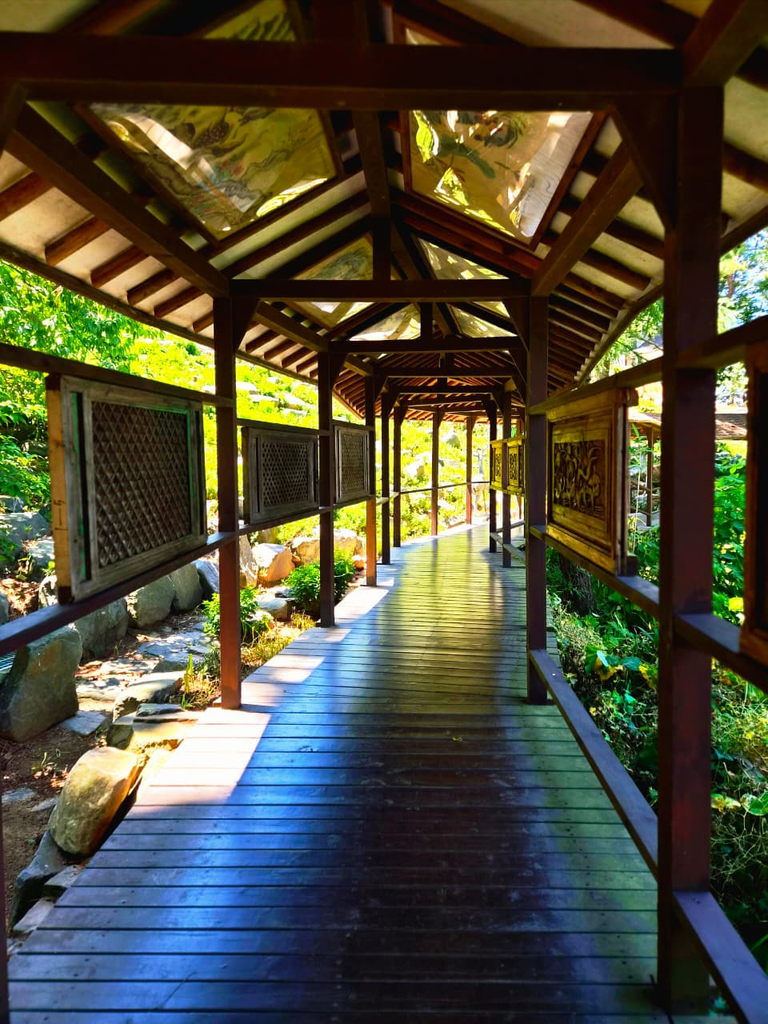
Beautiful wooden walkway.
For as long as we have been buddies, my best friend and I have harbored a classic, unresolved debate. He is a fierce defender of the sea, captivated by its boundless horizons; I am a soul rooted in the mountains, drawn to their quiet, stoic majesty. We have spent countless late-night study breaks arguing over which landscape holds the ultimate truth. But as we stepped onto Juk Island, Boryeong offered us a rare geographical truce, a place where the mountains walk down to meet the tide.
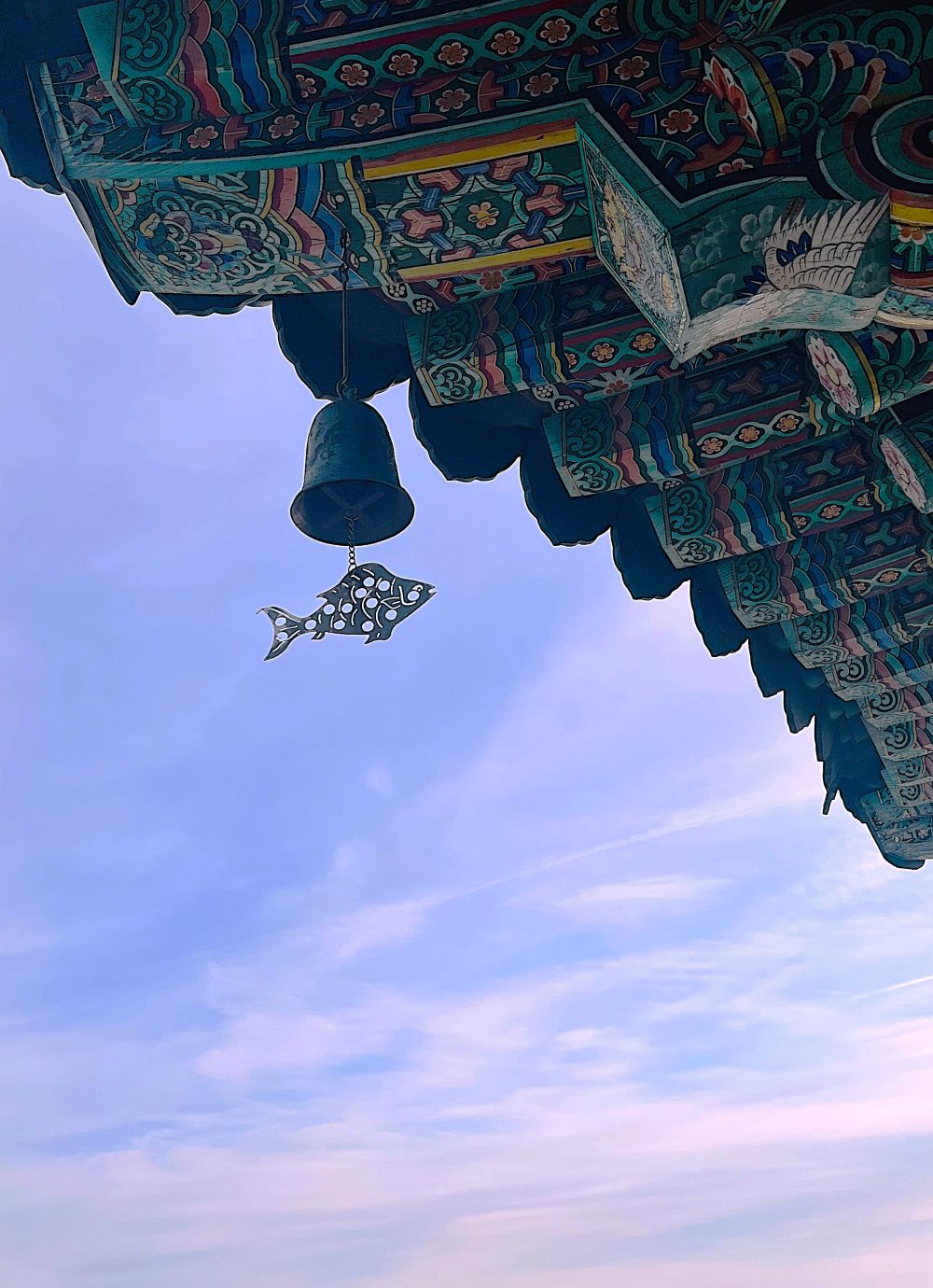
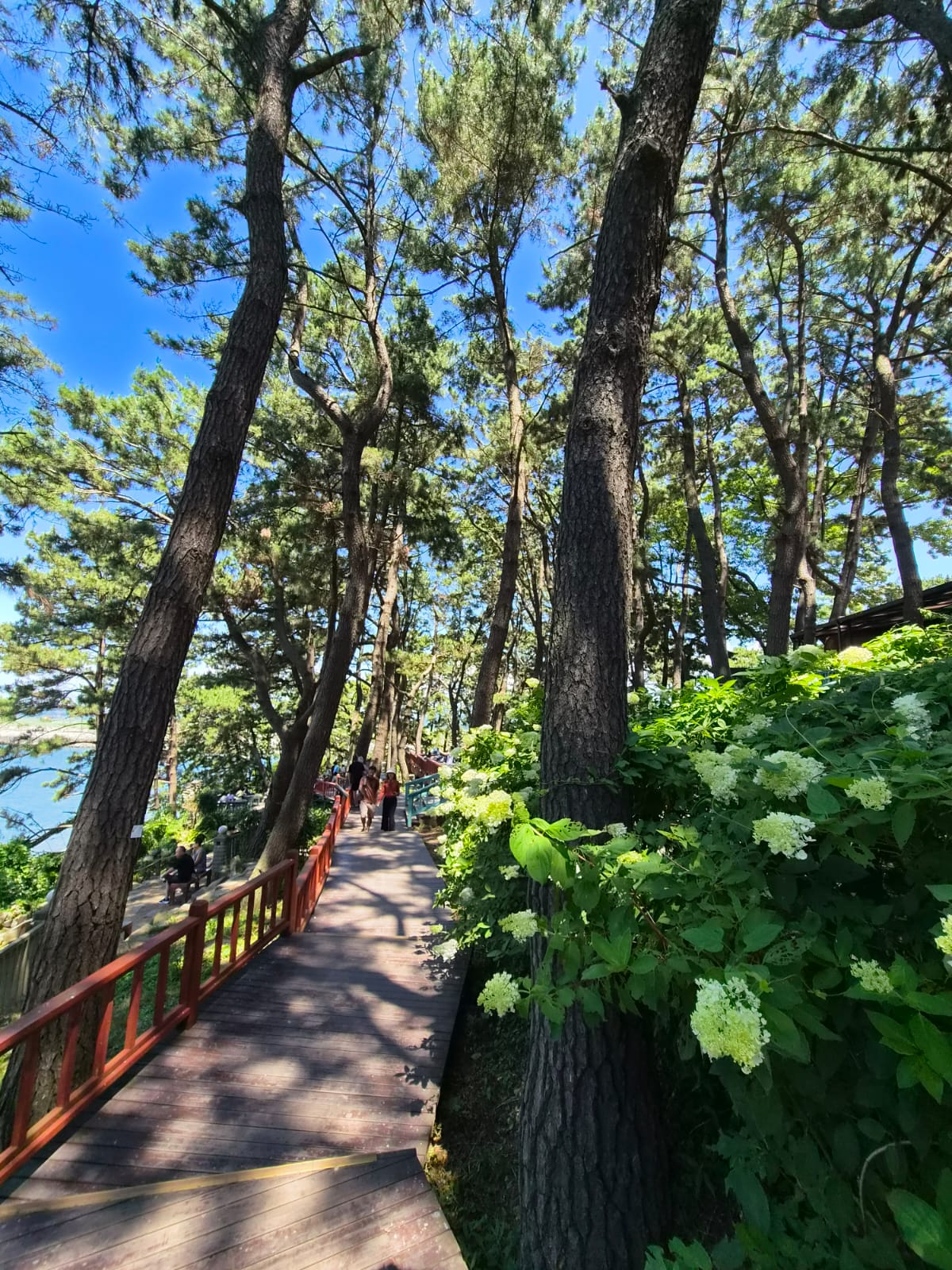
This place is Sanghwa-won, a hidden garden where nature and architecture have finally figured out how to be roommates without arguing. Here, the land doesn’t crash awkwardly into the Yellow Sea; it strolls with it, hand-in-hand, beneath a continuous roof of dark, weathered wood. Walking onto this two-kilometer wooden corridor feels like stepping into a living ink-and-wash painting. The path hugs the island’s edge, wide open to the salty spray on one side and embraced by stubborn pine trees and mountain bamboo on the other. Because the entire walkway is roofed, you can wander through a rainstorm looking like a philosophical main character in a movie, rather than scurrying for cover like a wet cat.
“Boryeong offered us a rare geographical truce, a place where the mountains walk down to meet the tide.”
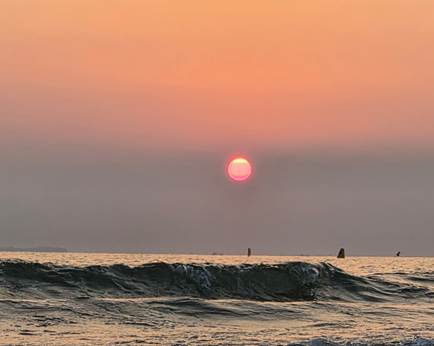
Chasing sunsets by the shore.
The walk isn’t just exercise: It is a moving meditation. The steady tap-tap-tap of our shoes harmonized with the rhythmic sigh of the tide. Standing between the forested cliffs and the roaring water, our long-standing debate finally dissolved into silence. We realized that the sea and the mountain do not compete; they complete. The mountain provides the steadfast anchor, a monument to endurance, while the sea offers the grace of movement, a reminder of infinite possibility. True harmony doesn’t require choosing one truth but appreciating how different strengths coexist to create a perfect whole. Halfway through the loop, the garden offered us supreme enlightenment disguised as local hospitality: a cup of warm tea and a traditional rice cake. Honestly, nothing heals academic trauma quite like free snacks at the edge of the world.
But the adventure did not end in the shadows of the pines. We chased the light down the coast of Daecheon Beach, where the cozy wooden roof gave way to a cathedral of wide-open sky. The pale-blue sky deepened into rich amber, then a dramatic violet that bled into the tidal flats. The sun dipped low, painting the wet sand in molten gold and fiery crimson.
Standing at the water’s edge, I let the surf rush over my feet, feeling the cold pull of the receding waves and the soft kiss of flying sand. In that moment, the sunset felt like a lesson: An ending can be just as beautiful as a beginning if you fill it with colors. It is the art of setting, only to rise again with new joy. Rinsed by the cold water and warmed by the day’s last rays, our souls received the ultimate reboot. We left laughing and barefoot – mountain lovers and ocean dreamers alike. The research papers were still waiting for us, but we returned to them no longer as “scrambled eggs.” We were researchers once more, but this time, we were people who had rediscovered how to breathe freely.
The Author
Tabbu Shaikh, an international research student from India, has spent her Spring 2026 exchange program at Chonnam National University in Gwangju. Deeply immersed in her academic research, Tabbu balances her analytical mind with the soul of a poetess, constantly finding inspiration in nature and translating her surroundings into verse.
(Photographs by the author)
Cover Photo: Sunlit paths and silent moments.