



Area Sports Round-Up – April 2026
Baseball – Soccer – Volleyball
|| By Zhang Jiuzhou (Julius) ||
Kia Tigers Complete Spring Camp
The Kia Tigers have wrapped up their preseason preparations and now shift their focus to the upcoming KBO season. During the first phase of spring training, which began January 25, the Tigers emphasized physical conditioning and technical drills. In the second phase, the team played five practice games to regain their competitive rhythm, including a scrimmage against the South Korean national team preparing for the World Baseball Classic.
Several players stood out during camp and were named MVPs of the training program. Pitchers Jo Sang-woo, Kim Si-hoon, Han Jae-seung, and Hong Min-gyu led the pitching group, while catcher Han Jun-su, infielders Park Min and Jeong Hyun-chang, and outfielder Park Jae-hyun were also recognized.
Manager Lee Bum-ho expressed satisfaction with the team’s progress. “I’m glad we completed the spring camp without any injuries,” Lee said. “Many of the younger players used to be hesitant, but this camp helped them become more proactive. That’s a big step forward.”
Lee also pointed to improvements among the young infielders, noting that their development has expanded the club’s tactical options. “The young infielders have improved technically, which gives us more flexibility,” he stated. “I’m also pleased with the added depth in the infield, and a stronger bullpen should make managing the pitching staff easier.”
With camp completed and competition intensifying, the Tigers enter the season with improved depth and renewed confidence.
Gwangju FC Turns to Familiar Hands as Lee Jeong-kyu Takes Helm
Gwangju FC has entered a new era under Head Coach Lee Jeong-kyu following the departure of former manager Lee Jung-hyo.
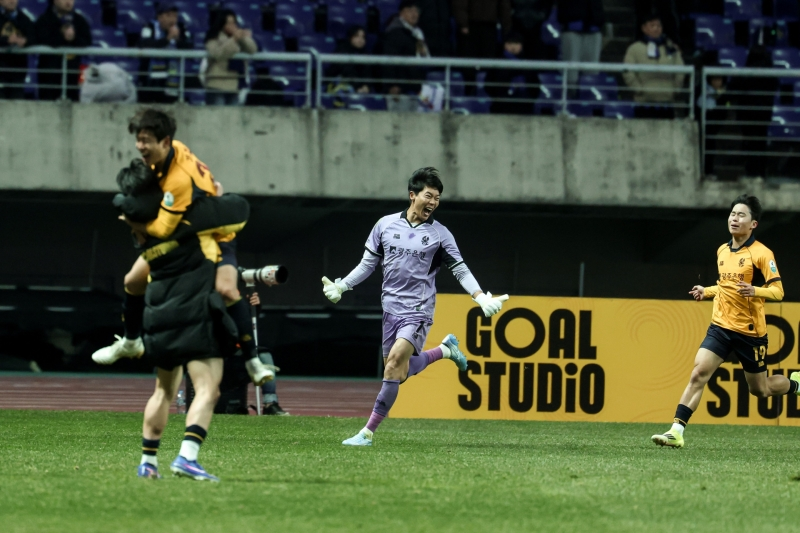
(Goalkeeper Kim Kyeong-min saves a penalty to secure Gwangju FC’s first win of the season. (Gwangju FC))
The club faces immediate challenges. Because of a player registration ban, the squad has been significantly reduced, forcing the team to rely on positional adjustments and emerging young players to remain competitive.
Despite these limitations, Gwangju FC has begun the season with encouraging results. In the opening match away at Jeju SK, they earned a draw after the hosts were reduced to ten men following the dismissal of midfielder Italo. In the second round on March 7, goalkeeper Kim Kyeong-min saved a late penalty to secure a dramatic 3–2 victory over newly promoted Incheon United.
Gwangju FC aims to maintain the team’s trademark style of high pressing and organized movement while improving tactical discipline and execution. To support this goal, the club placed particular emphasis on tactical preparation and physical conditioning during the winter offseason.
Currently, Fridjonsson is the squad’s only available foreign player due to the registration ban. As a result, the team is expected to spend the first half of the season refining its tactical system before seeking reinforcements during the June summer transfer window.
Uncertainty Surrounds AI Peppers
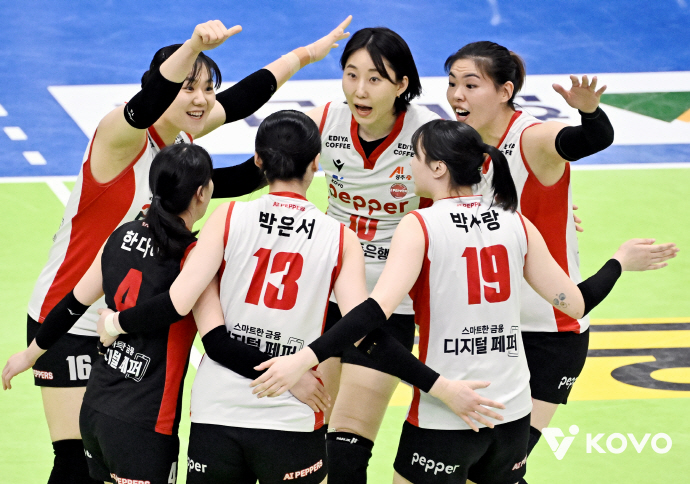
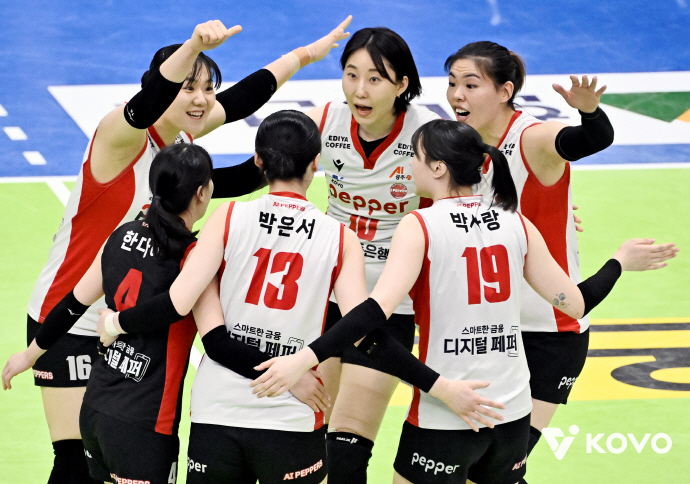
The AI Peppers celebrate their record 15th victory of the season after defeating Hyundai Hillstate. (KOVO)
Rumors of a potential sale of the AI Peppers have continued to generate debate within the Korean volleyball community. Speculation has circulated for months as the team’s parent company faces financial difficulties and the team continues to struggle on the court. Despite the ongoing discussions, however, no confirmed buyer has emerged.
Financial concerns and poor competitive results have both contributed to the uncertainty. Since entering the V-League in the 2021–22 season, the AI Peppers have finished last for four consecutive seasons. Although they avoided the bottom position this year, the team’s performance has still fallen short of expectations.
The gap between investment and results has become a growing concern for fans. One supporter noted that the club invested heavily in signing high-profile players such as Park Jeong-ah, Ko Ye-rim, and Lee Han-bi, raising questions about whether their contributions match their contracts.
Park Jeong-ah, who signed a three-year free-agent deal worth 775 million won per season in 2023, has struggled offensively. According to league statistics, her attack success rate has remained just above 20 percent and she has not ranked among the league’s top ten in major offensive categories.
Team Captain Ko Ye-rim also faced setbacks after joining the club with a salary of 300 million won. She fractured a finger and tore a ligament in her left hand during training following a December match against IBK Industrial Bank and underwent surgery at the end of the month. Lee Han-bi, who signed a three-year contract worth 1.06 billion won in 2023, has also struggled in receptions this season, with reception efficiency hovering around 20 percent.
In the 2025–26 season, the AI Peppers finished sixth among seven teams. Analysts estimate the club spent approximately 68.7 million won for each point earned, about 65 percent higher than league-leading Korea Expressway Corporation Hi-Pass.
With identical salary caps but vastly different results, the AI Peppers’ situation illustrates a harsh reality in professional sports: Financial investment alone cannot guarantee success.
The Author
Zhang Jiuzhou (Julius) is a dedicated follower of Gwangju’s sports scene. He regularly attends games of the Kia Tigers, Gwangju FC, and AI Peppers, and closely observes the unique identity and competitive spirit each team brings to the city. He hopes to see all three clubs continue to grow sustainably and attract even more supporters.