
Experts of the In-Between: Insights from Chiang Mai
By Reeti Roy ||
I think the first lesson Korea taught me was that every city deserves to be read before it is judged.
When I first arrived in Seoul, I was captivated, as most visitors are, by the obvious things. The efficiency. The skyline. The immaculate public transport. But living there slowly changed the way I looked at cities. Beneath every gleaming façade was another story, one of war, occupation, division, democratization, and extraordinary reinvention. Korea taught me that cities are not built merely from concrete and steel. They are built from memory. From grief. From resilience. From the quiet, persistent, ordinary acts of repair.
Earlier this year, invited by Professor Lee Sang Kook, I delivered a guest lecture under Yonsei University’s BK21 Project titled “Experts of the In-Between: What Urban Refugees Taught Me About Resilience, Belonging, and the Social Architecture of the City.” The lecture asked a question that has refused to leave me: Who understands a city best? Is it those born comfortably within its boundaries or those who have had to fight to belong?
Months later, when Professor Amporn Jirattikorn invited me to Chiang Mai University to deliver another guest lecture, I realized I was carrying Korea with me. Not in my suitcase but in my way of seeing. Somewhere between Calcutta and Seoul, Korea had quietly become less a destination and more a lens – a worldview, if you will. I no longer arrived in new places asking what there was to see; I found myself asking different questions: How does this city remember? Who does it care for? What stories has it chosen not to forget?
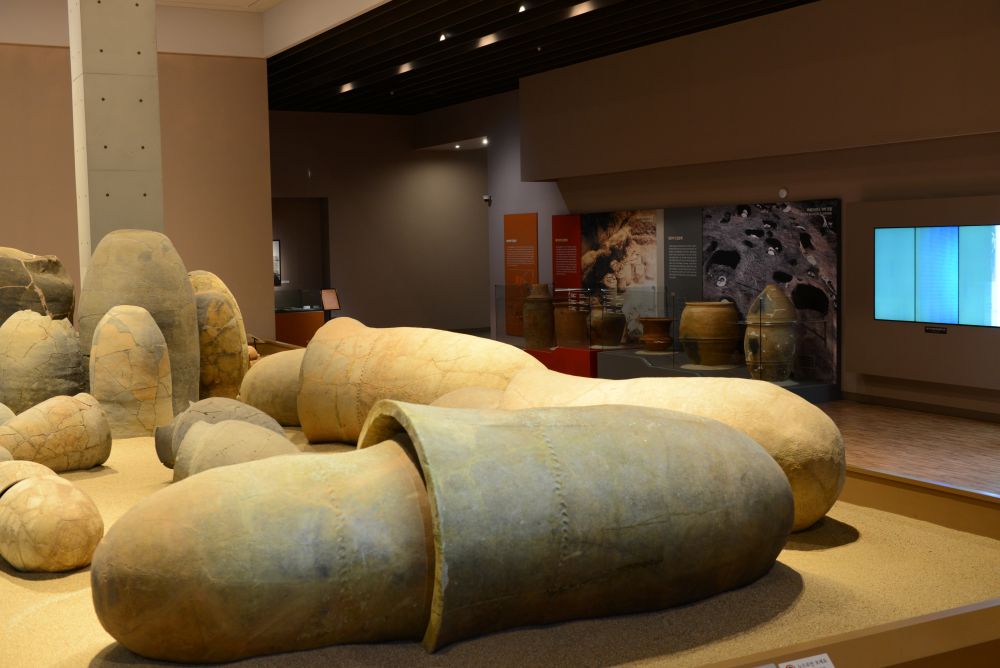
Those questions followed me into the Chiang Mai City Arts and Cultural Centre. The museum does something remarkable – it refuses to begin with Chiang Mai. Before King Mangrai founded the city in 1296, before the Lanna Kingdom became northern Thailand’s political and cultural centre, people had already lived in these valleys for millennia. They traded here, buried their dead here, and built communities here. The city, the museum seemed to suggest, was only one chapter in a much longer story.
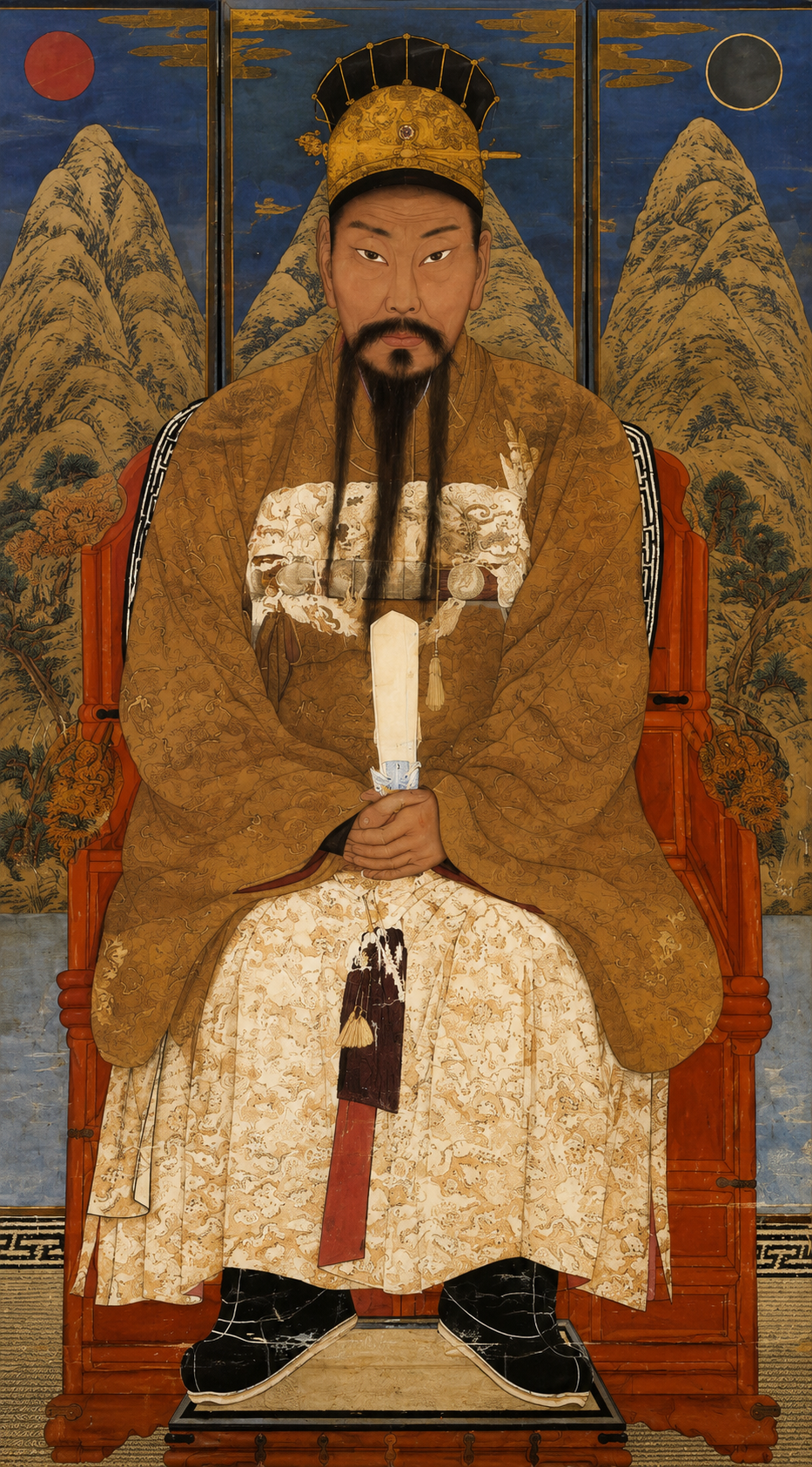
It reminded me immediately of Korea. The story of the peninsula never begins with Seoul, nor with a single dynasty. It unfolds through Goguryeo, Baekje, Silla, Goryeo, and Joseon, each leaving behind traces that continue to shape the present long after political power shifted. Walking through the galleries in Chiang Mai, I realized that Lanna occupies a similar place in northern Thailand’s imagination to that of Goryeo in Korea’s. Both produced distinctive Buddhist art, refined craft traditions, and cultural worlds that defined their eras. Their political boundaries disappeared centuries ago, but their artistic traditions, philosophies, architecture, and language remain deeply alive.
Kingdoms disappear. Ways of seeing rarely do.
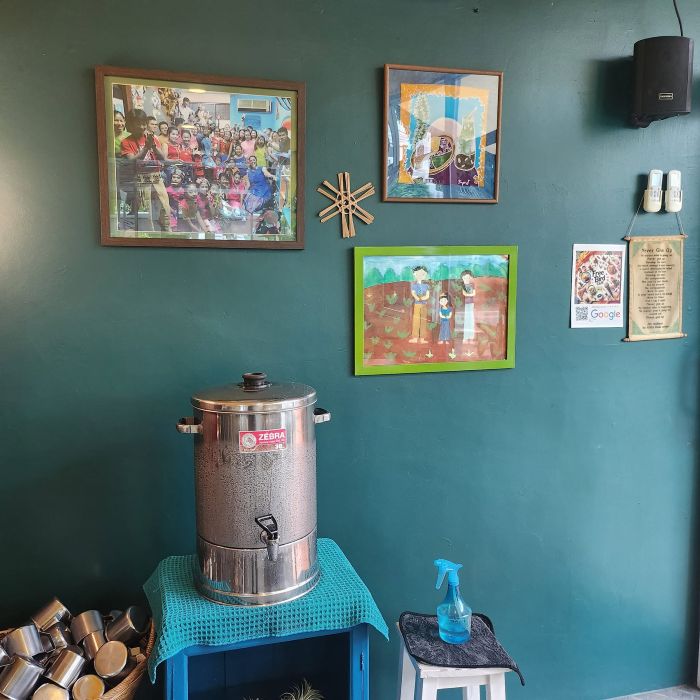
Art on the wall of the Free Bird Café.
In Seoul, I had learned that memory could survive astonishing reinvention. A city devastated by war had rebuilt itself into one of Asia’s great metropolises without entirely severing itself from its past. Chiang Mai suggested something different. Here, memory endured not because the city had to rebuild but because it had never stopped carrying the traces of Lanna into everyday life. Different histories, different trajectories, yet both reminded me that history is never simply preserved behind museum glass. It continues to shape the ways people live, create, worship, and imagine themselves.
Growing up in Calcutta, history always felt heavy. It was everywhere, in decaying colonial buildings, intense political conversations, and inherited memories. Korea taught me something different: History is not simply inherited; it is continually negotiated. Every generation decides what it chooses to preserve.
That realization stayed with me as I wandered through the artistic village of Ban Kang Wat. I arrived carrying a glass of butterfly pea tea, its impossible blue catching the afternoon light. Children drifted between ceramic workshops while someone sat reading outside an independent bookshop. Artists worked with their doors open. Nothing felt staged. Nothing demanded attention.
Almost instinctively, I thought of Julie of KOTE and our long afternoons in Seoul at the culture and art space.
The two places could not have looked more different. KOTE existed within one of Asia’s most dynamic global cities, constantly creating conversations between artists across borders. Ban Kang Wat emerged quietly from the neighborhood around it. Yet both believed something remarkably similar: Art is not decoration; art is social infrastructure. Julie taught me that the most meaningful conversations rarely ended inside a gallery; they continued over coffee, during walks home, and in friendships that crossed languages. Ban Kang Wat taught me the same lesson without saying a word. Here, art was not separated from ordinary life – it was how neighbors met, how children learned creativity, and how memory remained alive without becoming nostalgic.
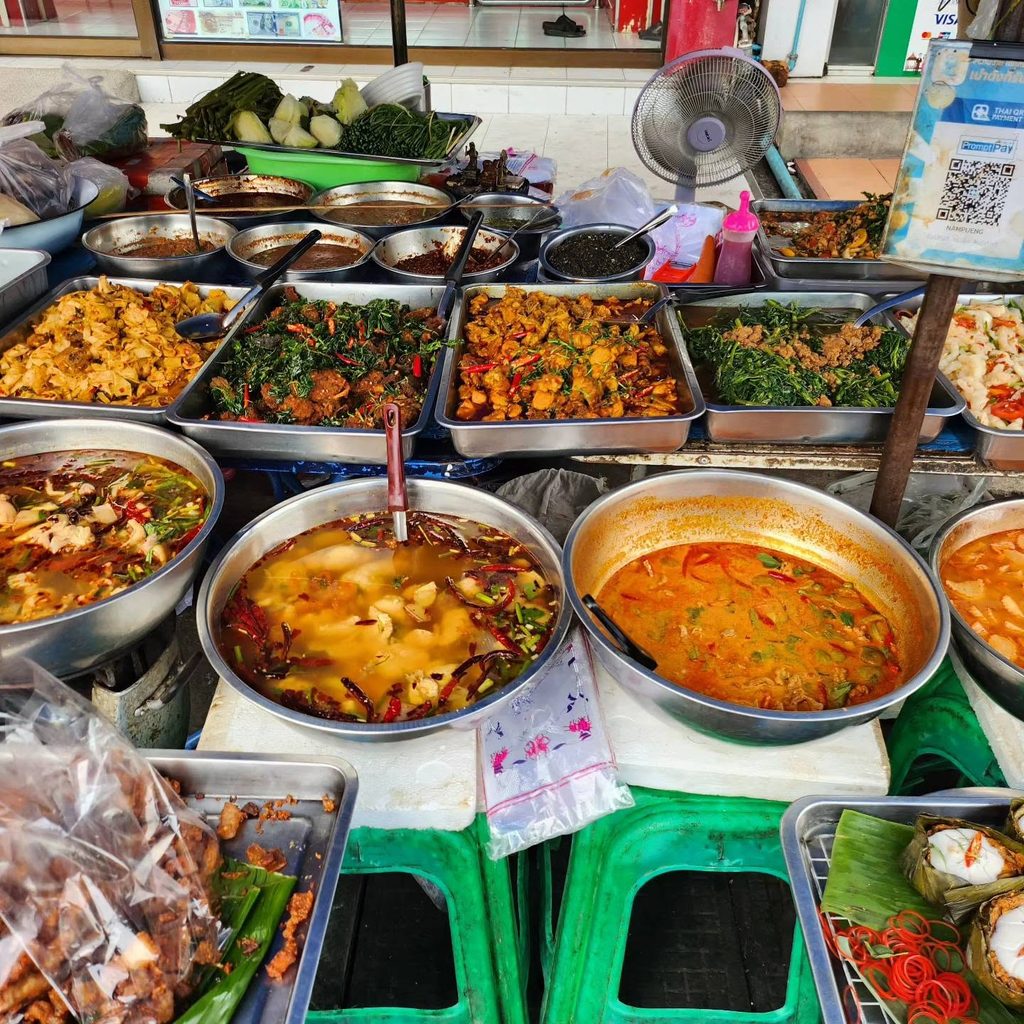
Northern Thai foods in a local market.
I began asking myself another question: Can art become a form of social justice?
That question followed me to Thai Freedom House. Before arriving, I knew it as an organization supporting refugees, primarily from Myanmar. What I encountered instead was something far more intimate. English lessons were in progress. Paintings covered the walls. Children laughed. Adults discussed work, education, and the future. It reminded me how often we freeze refugees at the moment they flee. We rarely imagine what comes afterwards: learning another language, making new friends, creating art, and rebuilding ordinary routines.
“Art is not decoration; art is social infrastructure.”
At Yonsei University in Seoul, I had argued that refugees are “experts of the in-between.” Standing inside Thai Freedom House, I finally understood what I meant. Living between countries, languages, and identities demands extraordinary resilience. It also reveals something about the society that welcomes them. The true measure of a city is not how it treats the powerful but how it creates space for those who arrive carrying uncertainty.
The same thought returned at the Chiang Mai Women’s Correctional Institution, where women prepare for life after prison through vocational training. Watching them, I found myself thinking of my work in Murshidabad, where I have spent years witnessing communities rebuild dignity through education and livelihoods. Different histories, different countries, yet the same question lingered: Do we believe people can truly begin again?
Last year, Chiang Mai asked me that question differently. I arrived during devastating floods and found myself helping to donate coffins for those who had died without families able to bury them. It was the first time I had understood disaster – not through news reports or statistics, but through the quiet dignity of ensuring that someone who had lost everything could still receive a proper farewell. There was nothing extraordinary about the act; it simply felt necessary. This year, compassion appeared in another form altogether. Before I left, chef P’Nun quietly packed stir-fried morning glory for my journey because he remembered it was my favorite dish.
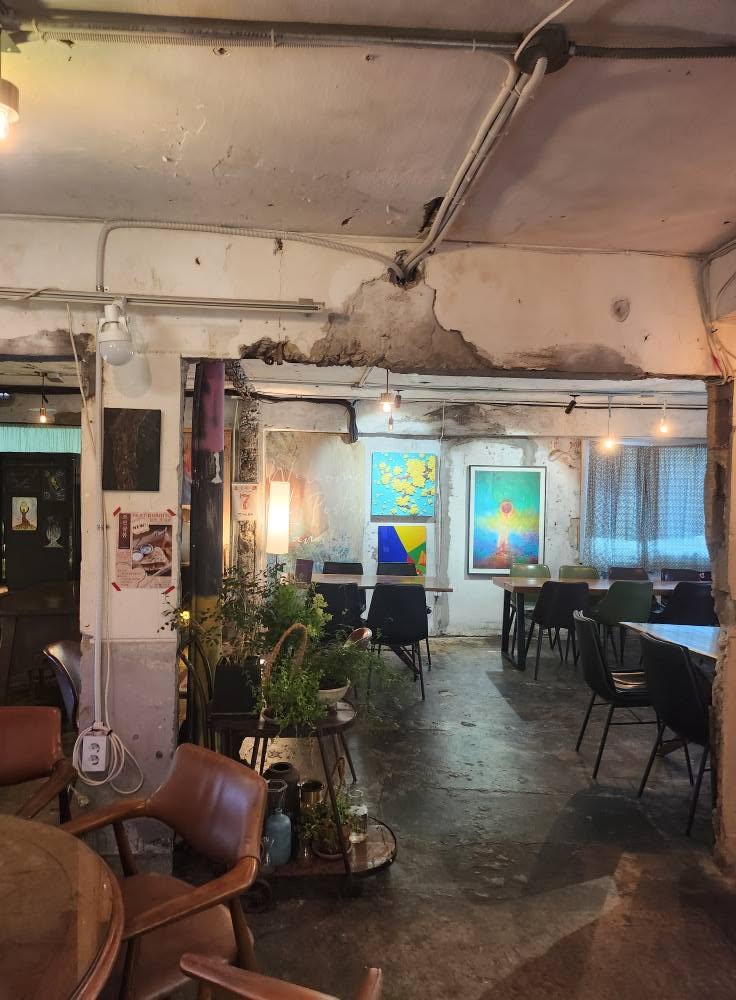
KOTE, an artistic and cultural space in Seoul.
One encounter was about death, the other about lunch. Yet both revealed the same truth: Care is rarely measured by the size of the gesture but by the attention we give another person’s humanity.
No speech. No ceremony. Just care. It reminded me of a Korean idea I have come to admire: that relationships are built not through dramatic gestures but through the steady accumulation of everyday kindness. I have found that spirit in Seoul and, unexpectedly, in Chiang Mai too.
One afternoon, after listening to me speak about migration and people’s movements, someone smiled at the notebook in my hand.
“This is not a pen,” he said. “This is a sword.”
I have thought about those words often. Not because I believe writing should wound but because I finally understand that it must cut through the indifference that allows us to look away from suffering.
When I began writing The Calcuttan in Korea, I imagined I was writing about Korea. I now realize I have been writing about Asia. Calcutta gave me my conscience. Korea gave me the discipline to observe before I concluded. Chiang Mai reminded me that the most important lessons are rarely found in conferences or classrooms, but in refugee centers, artists’ villages, temple courtyards, neighborhood restaurants, and the quiet acts of care through which strangers become neighbors.
“Relationships are built not through dramatic gestures but through the steady accumulation of everyday kindness.”
As I write this in Chiang Mai, preparing for the next chapter of my journey at the Toji Cultural Foundation in Wonju, Korea, I realize that the “in-between” is no longer simply the subject of my research. It has become the place from which I see the world. Somewhere between Calcutta and Seoul, between classrooms and communities, between museums and refugee centers, I have learned that belonging is rarely something we inherit. It is something we practice.
Korea taught me to approach every new city with curiosity before certainty, observation before judgement, and care before conclusion. Perhaps that is what it truly means to become an expert of the in-between.
The Author
Reeti Roy is a cultural commentator and the founder of Aglet Ink. A graduate of Jadavpur University and the London School of Economics, she is currently based between Korea and India, investigating Indo-Korean social architectures through an anthropological lens.
(Photographs courtesy of the author)
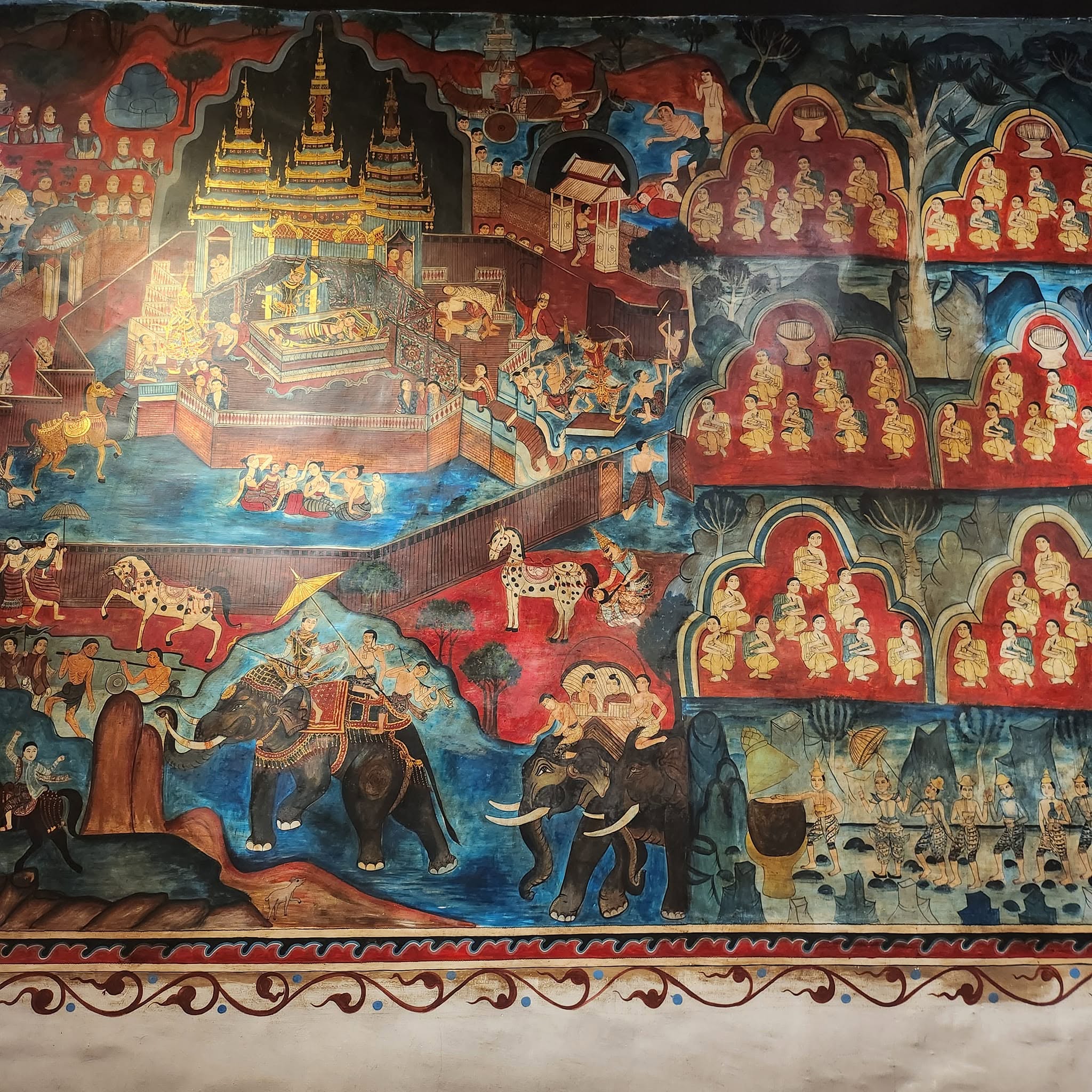
Cover Photo: Mural Painting of the Lanna Peoples at the Lanna Folklore Museum. The Lanna Folklife Museum used to be a Teakhouse belonging to Prince Uparat Suriya, who later became Prince Inthawaroot Suriyawongse, the 8th King of Chiang Mai.