

The Art of Change: Inside the 2026 Gwangju Biennale
By Luis Andrés
The time has come again for the Gwangju Biennale. As happens every September, during the first week of the month, the Biennale opened its doors once again to visitors from Gwangju and around the world.
Last year, we had the Gwangju Design Biennale, which focused on innovative ideas, objects, and technologies that have changed our lives and may continue to transform them in the future. However, the Gwangju Biennale was originally established as an art biennale, which now takes place in even-numbered years. In 2026, it returned under the theme “You Must Change Your Life.” This year’s theme can be understood as an invitation to recognize change, embrace it, and live through it rather than simply letting it pass us by.
Changes in our lives take many forms. Sometimes they are inevitable, like our bodies growing older. Sometimes they are daring choices, like moving abroad. Sometimes we build something new and better, and sometimes we destroy what we already had. Sometimes we gain something obviously useful, while at other times, things become apparently useless until we discover a new purpose for them. These different ways of experiencing transformation appear throughout the works of the artists gathered at this year’s Gwangju Biennale.
It is also particularly fun to explore the Biennale this year because of its multiplatform and multimedia character. Painting and sculpture, the classical fine arts, now share the same spaces with films and AI-generated art. Live performances and body art coexist with works produced through standardized, repetitive, and cyclical machinery. There are visual and sound installations, but also olfactory experiences and even works involving taste. Change, in other words, is present not only as the subject of the exhibition but also in the very ways in which art is produced, presented, and experienced.
Another interesting change, very much in keeping with this year’s theme, is the implementation of AI docent tours. Visitors can take a picture of the artwork they are looking at with their phones and receive a description and explanation of the piece, in both voice and text, in a variety of languages.
It was particularly interesting to see many children engaging with the artworks through this process, taking pictures and actively looking for information about what they were seeing. Whether young people should depend so much on their phones is, of course, a topic for another day. Still, in this context, the technology also makes the exhibition more accessible.
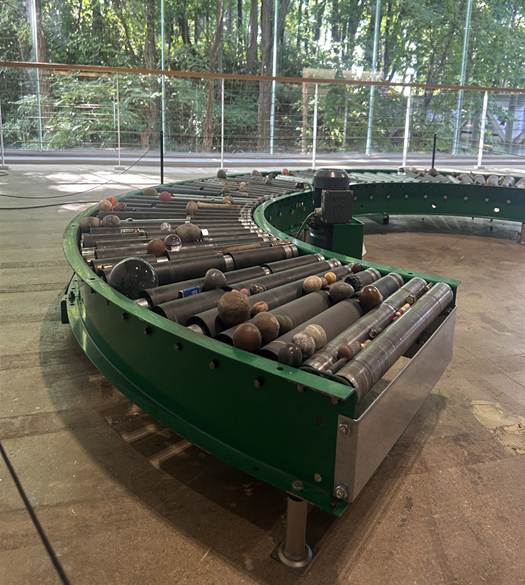
Old machine repurposed for art with stones, batteries, and other salvaged materials that seemed useless. Necromancer by Nina Canell.
It can help visitors who may struggle to read labels in dark exhibition spaces or who have other accessibility needs. It can assist international visitors who are not comfortable reading Korean or English, as well as people who might find it difficult to follow the pace of a traditional docent tour. On a much simpler level, it also means fewer people crowding around a tiny label trying to read the same artwork description. Technology, when used this way, can actually make the physical experience of the exhibition space feel broader.
The Biennale brings together artists, perspectives, and methods from around the world. People who worry that they “do not understand” contemporary art may find the interactive features, including the AI docent, a useful way into the exhibition. Meanwhile, those looking to be challenged, confused, surprised, or even unsettled will still have their hands full with the many representations of change and the different histories, experiences, and events that shape the works on display.
In this sense, this year’s Biennale once again captures something essential about Gwangju in more ways than one. The city’s growing emphasis on technology and AI-driven regional development appears alongside the democratic spirit, international outlook, and concern for inclusion that have become central to the way Gwangju presents itself.
Perhaps this combination is especially appropriate for an exhibition telling us that we must change our lives. Change does not necessarily mean forgetting what came before. New technologies do not have to erase history, and innovation does not have to come at the expense of accessibility or human experience. Sometimes change means finding new ways of interacting with what we already have, seeing familiar things differently, or opening spaces to people who might previously have remained outside them.
The 2026 Gwangju Biennale is therefore more than another major cultural event on the city’s calendar. It is also one of Gwangju’s flagship messages to Korea and the world: A city can continue changing while carrying its history, values, and identity with it.
The Author
Luis Andrés González is a Mexican GKS scholar and master’s student in cultural anthropology at Chonnam National University. He advocates for LGBTQ+ rights and gender equality, and explores global affairs through pop culture. He is the founder of Erreizando, a digital magazine. Instagram: @luisin97 / @erreizando
(Photographs by the author)
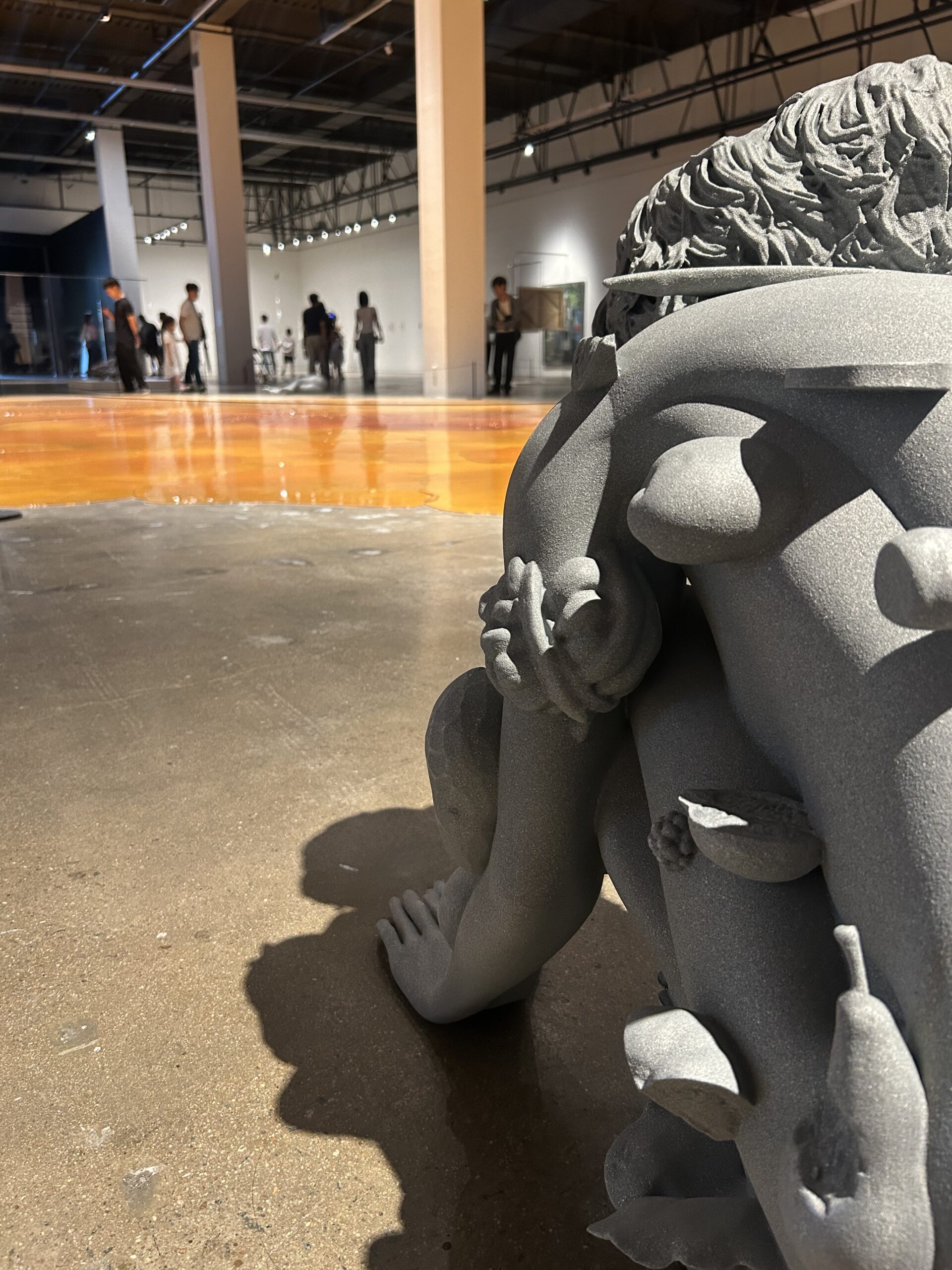
Cover Photo: One work of art had no linear boundaries from the others. They were all interacting. Clumped Compositions by Jean Barth, and the Resin Pond by Goldin+Senneby.